I’m teaching a British Cheese and Cider class this weekend, so I thought I’d share a little about why I’m so excited about it. While I’m currently the British Cheese Buyer at Formaggio Kitchen, I used to work at a natural cidery, Botanist & Barrel. Before finding them, I was more of a beer and wine enthusiast. I always thought cider was sweet and insipid, not something adults drank. They truly opened my eyes.
When I moved to Hillsborough, North Carolina to start our farm, I found there were no breweries nearby, just Botanist & Barrel, the South’s first natural cidery. It’s a gorgeous spot, with a pond and a decades-old blueberry farm. I tried a flight in their tasting room, and I was hooked. Later I joined the team, working the tasting room and selling cider at farmers’ markets. I even made cider at home, and it was amazing. Now that I live in New England, land of apples, I think it’s time to start again!
I want to thank Eglantine Crumb and Aritz Rind for sharing their perspectives and expertise. This is our first post written together, and I look forward to many more collaborations!
Pairing British Cheese and Cider
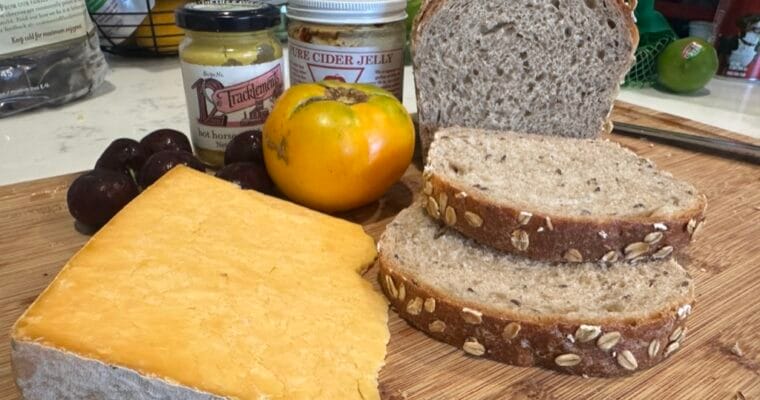
Cider isn’t just historically linked with British cheese, it’s also a natural partner in flavor. British farmhouse cheese like cheddar, Cheshire, Red Leicester often have a savory, earthy depth, sometimes even a bit of tang. Traditional ciders, especially from the West Country, bring bright acidity, gentle tannins, and a touch of sweetness. That balance cuts through the richness of the cheese and lifts it, the way a squeeze of lemon can transform a dish. Together, they create something greater than either alone.
Eglantine: A well-made cider has that sparkle of acidity, like a crisp autumn morning. It clears the palate, so when you return to the cheese you taste it afresh, more layers, more nuance. And the tannins, ever so soft, seem to catch hold of the cheese’s creaminess, carrying it further.
Aritz: For me it is simple. Cheese is fat, cider is acid. They fight, then they dance. But also, both are of the land. Working people drank cider, ate cheese, because it was theirs. Just apple and milk, what the land gave. That is why the pairing is honest.
British Apple Origins
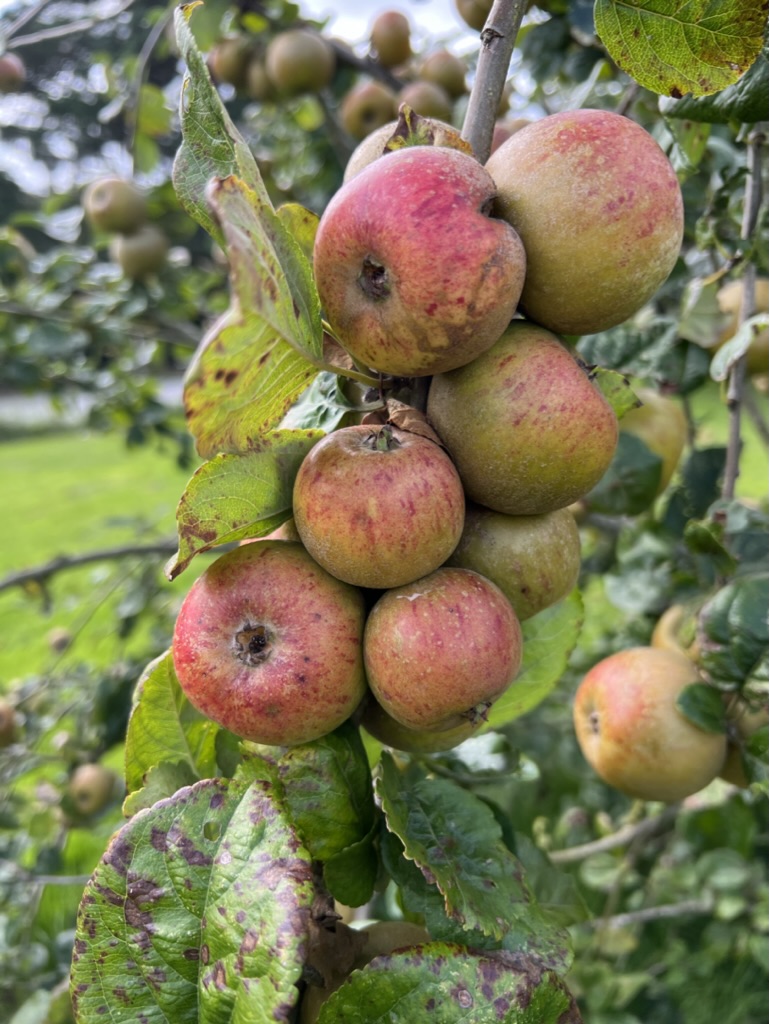
The old saying, “What grows together, goes together,” applies not just to seasonality of fruits and veg, but to geography as well. While the apple is not indigenous to the British Isles, it has been there a very long time. Apples originated in Kazakhstan, and spread by many means. Bears were among the first Johnny Appleseeds, eating apples, swallowing the seeds, and spreading them far and wide in their scat.
Eglantine: It’s an interesting distinction, isn’t it? A plant that arrives on the back of the wind or in the belly of a bird, over centuries, eventually becomes part of the landscape. We don’t call it “non-native.” That word we reserve for what humans cart about: the seeds in their pockets, cuttings on their ships, intentional or not. Nature makes her own introductions.
Here’s Your Roman Empire
When the Romans invaded Britain, folks were already making cider with the wild crabapple. Those crabapples had been there since the Stone Age. They’re not the tastiest for eating, and can make a very sharp and tart cider. The Romans’ apples increased the bounty as well as the quality. Because apples grown from seed do not match their parents’ characteristics, to get consistent quality, you need to graft tasty fruiting branches onto rootstock. The Romans brought that horticultural knowledge with them.
Eglantine: Apple trees are fussy about their winter’s sleep. They need “chill hours” to go dormant, to allow proper rest to wake and fruit again. The West Counties in England are especially perfect, with cool winters, sunny slopes, soils that drain. New England is a heaven for apples!
Cider quickly became Britain’s drink of choice. A glut of apples ripening all at once begs for preservation, and fermentation is a merry answer. There’s that old tale of unsafe water in medieval and early modern times, cider and ale being safer to drink. Saxons brought the ale, but ale meant firewood for brewing, and Britain’s forests were already thinned. Orchards were the wiser path. Later, when the Normans arrived, they brought with them new apples and methods, layering another chapter onto the story. Truly, you can sip British history in a glass of cider.
Aritz: Fermentation was all wild. No packets of yeast, no labs. Just the microbes already living on the skins of the fruit. This is how cider should be, in my view. My favorite English cider is Scrumpy. “Scrumping” is stealing windfall apples from the orchard floor. To the landlords, it was theft. To the poor, it was survival. Scrumpy is rough, cloudy, and sometimes fierce. Stronger too, because the apples have already begun their beautiful change. But it tastes of freedom. Of not paying rent for every drop you drink.
Sources:
Cider, Hard and Sweet by Ben Watson