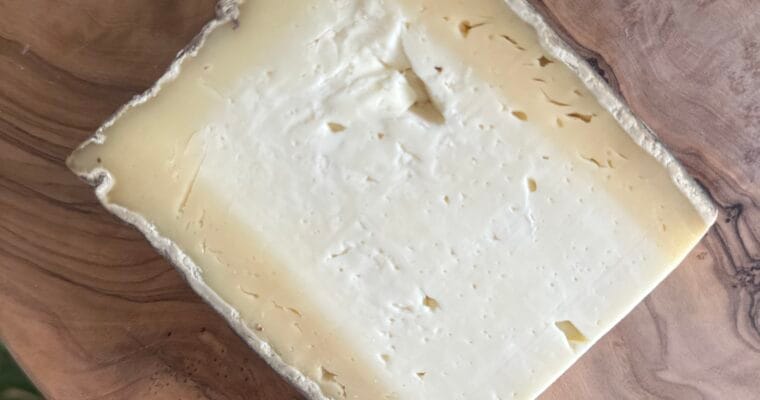
I’ve always been drawn to Caerphilly. It’s a Southern Welsh cheese, and family lore says my great-grandparents on my mother’s side were Welsh coal miners before they emigrated to Pennsylvania. Beyond that though, I think Gorwydd Caerphilly maybe the prettiest cheese I’ve ever seen. What …
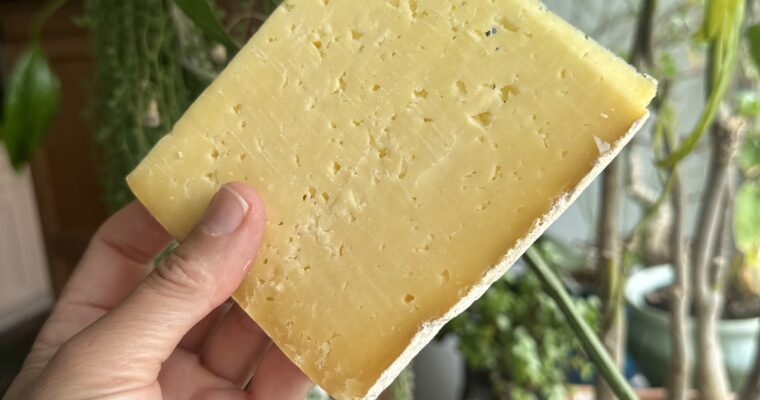
Yoredale from Curlew Dairy in the Yorkshire Dales, is real farmhouse Wensleydale, brought back from extinction. For many people, Wensleydale means the industrial blocks in the supermarket, studded with cranberries at Christmas. Yoredale shows what the cheese was meant to be. It’s one of my …
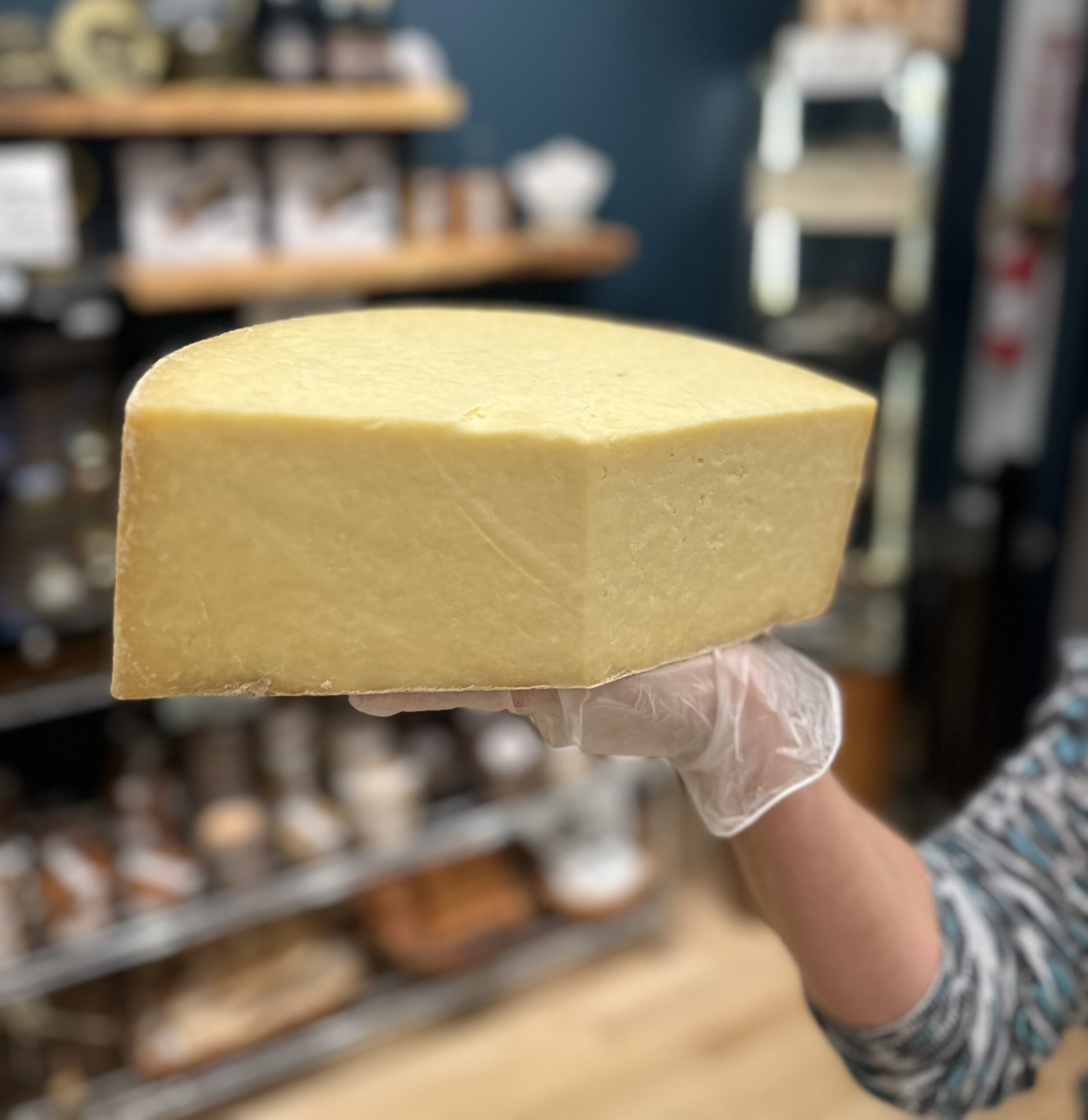
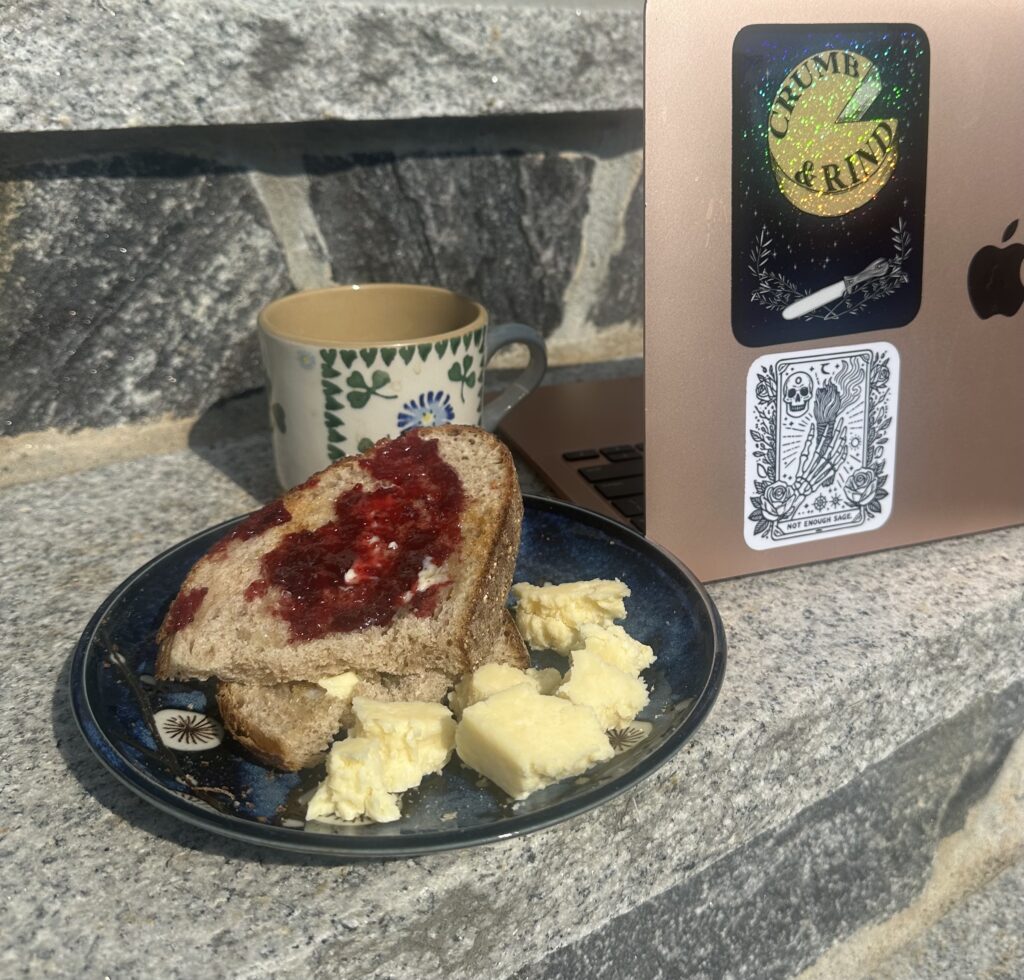
Kirkham’s Lancashire is an English Territorial, one of the Crumblies, and one of my favorites. It’s buttery, tangy, and as one of my colleagues said, “fluffy.” However, when people see Kirkham’s Lancashire on the counter, they figure it’s another cheddar. With this post, we’re hoping to help change that. Lancashire has its own story, its own taste, and its own place in the world. We hope you find it belongs on your table. Try it with a strong black tea, a bitter ale, or a dry glass of cider. I brought some home, and my plan was to do something special with it for this post. But I gobbled it up with toast and jam. Not photogenic, but delicious!
My Kirkham’s Lancashire breakfast
How Lancashire is Made
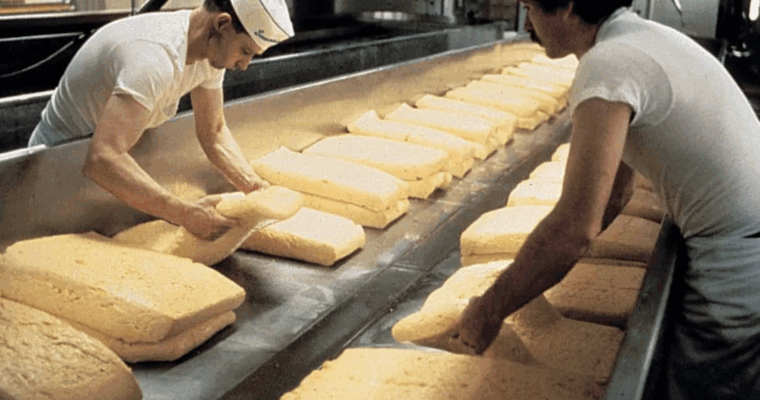
Lancashire is from blended curds from several days’ milk. So on day one, they drain the curds, salt the curds, and store them cool, and keep them loose and pliable. On day two (and sometimes day three), they make fresh curd and break it up together with the older curd. The older curd brings tang and structure, the younger brings sweetness and moisture. When they’re milled together, their surfaces “reset,” so that once they go into the mold and under the press, they knit into a single cheese. The result is a texture you won’t find in cheddar. It’s crumbly yet buttery, with little fault lines from the patchwork of curds. That crumbly-but-creamy character is Lancashire’s hallmark.
Industrialization Changes Everything
There was a time when Lancashire was everywhere. In the early 20th century, more than 200 dairies were registered as Lancashire makers. And before that, before industrialization, there were likely thousands of farmhouse versions. But as the 19th and 20th centuries reshaped Britain, rural families left the land to work in factories and mills, and small dairies couldn’t compete with the efficiency of industrial creameries. People moving to the cities needed cheap, easy-to-ship food. The curd-blending method that made Lancashire unique was too slow, too impractical for the factory system. By the 1980s, only one farmstead producer remained.
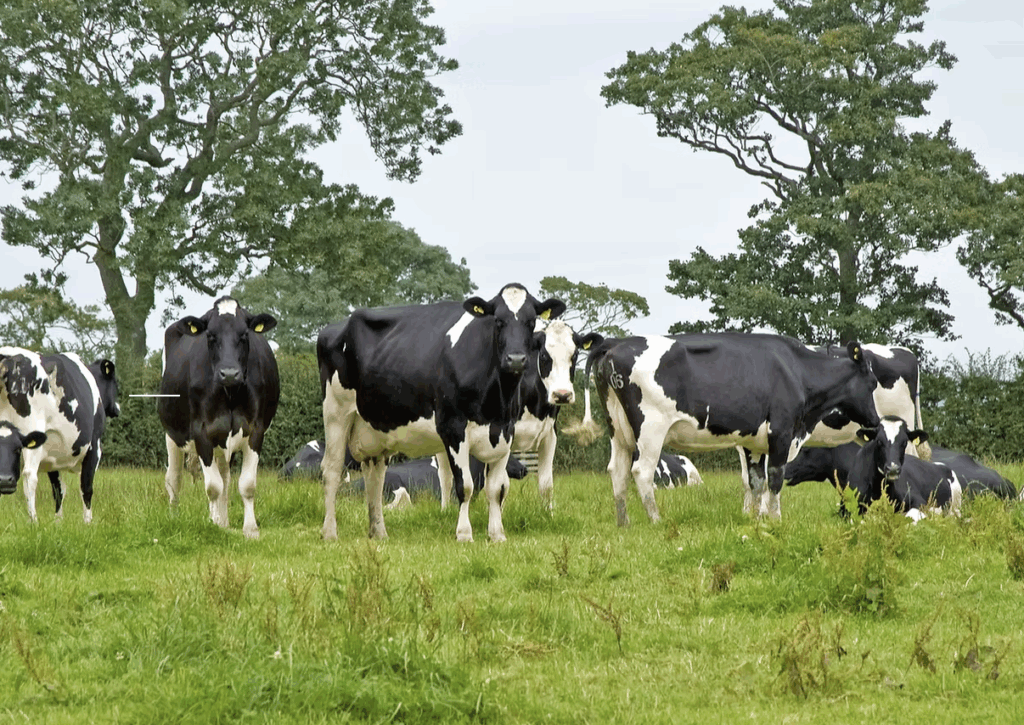
Kirkham’s cows, photo stolen from their website
Making Kirkham’s Lancashire
Eglantine:The Kirkhams milk a mixed herd, mostly Friesians with some Shorthorn and Montbéliarde. They are bred for sturdy health and good milk rather than yield alone. Because the cows graze their own pastures, the family knows exactly what’s going into the milk and how the land is faring. That’s the strength of a farmhouse dairy. The herd and the soil work together. When farms get pushed into industrial systems, they breed animals for volume, not longevity, and they treat soil like a factory floor. You lose resilience. Kirkham’s Lancashire shows what’s possible when the farm and the cheese stay tied to the same ground.
Aritz: Capitalism demands uniformity, efficiency, profit. It destroys diversity, tradition, and the small farms that held communities together. Industrial cheddar dominates because it could be made in factories, rationed in wartime, shipped cheaply. Lancashire, with its slower method and delicate texture, could not. Every bite of Kirkham’s is a vote against the idea that only what is profitable deserves to survive.
Aritz is not pulling punches here! It is true that Lancashire is not as easily scalable as cheddar. While labor intensity and good taste don’t necessarily correlate, I feel better eating food made by real people who care of the land and animals, and are part of their communities.
Kirkham’s Lancashire Today
You can still find something called “Lancashire” in British supermarkets today, but it’s a different cheese entirely. The industrial version is factory-made, pasteurized, aged only a few weeks, and designed for efficiency. It’s blocky, mild, and smooth. It bears little resemblance to the farmhouse Lancashire that Mrs. Kirkham refused to abandon.
Mrs. Kirkham, working out of Beesley Farm in Goosnargh, carried the tradition through the years. Now her son Graham leads the dairy, joined by the next generation. Together, the family keeps alive a cheese that could have vanished last century. Kirkham’s is the last of its kind. It’s raw-milk, hand-ladled, and made on the same family farm where the cows graze.
Kirkham’s isn’t alone in this fight for survival. Appleby’s Cheshire, Gorwydd Caerphilly, and a handful of other farmhouse makers across Britain tell the same story: once-thriving regional traditions nearly erased by industrialization, saved only by the grit of a few families who refused to let them vanish. Lancashire is just one piece of that larger pattern, a reminder that when you choose a cheese like this, you’re keeping more than flavor alive. You’re keeping history, land, and culture on the table.
Often I hear, “Oh, I just like boring cheese like cheddar” or if I suggest a cheddar to try, they look disappointed. But it’s a fantastic cheese! Cheddar is the cheese most of us know by name, but very few of us truly know. When …
Do not be afraid! When I’m on the cheese counter at Formaggio Kitchen, helping a customer put together a board, I always ask if there are any cheeses to avoid. The second most common answer is “Blue cheese!” (The most common is “Nope!”). I understand …
It is time to more fully introduce our founders, Eglantine Crumb and Artiz Rind. As I mentioned in a previous post, there’s a bit of hesitation here. I’ve got two reasons. One is respect for their privacy. Two is that I’m not sure people will understand….
Eglantine Crumb
Eglantine is a cheesemaker, cook, and baker with a keen interest in foraging and brewing. She rather fancies herself a bit of a witch. She always says, “Food’s magic!” and believes in the healing power of a warm meal made with love. Born and raised in Yorkshire, England, she will always have a soft spot for Wensleydale. Though her roots are rural, she has traveled widely and draws from many cuisines in her kitchen. Every so often, she shares stories from those adventures. While she is proud of her resilience and ingenuity in finding her way home, she’s still a little embarrassed about how she ended up trapped in a shipping container in the first place.
She is our window into the animal and plant worlds that shape cheesemaking and food. For example, she brings a special understanding of how feed influences milk, how different breeds of cow lend their character to cheese, and she cares deeply about the welfare of the animals themselves. She’ll also share her pairing suggestions and recipes!
She and Aritz founded Crumb & Rind to spread the word about the wonderful world of artisanal cheese. It was her idea to bring me into the fold to hopefully find a greater audience, and I am grateful for her taking a chance on me. I promise to listen and share what I learn.
Aritz Rind
Aritz Rind is a little harder to explain (pssst, he’s a cheese mite.) He is a Basque (we think) anarchist (we know), and an affineur. (An affineur is someone who tends to cheese as it ages. More on that soon.) His favorite cheese is Ossau-Iraty, washed down with an unfiltered sagardo. He lives in an aging cave, though none of us is quite sure where. He insists he has traveled widely, and scoffs at our knowing smiles when we remind him he hasn’t gone all that far.
Through the mycelium network, he can reach almost anywhere on earth, so he picks up all sorts of odd bits of knowledge. Since his diet is mostly fungus, he can be a little out there sometimes. He’s also deeply political, never missing the chance to remind us: “Every bite is a choice, and every choice is a vote.” He can be intense, but he doesn’t take himself too seriously.
Aritz is our guide to the invisible world, where fungi and bacteria shape so much of what we eat and drink. He reveals how cheesemaking depends on things we cannot see. And he often slides into my lane to have something to say about economics, politics, and humanity along the way.
He and Eglantine first met on her travels, and she credits him with helping her get home safely. He has never mentioned it, but it’s clear he’s fond of her. As for me, he wasn’t so sure about my joining Crumb & Rind. He thinks people are too quick to fear what they don’t understand, and too eager to place themselves at the center of the universe. When I joined, I promised him I’d keep a humble, open mind.