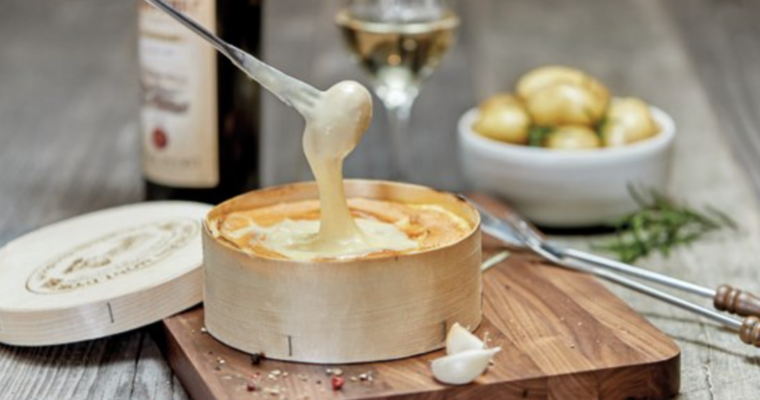
The Cheese for the Coldest Months Vacherin Mont d’Or is the ultimate holiday season cheese, and that has less to do with marketing than with timing. It is made in the colder months, when alpine herds have come down from high pastures and milk is …
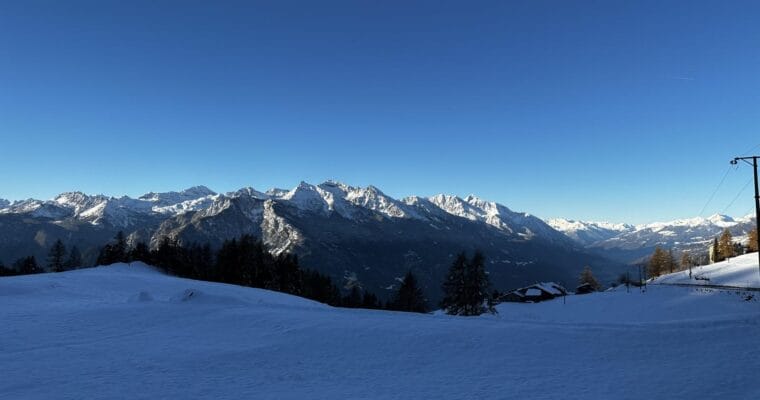
Eglantine Crumb’s Field Notes Full Moon, Snow Settled Vallée de Joux, Jura Near the French-Swiss Border I’ve been in the Jura for a time. How much time? I don’t know. But I have a curious feeling of being very aware of time, and not especially …
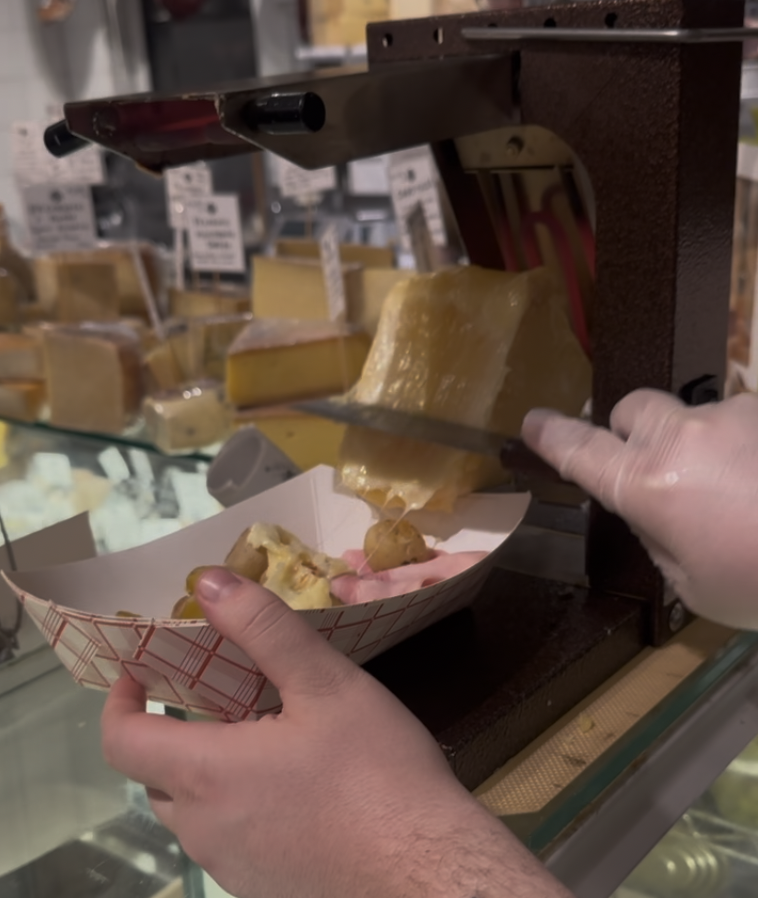
We’re serving raclette at the South End Formaggio Kitchen this winter season where I work as a Cheesemonger. Happily, I’m also teaching a class on raclette (and fondue) at the Formaggio Kitchen in Cambridge. We’re keeping it seasonal around here!
What is Raclette?
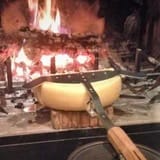
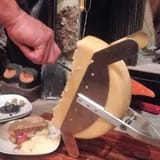
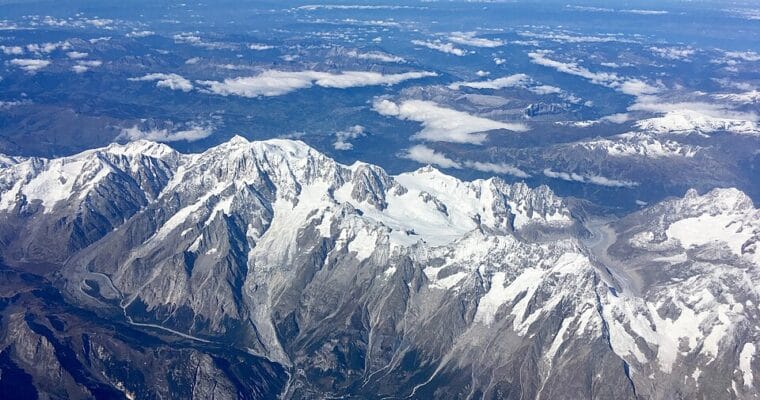
Raclette can be both a noun and a verb. It refers to the cheese itself, and to the method of melting and scraping that cheese onto food. Raclette comes from the Swiss Alps. Picture a cold evening in the mountains, people gathered around a fire, softening a half-wheel of cheese and scraping the melted layer onto potatoes. It’s one of those simple foods that makes complete sense the moment you try it. One of our founders, Eglantine, shared a page of her journal about her adventures in the Swiss Alps, and you can read it here.
Raclette is a raw cow’s milk alpine cheese, but it isn’t as firm as Gruyère or Comté. It’s a washed rind, so it can be quite funky. Because it’s younger than many alpine cheeses, it melts a lot more easily.
Why Raclette Melts So Well
In order for cheese to melt well, a few things need to be true:
1. Enough moisture Younger cheeses still hold water. That moisture turns to steam when heated and softens the cheese from within. As you’ve probably noticed, very dry, aged cheeses, like Parmigiano, get oily or grainy instead of creamy.
2. A flexible protein structure As cheese ages, proteins tighten and become more rigid. In fact, his is why older cheeses grate beautifully but don’t melt smoothly. Raclette’s proteins are still relaxed enough to flow.
3. Balanced fat Fat gives melted cheese its silkiness. Too much fat and it separates. Too little and the cheese gets rubbery. Raclette has a natural balance that keeps it smooth and glossy.
4. Moderate acidity High acidity causes cheese to tighten up instead of melting. Raclette is low-acid, which keeps the melt stretchy and even.
All of these traits are part of how the cheese is made. It’s the milk, the cooking temperature of the curd, the size of the cut curds, the aging environment, and the short maturation time. Raclette is designed to be a melting cheese from the start.
A Little History
Raclette has been around for centuries in the Valais region of Switzerland. Herdsmen would take wheels of cheese up into the mountains with them for the summer. As a result, the cheese was firm enough to travel but soft enough to heat by the fire. They would warm one side and scrape the melted layer onto bread or potatoes. Racler in French means “to scrape,” which is where we get the name.
The modern raclette machine, which you may have seen at markets or in restaurants, is just an updated way of doing the same thing with more control and less smoke.
Raclette vs. Fondue: What’s the Difference?
Both are winter comfort traditions and are excellent ways to show off alpine cheese. They come from the same general region, they use similar cheeses, and they both make the table feel cozy. But they’re not the same thing!
Eglantine:“Everyone talks about fondue like it’s a big event, but raclette is the one I reach for when I’m cold and hungry.” Aritz:“Fondue is a recipe. Raclette is a cheese. Let each thing do its job.” Eglantine:“Exactly. Scrape, eat, and don’t faff about.”
Raclette is the cheese itself. You melt a single cheese, Raclette, and scrape it over food. You’re tasting the cheese in its pure form, just melted.
Fondue is about the blend. A classic Swiss fondue is a mixture: usually Gruyère and Emmentaler, sometimes with Appenzeller added. The cheeses are grated and melted together with white wine, garlic, and a little kirsch. You’re creating a sauce with multiple ingredients, the texture is more liquid and the flavor is shaped by the wine as much as the cheese.
How to do Raclette or Fondue
Equipment:
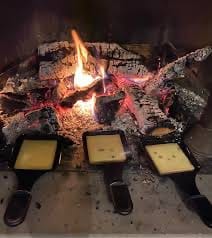
Raclette uses direct heat. It could be a raclette machine, fire, broiler, or pan, to melt the surface of a wheel or a slice.
Fondue uses a pot over steady heat, often with a flame underneath to keep it warm.
How you eat it:
Raclette is scraped onto potatoes, bread, vegetables, or charcuterie.
Fondue is something you dip into with bread cubes, boiled potatoes, or vegetables.
Texture:
Raclette is stretchy and glossy, almost like thick lava.
Fondue is thinner, more like a smooth cheese sauce.
Flavor:
Raclette has a bit more funk from the washed rind.
Fondue tastes cleaner, nuttier, and wine-forward.
The vibe:
Raclette feels more rustic. You’re scraping from a wheel. You can find it at Christmas markets, it’s more like street food.
Fondue feels more communal. Everyone is dipping into the same pot. So, it’s a little more formal because of the setup, but it’s definitely a party!
How to Serve Raclette at Home
You don’t need much. The joy of raclette is in its simplicity.
The Cheese:
Traditional Swiss Raclette
French Raclette de Savoie
Or a similar alpine melting cheese if needed, make up your own!
What to melt it on:
Boiled or steamed potatoes (small yellow potatoes are ideal)
Slices of crusty bread
Roasted vegetables
Blanched or steamed broccoli
Even mushrooms or small onions
What to serve alongside:
Charcuterie (salami, ham, prosciutto)
Cornichons
Pickled onions
Mustard
Simple greens
You can use a raclette grill, a broiler, a cast-iron skillet, or even just a small pan on low heat. The goal is gentle, gradual melting. Once it softens, you scrape or spoon the melted top layer over your plate. That’s why it’s one of the best ways to experience the cheese. Raclette is warm, elastic, and incredibly satisfying. It’s cozy food, and it makes a long winter feel a little more cozy.
Eglantine Crumb’s Field NotesWaxing Rind Moon, Snow Deepening Chalet above Martigny, near La FoulyCanton of Valais, Switzerland On my last evening with Aritz in Aosta, we had what he called a simple meal, though it felt quite grand to me. We were on the banks …