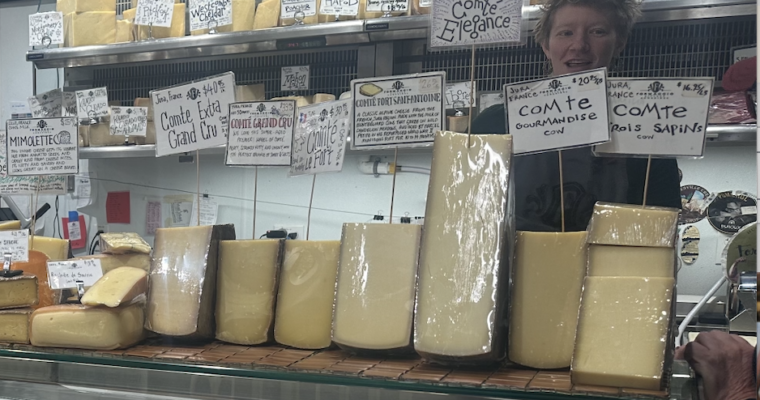
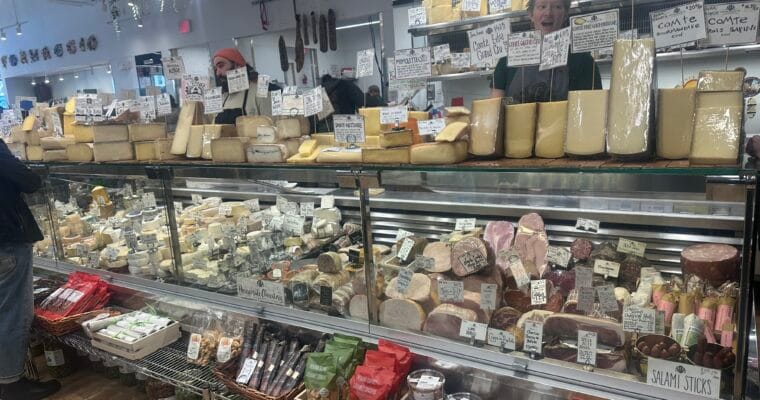
Now that we’re back from our winter break, it’s time to start the year with the heavyweights. It is still snowing as I write this, and there is no better “snow day” cheese than a cooked-curd Alpine. The two neighbors, Swiss Le Gruyère AOP from …
The Cheese for the Coldest Months Vacherin Mont d’Or is the ultimate holiday season cheese, and that has less to do with marketing than with timing. It is made in the colder months, when alpine herds have come down from high pastures and milk is …
Eglantine Crumb’s Field Notes Full Moon, Snow Settled Vallée de Joux, Jura Near the French-Swiss Border
I’ve been in the Jura for a time. How much time? I don’t know. But I have a curious feeling of being very aware of time, and not especially bothered by it.
I came to this region to learn about Comté, but I stayed for Vacherin Mont d’Or. It was a day’s journey from the fruitière, so no trouble at all. Back in Yorkshire, I read about this cheese. I always meant to go into Leeds and track it down at a cheeseshop, but somehow never quite managed it. So I thought, if I was ever going to understand it properly, it had to be now.
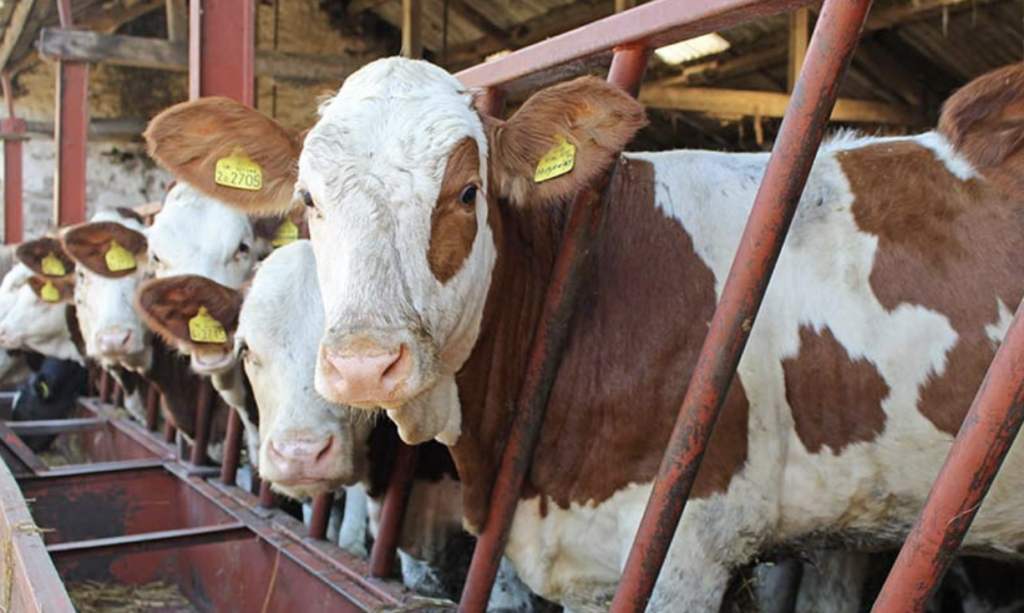
The cold air here seems to settle and stay. When farm work slows, people need something steady to occupy their hands, and so watchmaking took hold. It’s delicate, patient work. People here became attentive to measuring time. One of the Montbéliarde cows I met, all snug in her barn, told me she only cared whether it was winter or summer, and that there was no real need for watches (at least for cows) at all in the Jura!
Vacherin Mont d’Or is also about time. It’s a cheese many people make a point of finding at Christmas, though here it feels more like part of the season than a celebration. It is an unusually rich cheese, made only from winter milk, wrapped in spruce bark and almost begging to be eaten fireside. Mont d’Or isn’t aged long, and its time is brief, but that’s the point. It must be eaten now, in the winter, though not with urgency. There is no need to rush.
As usual, Aritz found me an excellent guide and host. Brune is one of the most patient hares I’ve ever met. I was feeling a bit lonesome before, missing Christmas at home. She takes winter as it comes. No complaining about the early darkness or the cold. No romanticizing it either. Just a steady acceptance of the present.
She has a collection of watch parts, which she returns to the watchmakers when they need them. She can’t quite explain why she finds them when they are lost, only that she comes from a long line of helpers. Sometimes she finds gloves or buttons and returns them too, but her favorites are the watch pieces, the springs and cogs. She keeps them carefully in a wooden cupboard alongside her other winter things.
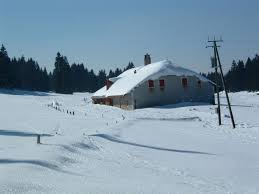
Snow stayed on the ground for weeks, and the cold air didn’t seem to budge. Even in the Alps, with all the changes in altitude, you sometimes get a break from the worst of it. Here in the Jura, which is lower in elevation, the wind rips across the plateau, but the cold itself seems unmoved. Still, I’ve found it a welcome pause from my travels. No big parties in chalets here!
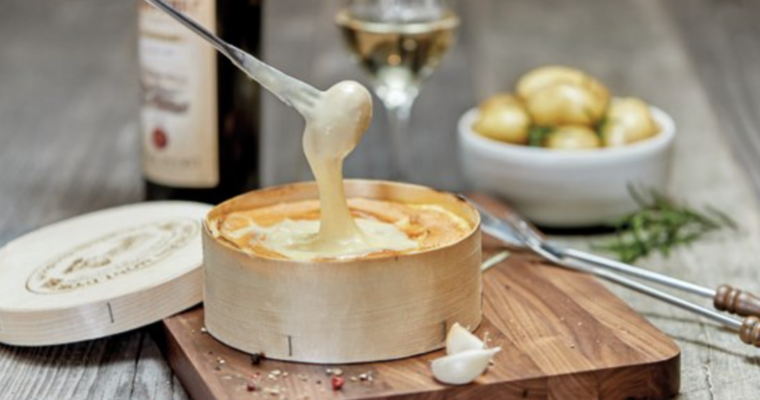
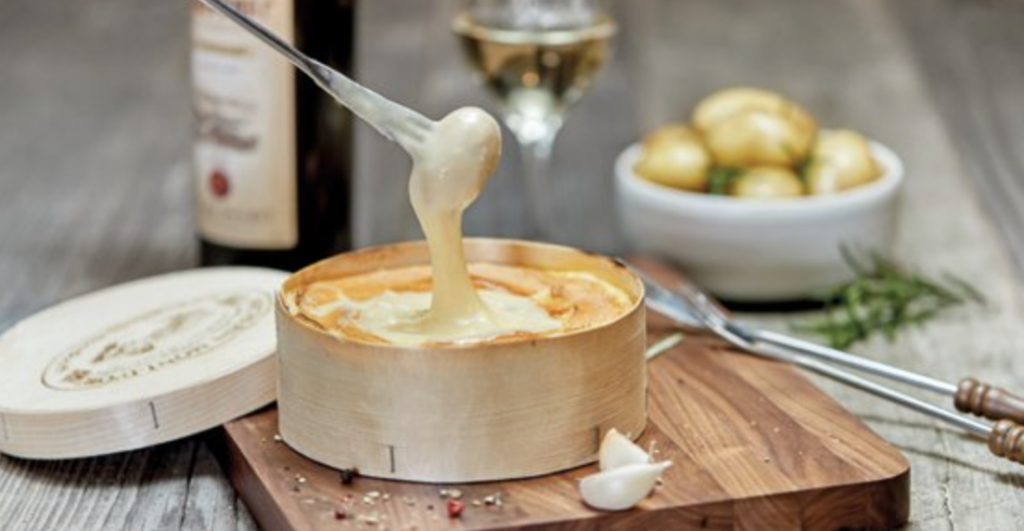
For my last night, we toasted a Vacherin with a bit of garlic and rosemary, paired with a Jura white wine. The wine was almost nutty, and not a bit of oak in it.
Later in the evening, after we had finished the Vacherin and our glasses of Chardonnay, Brune showed me one of her favorite ways of lengthening a winter night. Make a winter’s night longer, she said. I thought she was the maddest hare since Lewis Carroll. Suddenly Aritz appeared, not even bothering to say hello, acting as though he’d been there all along.
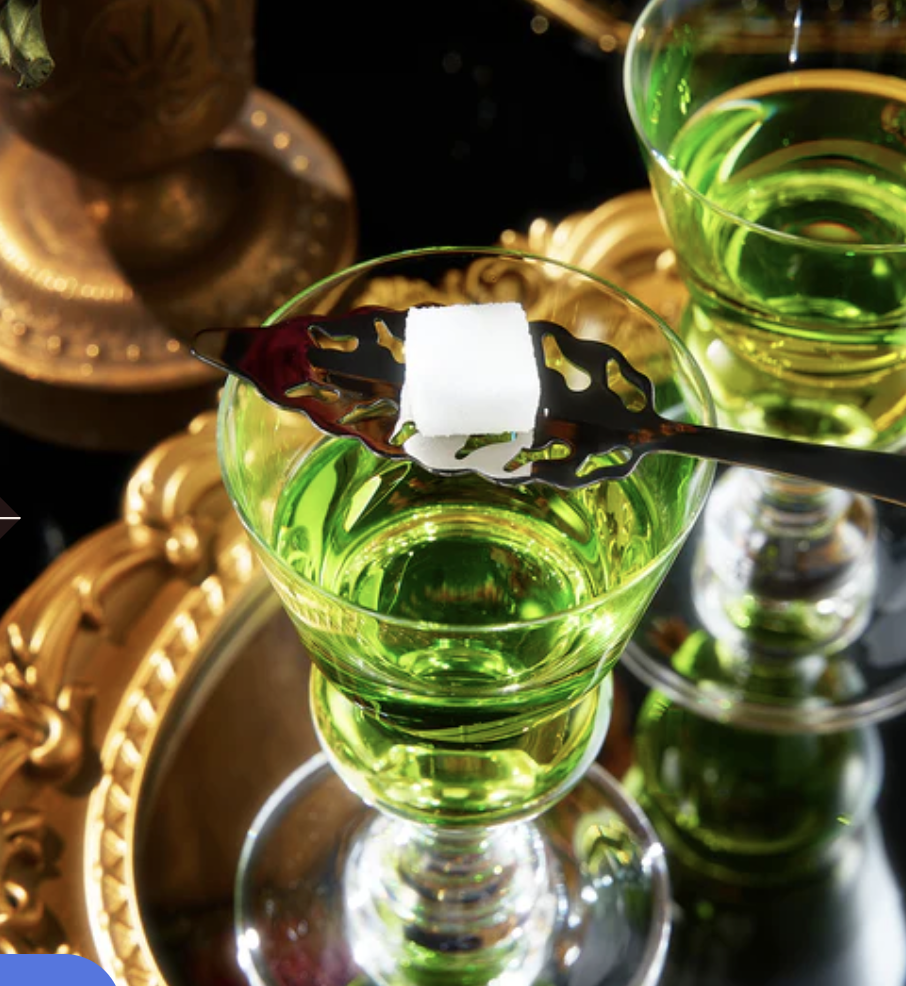
Brune pulled an antique bottle of green liquid and a small slotted spoon from the back of her cupboard of springs and cogs. She set out little glasses, each with a small bubble at the bottom. Then she said that’s how you know how much Absinthe to pour.
Brune explained that although the Absinthe was made in Pontarlier, technically in France these days, the herbal spirit was a part of life here. She poured just enough to fill the bubble, placed a sugar cube on the spoon over the glass, and let cold water drip slowly over it. Drip, drip, drip. Like a clock ticking. She said the important thing was not to rush. The green liquid slowly turned cloudy. Brune said the clouding is the “louche.”
I admitted I had always thought you lit the sugar cube on fire. She laughed and said that we were not in a Paris tourist trap! Aritz called me Toulouse-Lautrec, waved a hand dismissively, and said it’s a myth. And it burns off the aromatics. The flame makes the drink worse, not better.
Aritz explained that the stories about wormwood, thujone poisoning, and the green fairy were mostly nonsense. Absinthe had simply become too popular, and big business preferred people drinking wine instead. He said it was also a drink associated with bohemians and The Poor. It was easier to demonize a drink than to compete with it. It was his usual habit of blaming capitalist conspiracy for everything, but Brune politely agreed.
The lovely herbal bitterness and warmth were just what I needed. We talked late into the night. It’s still night now, actually. I swear it was hours, though perhaps we started early. I might have to nick one of them watches!
Eglantine Crumb, is a Yorkshire Cheesemaker who happens to be a Mouse. Not long ago, she found herself trapped in a shipping container was transported far from home. This is one of her journal entries.
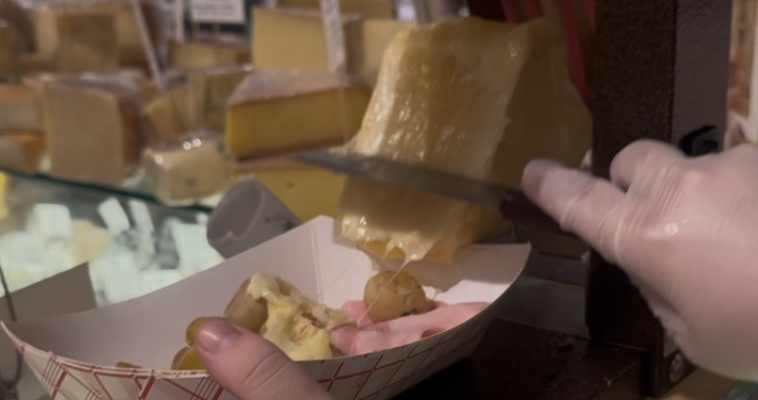
We’re serving raclette at the South End Formaggio Kitchen this winter season where I work as a Cheesemonger. Happily, I’m also teaching a class on raclette (and fondue) at the Formaggio Kitchen in Cambridge. We’re keeping it seasonal around here! What is Raclette? Raclette can …
Eglantine Crumb’s Field NotesWaxing Rind Moon, Snow Deepening Chalet above Martigny, near La FoulyCanton of Valais, Switzerland On my last evening with Aritz in Aosta, we had what he called a simple meal, though it felt quite grand to me. We were on the banks …
Believe it or not, I’m calling this a seasonal post! A lot of our winter cheeses have washed rinds. Vacherin Mont d’Or, Epoisses, even Gruyère and Comté. Many of the cheeses we melt in the colder months, like Raclette, are on the stronger, funkier side, and they have washed rinds. These cheeses pair well with celebratory Champagne, off–dry wines like Riesling, or a sweet Sauterne. All of these feel right during the holidays and colder weather.
Washing the rind doesn’t just change the look of the cheese. It changes the flavor in a big way. The microbes on the rind start breaking down the cheese from the outside first, which releases all those savory, meaty aromas washed rinds are known for. The paste inside often stays sweet and milky, but the rind adds salt, funk, and a bit of earth. Eating both together gives you that classic washed rind balance of custardy interior and punchier rind.
Funky Washed Rinds
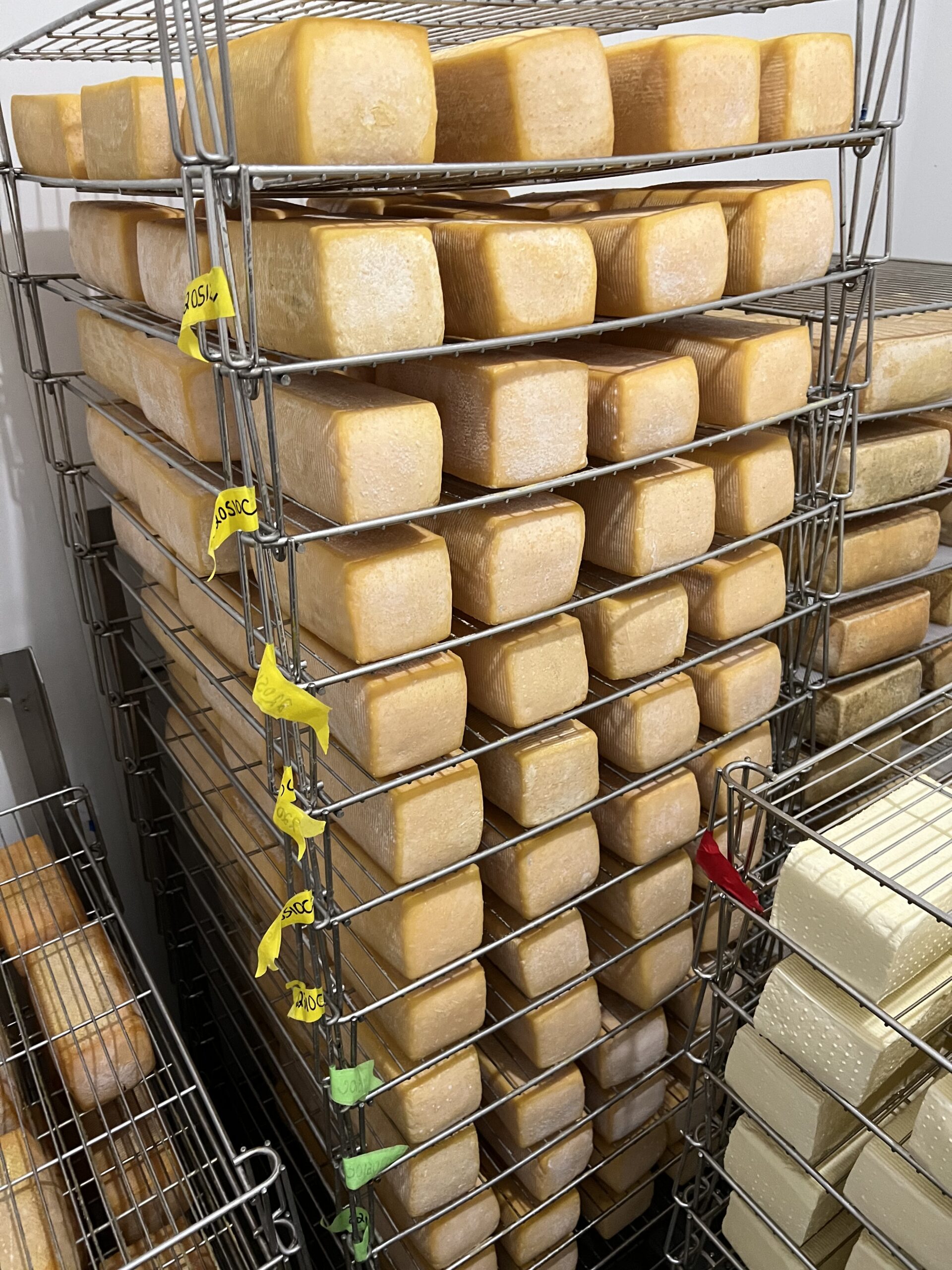
While there are a few ways cheese can develop strong flavors, washing the rind is THE path to funkiness. And that funkiness comes from microbes! When we say a cheese is “washed,” we mean someone literally washes the outside with brine. Sometimes beer, wine, or liqueur is added to the salty water. Some affineurs add microbial cultures to the brine to help things along. Others rely on microbes already in the milk, or those endemic to the aging cave. Washing is cold, labor intensive work. It also requires someone who understands how to care for the cheese at each stage of its life. I got a taste of this skill when I worked at Boxcarr.
Affinage at Boxcarr
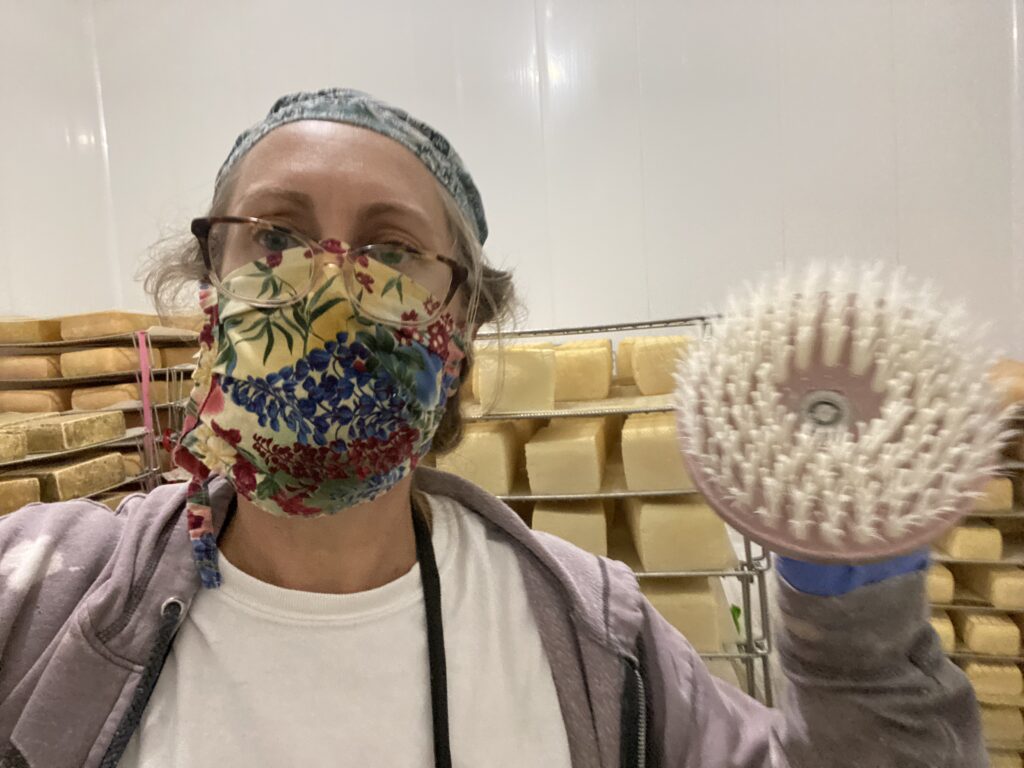
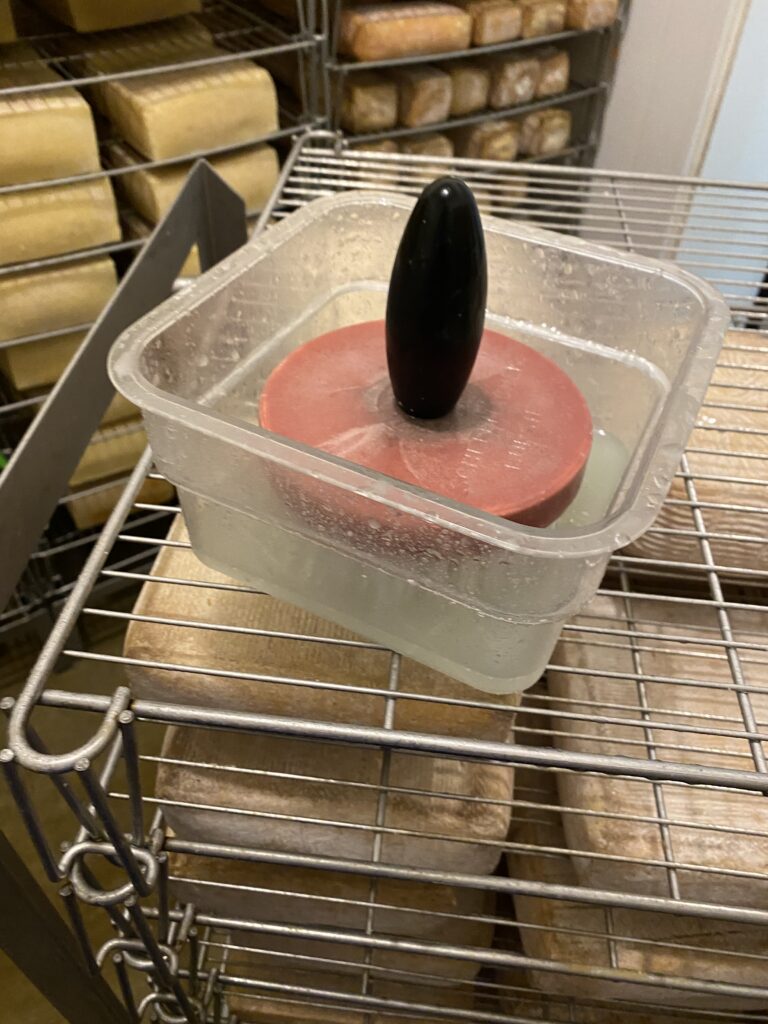
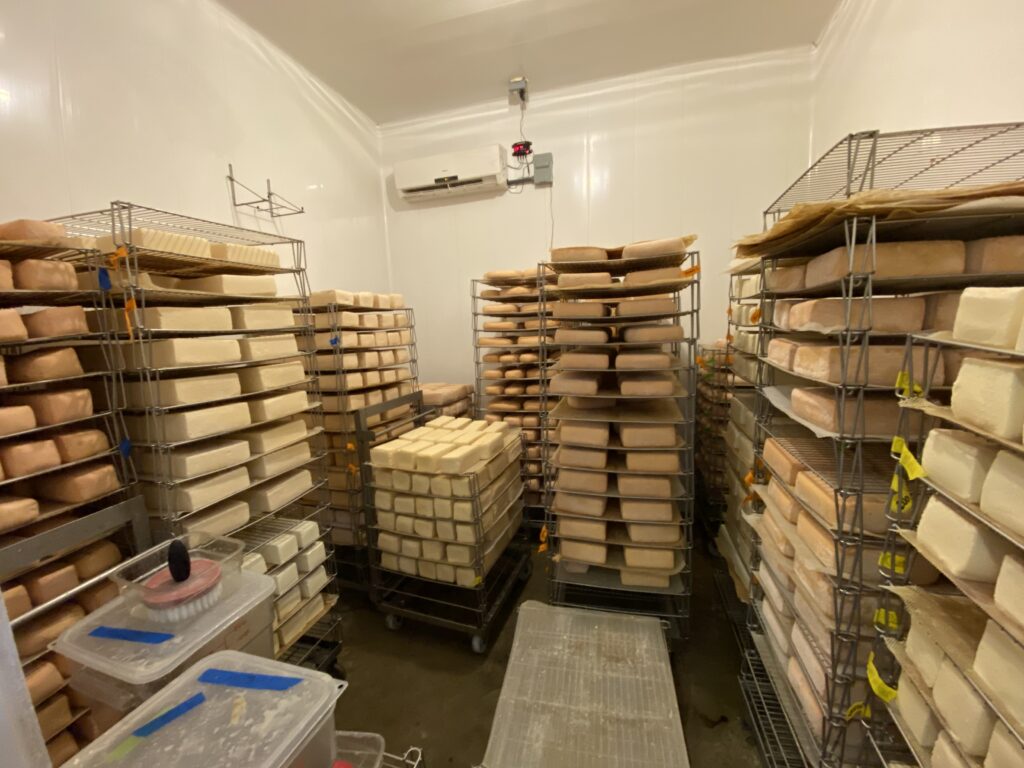
At Boxcarr, cheese brush in hand, I washed Lissome, Nimble, and Campo. Early on, I kept the cheese very wet so the desired microbes could take hold before anything else moved in. Once pale blocks of cheese start turning a bit orange, I could ease up on the aggressive, wet brushing. I wanted the cheese to stay a bit sticky but not too sticky, the difference being something I had to learn by feel. If any unwanted mold started growing, I had to brush more attentively. After a few weeks, once the rind was established, I was able to merely dip my glove in the brine, and lightly smooth over the rind.
An Affineur’s Perspective
Aritz: Brevibacterium linens get a lot of attention for washed rinds, but there are other microbes that create the orange, funky rind people love. Fusarium domesticum, Rhodosporidium, Staphylococcus xylosus, bacteria and yeasts that also make the rind orange and funky. They break down the proteins and fats .
We’ll profile some washed rind cheese, but for now, we hope this was a helpful introduction to what they are!
How I Came to Know Port Port is a fortified wine, usually sweet and served after dinner. To be perfectly honest, Port was an acquired taste for me. I don’t like sweet beverages, and it always seemed a bit frumpy to me. The fact that …
It’s our first post in a while that’s actually about cheese. It’s November and I’ve just finished teaching class on Stilton and Port, the perfect duo for these cold nights. They’re a classic pairing, and I thought I’d write about them together. What I realized, …
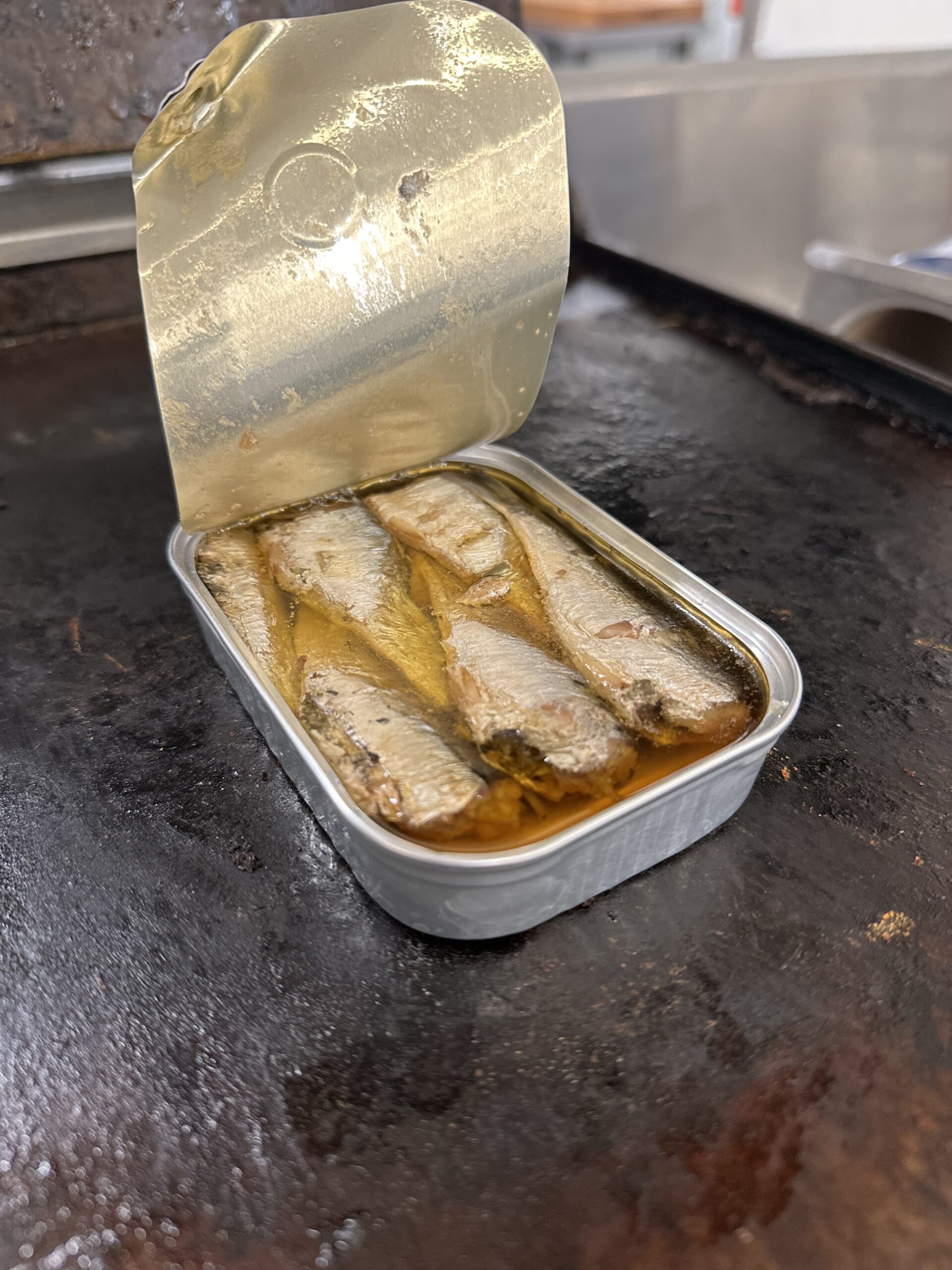
Tinned fish, called conservas in Iberian culture, has become popular in the U.S. in recent years, though it’s been beloved in Europe for decades. It’s sustainable, healthy, delicious, and the tins are undeniably cute. Conservas deserve a spot on any cheese and charcuterie board. I hope the trend keeps growing.
History of Tinned Fish
Tinned fish doesn’t go as far back as older ways of preserving fish. Before conservas could exist, people needed two things: a lightweight, durable material to store the fish, and a reliable way to keep microbes at bay.
In the 1760s, Lazzaro Spallanzani experimented with sterilizing by boiling, though it wasn’t applied on any large scale. A few decades later, Napoleon Bonaparte offered 12,000 francs to anyone who could invent a reliable method of preserving food for his armies. French chef Nicolas Appert won the prize in 1809 by boiling food inside sealed glass jars. The next year, Englishman Peter Durand patented the idea of using tin. (Can openers, however, wouldn’t arrive for several more decades.) Small, oily fish turned out to be an ideal match for this new preservation method.
Preservation
Aritz:The old ways: fermenting, smoking, drying, salting, pickling, even confit. Skill, intuition, culture. Working with other organisms instead of against them. Using heat to kill everything is inartful. It’s lazy. Like dropping an atomic bomb instead of fighting with skill.
Um, thank you for that, Aritz! Normally at Crumb & Rind, we talk about foods transformed by microbes, like cheese or fermented drinks. Conservas are different. Some are packed in vinegar, which is a fermented product, but the fish itself is not fermented. The food inside the tin must be completely free of microbes because botulism is a real risk. The low-acid, low-oxygen environment inside a sealed tin is perfect for Clostridium botulinum, which produces a deadly neurotoxin. Rule number one: always throw away any swollen, bulging, or damaged tin.
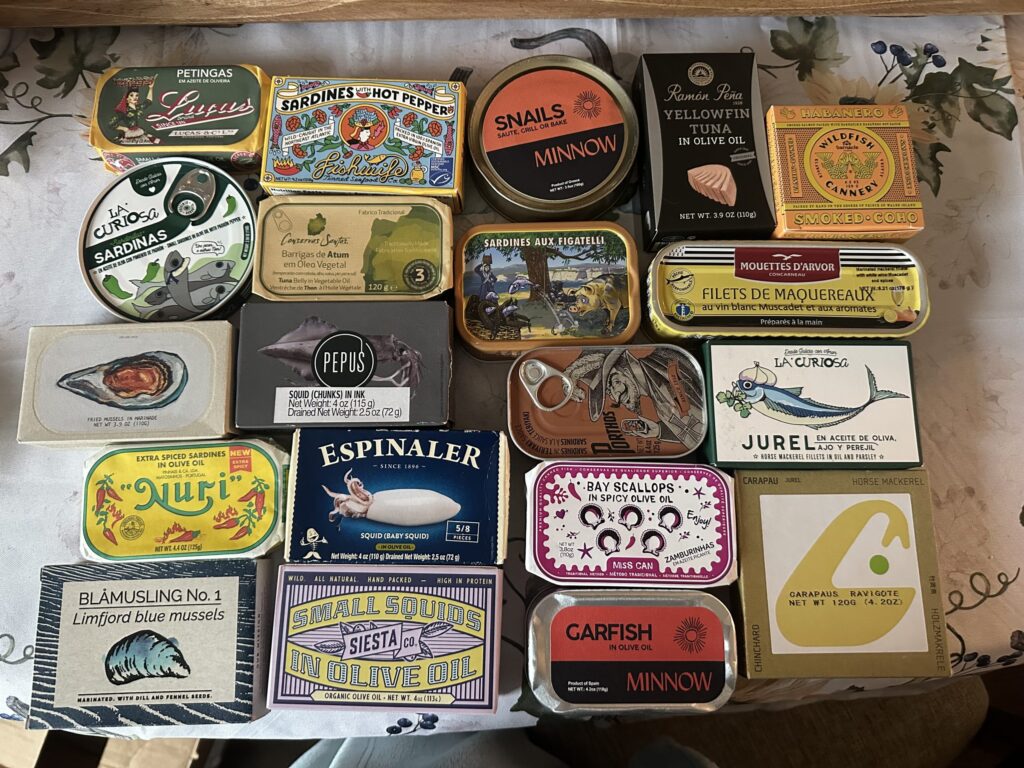
My Current Collection
Twentieth Century
By the twentieth century, tinned fish had spread across the world, not as a luxury product but as everyday comfort food. In the U.S., “Big Tuna” eventually took over the sardine industry. (There’s a great NPR interview about this—linked below.) Through advertising, Americans were taught to think that anything besides tuna or salmon in a can was “too fishy.” That’s pure marketing, not truth.
Tinned Fish Is Good for Everyone
Tinned fish helps the planet and your body. There’s no need to fly fish around the world for it to be “fresh.” Smaller species like sardines, anchovies, and mackerel are lower on the food chain, so they contain less mercury than big predators such as tuna or salmon. They’re rich in protein and Omega-3s, too.
Canning also supports sustainable fishing seasons. Fishers can harvest when the fish are at their best rather than when consumer demand peaks, which often happens at the wrong time of year.
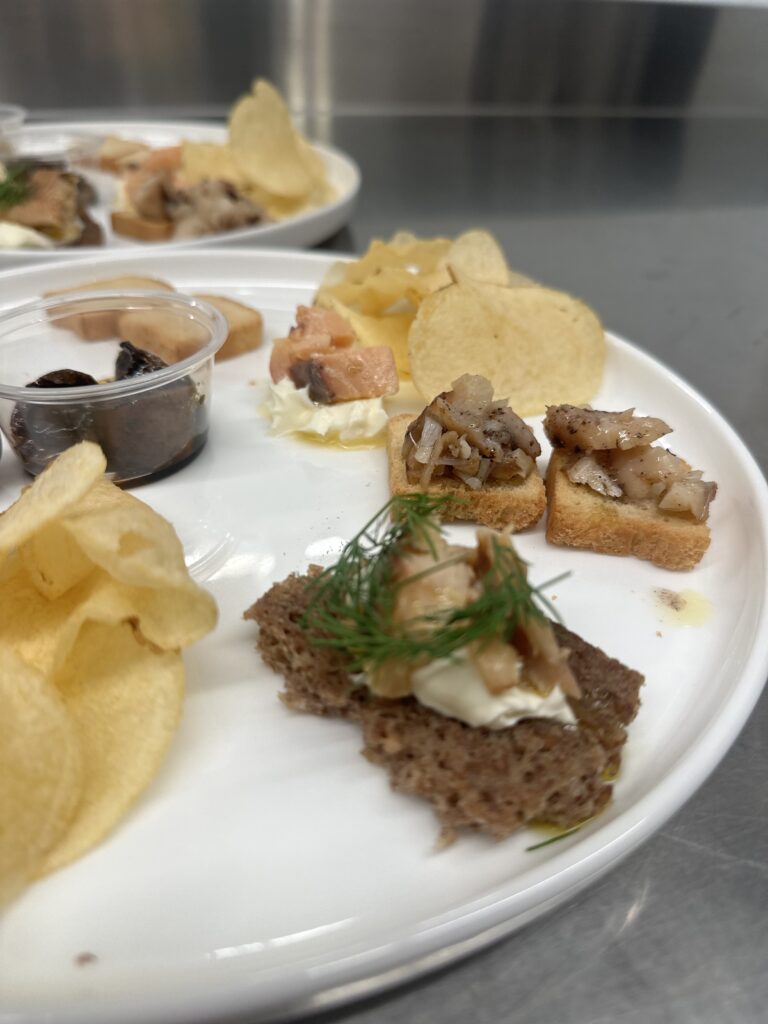
Plate from a Tinned Fish Class
Ways to Eat It
Most of the time, I just open a tin and eat it with a good baguette, maybe a little butter, some dried herbs, and sea salt. Conservas also belong on a cheese board.
Or think of them as Girl Dinner: straight from the tin with a glass of wine. Try them tossed into pasta, folded into lentils, or alongside roasted vegetables. Once you start, you’ll see how versatile these little tins are.
Shop Small If there was one thing I would ask of people, besides vote (or read a book,) it would be to shop small, especially at cheese shops. We’re heading into the holiday season, when most retail makes the profit that helps them through the …