Author: Jennifer

Appleby’s Cheshire

Appleby’s Cheshire

It’s our first cheese post! Here we go! Appleby’s Cheshire comes from Hawkstone Abbey Farm in Shropshire, England. The Appleby family founded the farm in 1952, and now Paul Appleby and his wife Sarah carry on the work, with help from their five children. They 

British Cider and British Cheese

British Cider and British Cheese

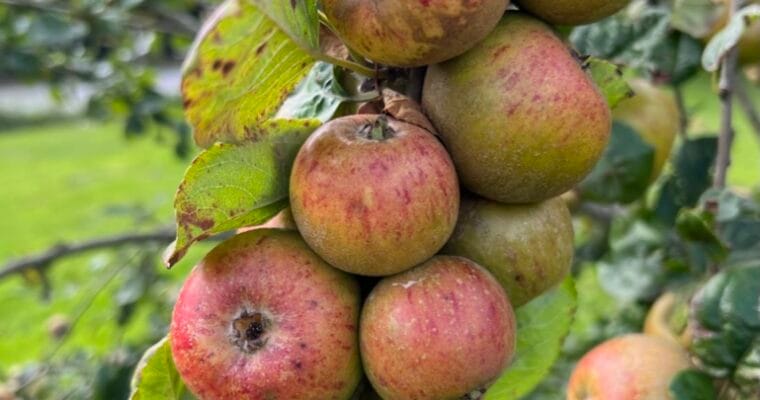
I’m teaching a British Cheese and Cider class this weekend, so I thought I’d share a little about why I’m so excited about it. While I’m currently the British Cheese Buyer at Formaggio Kitchen, I used to work at a natural cidery, Botanist & Barrel. 

Annatto

Annatto

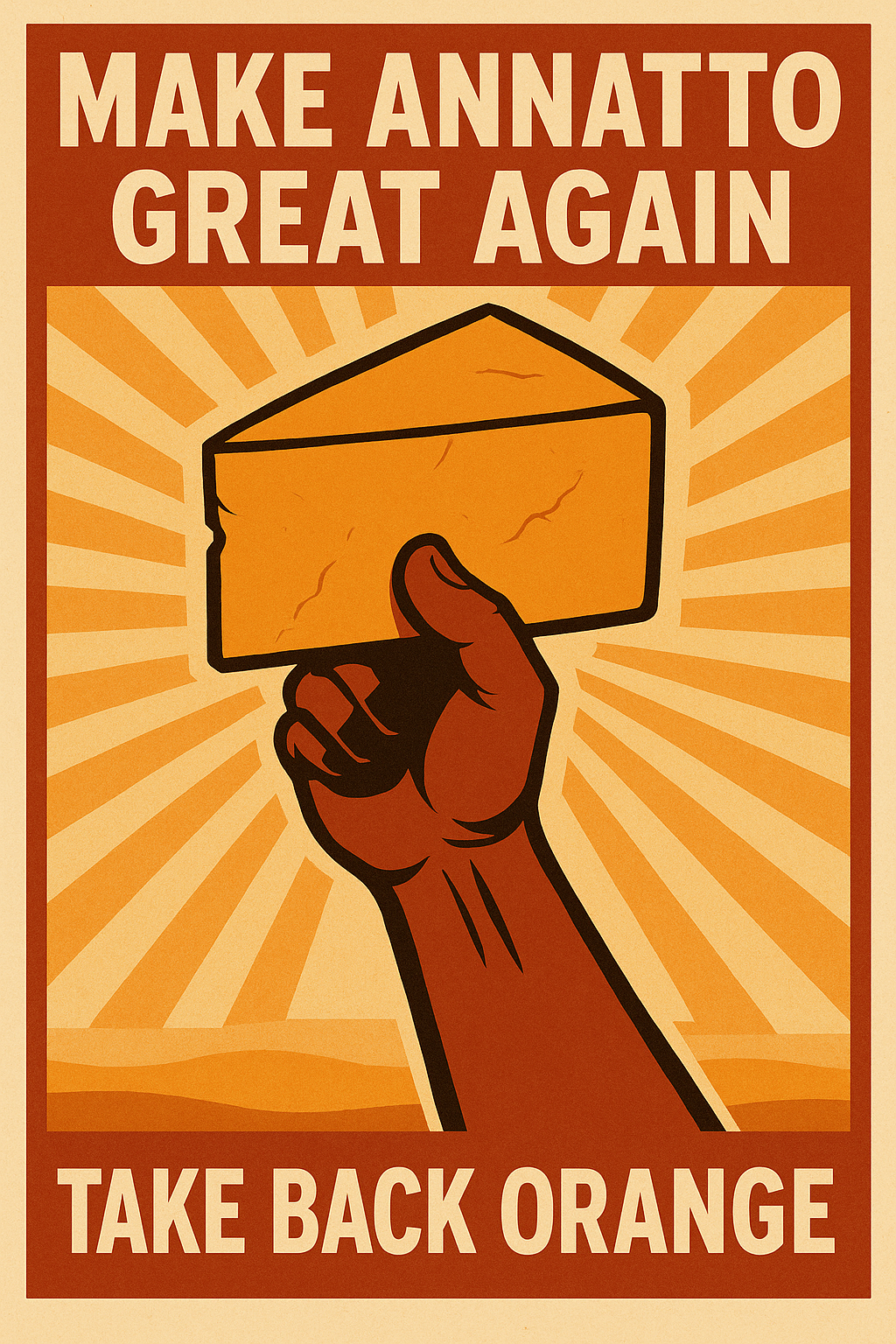
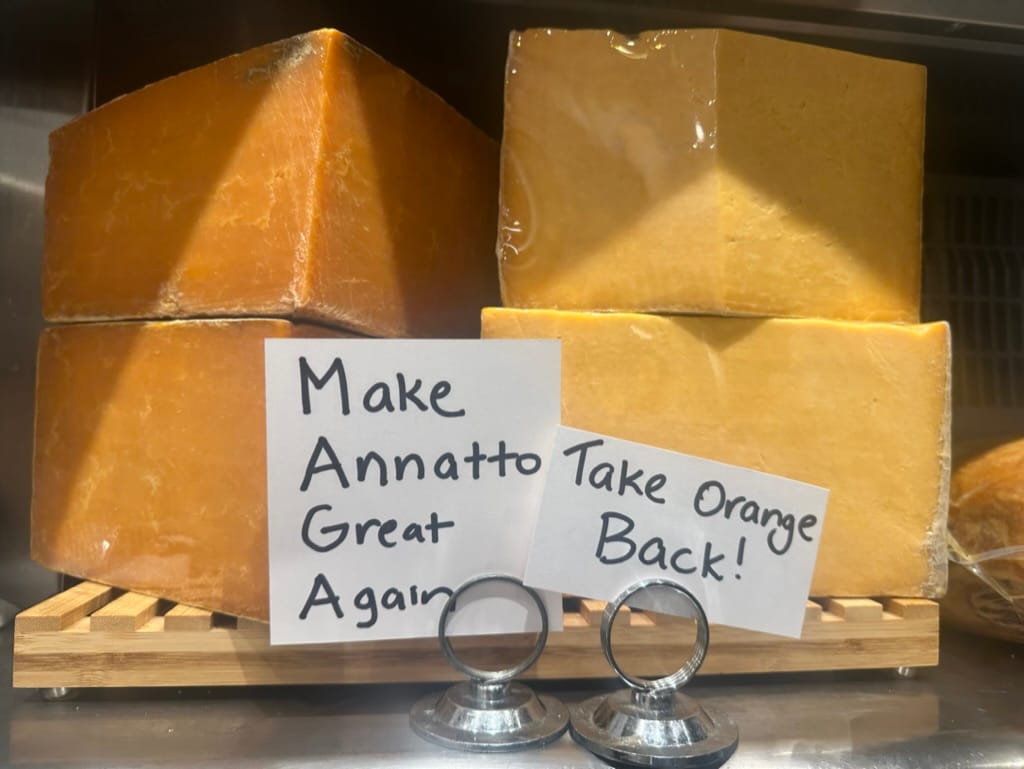
Take Orange Back! Make Annatto Great Again

A common refrain we hear as cheesemongers: “I don’t want any of that fake orange cheese!” I get it. Growing up in the 70s and 80s in the U.S., I know exactly the waxy, chemical-laden cheese they mean. Though, full confession: I’ll always have a soft spot for the Velveeta mac that my mom would make. And who among us hasn’t reached for that blue box with the powdered cheese packet in pinch? But that stuff is truly artificial. Ironically, it’s trying to echo cheeses that are naturally orange with annatto.

The orange comes from an additive, but it’s a natural one. It’s called annatto, made from the seeds of the achiote tree (Bixa orellana), native to the Americas. You can often find it in your local Latin American grocery store, sold for cooking or as a dye.

Annatto is Traditional

Traditionally, annatto shows up in cheeses like Cheddar, Red Leicester, and Mimolette, as well as one of our own homegrown American styles, Colby. It’s not the same as the orange on washed-rind cheeses, though. That color comes from bacteria that makes cheese stinky. According to The Oxford Companion to Cheese, even the humble slicing cheese Muenster gets a dip in annatto to mimic the funkier orange of Alsatian Munster.

So why pretend to be funky when you’re not, (I ask myself often.) Why add the color at all? There are lots of theories. Before annatto was known in Europe, British cheesemakers dyed their wheels with marigolds or ladies’ bedstraw. Some think it was to disguise the paler milk of winter, when cows ate hay instead of lush summer grass. (Has anyone ever seen a baby turn orange from eating too many carrots? My little brother did.) There’s also evidence it was used to mask the milk that had been skimmed to make butter, for profit and tax evasion purposes.

Orange Can Be Good

Whatever the reason, the practice stuck. Consumers came to expect that orange color, and cheesemakers obliged. These days, annatto doesn’t change the flavor much (except when you use A LOT, looking at you, Mimolette,) but it sure does look gorgeous on a cheese board.

Sources on Annatto:

The Oxford Companion to Cheese

Ned Palmer’s A Cheesemonger’s History of the British Isles

Post Script

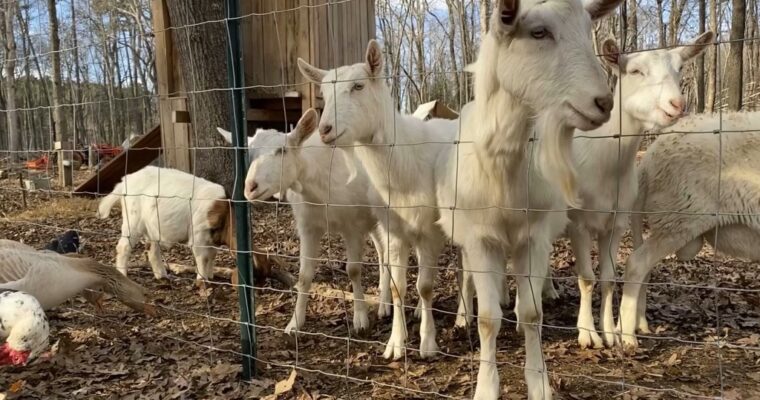
My partners Eglantine and Aritz don’t have anything to add to this post on annatto, as it mostly has to do with consumer behavior, which neither of them care about.

Cheese Judge

Cheese Judge

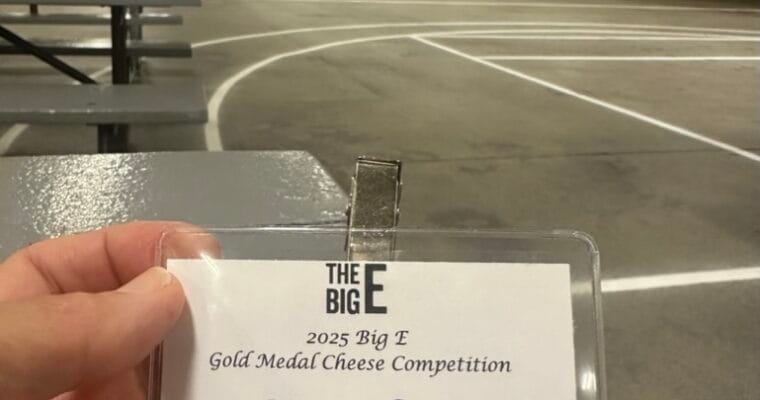
The Big E Cheese Judge In July, I got to be an aesthetic cheese judge for The Big E. As a cheese judge, I focused on the flavor, taste, and overall presentation of cheese. While I am still early in my journey to develop my 

About Crumb & Rind

About Crumb & Rind

About Crumb & Rind I’m Jennifer Tolliver, and I’m the editor of this website, and the public face of Crumb & Rind. I’m the one you’ll communicate with and see out and about. But rather than just talking about myself, I wanted to properly introduce 

British Cheese

British Cheese

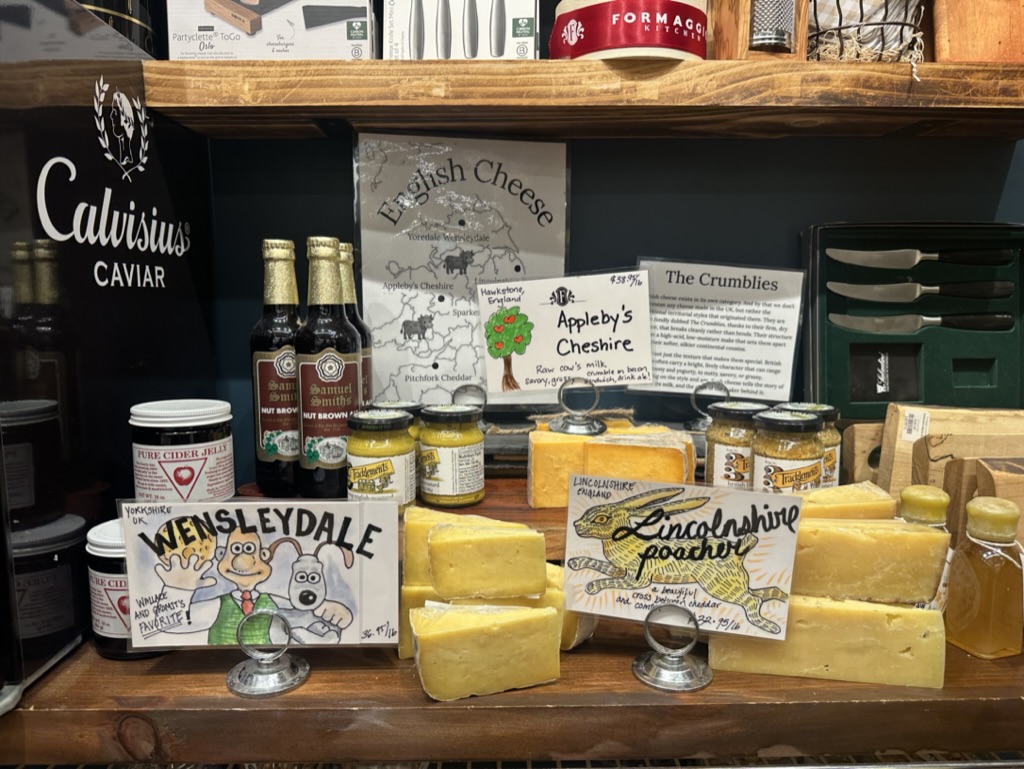
British cheese exists in its own category. And by that we don’t just mean any cheese made in the UK, but rather the traditional territorial styles that originated there. They are often fondly dubbed The Crumblies, (specifically Cheshire, Caerphilly, Wensleydale, and Lancashire,) thanks to their firm, friable texture, that breaks cleanly rather than bends. Their structure is from a high-acid make that sets them apart from their silkier continental cousins.

But it’s not just the texture that makes them special. British cheeses often carry a bright, lively character that can range from lemony and yogurty, to nutty, savory, or grassy, depending on the style and age. Each cheese tells the story of its place, its milk, and the craft of the maker behind it.

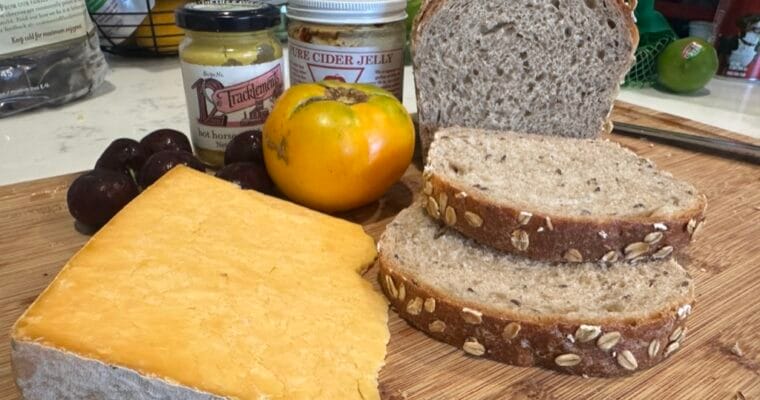
I love crumbly British cheese for snacking, for melting in a cheese toastie, or including on a well-rounded cheese board. They melt well because of their loose structure, but you’ll notice they don’t melt like a stretchy mozzarella. Their melt is a bit more creamy than stringy. A sandwich with a bit of bacon, caramelized onions, or strong English mustard, and you can’t go wrong. Or make a Welsh Rarebit with some dark ale and Worcestershire sauce.

British Cheese Today

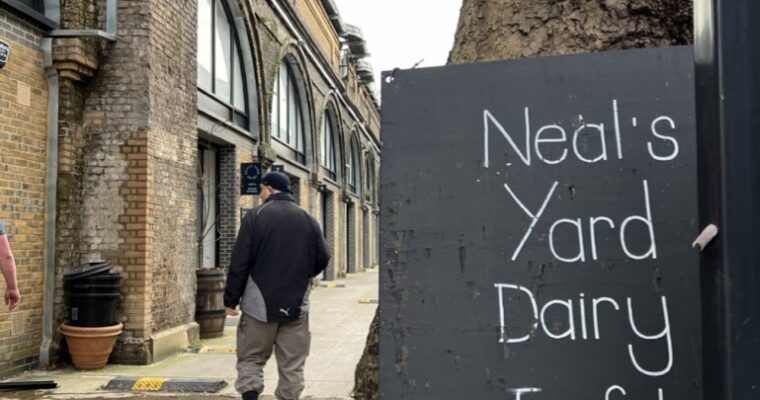
In the Twentieth Century, wartime rationing and a postwar preference for liquid milk nearly extinguished British farmhouse cheesemaking. While Cheddar became a global commodity (which we’ll discuss at length in another post,) other territorial cheeses faded into obscurity. Many of these traditional cheeses survived only as industrial shadows of their former selves. But thanks to a revival led by dedicated farmers, mongers, and affineurs, like Neal’s Yard Dairy, true British cheese is once again thriving. We’re delighted to offer a selection that honors this legacy. They’re bright, crumbly, and unmistakably British.

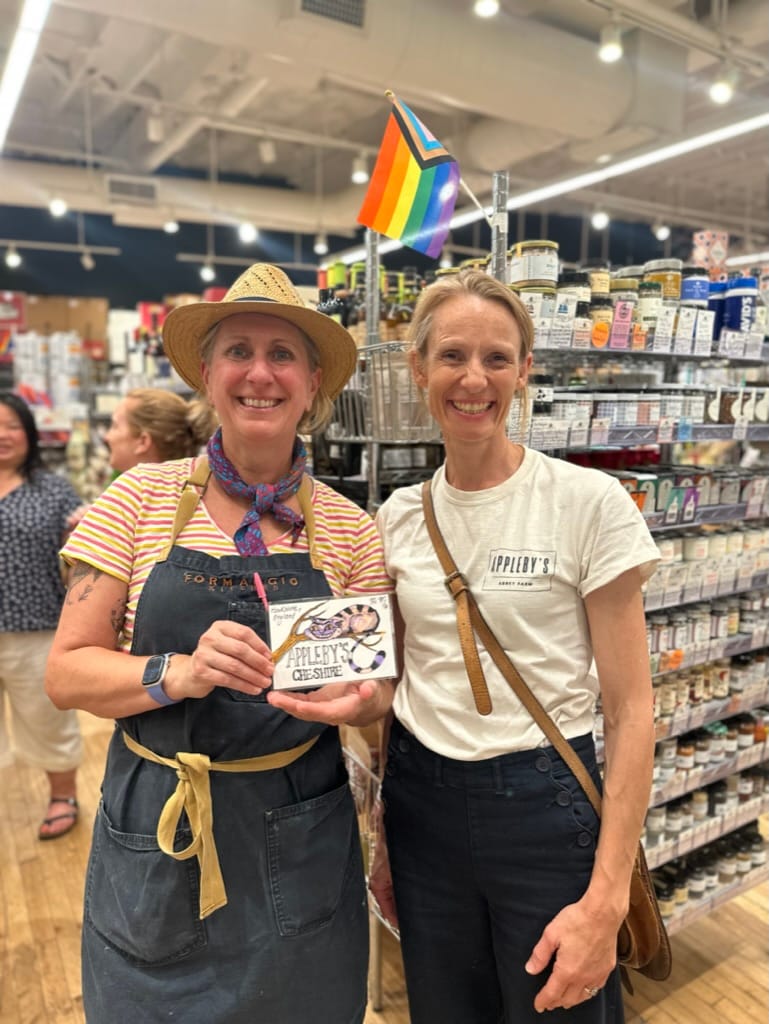
In subsequent posts, we’ll talk more about specific British Territorials. We’ll start with Cheshire, specifically, Appleby’s Cheshire. I had the honor of meeting Sarah Appleby when she came to visit Formaggio Kitchen with folks from Neal’s Yard Dairy in June of 2025. Cheshire is one of the oldest and popular cheeses in the British Isles, so it’s the perfect place to start.

Cilento

Cilento

The view from Roccadaspide

Neal’s Yard Dairy

Neal’s Yard Dairy

This is a love letter to Neal’s Yard Dairy. In January 2022, still in the grip of COVID-era precautions, I visited the Arches at Neal’s Yard Dairy in Bermondsey, London. Happily for me, my boss at Boxcarr Handmade Cheese, Sam Genke, introduced me to David 

About Jennifer Tolliver

About Jennifer Tolliver

Hi, I’m Jennifer Tolliver. and I’m excited to share my latest adventure with you. Welcome to the Crumb & Rind journey!

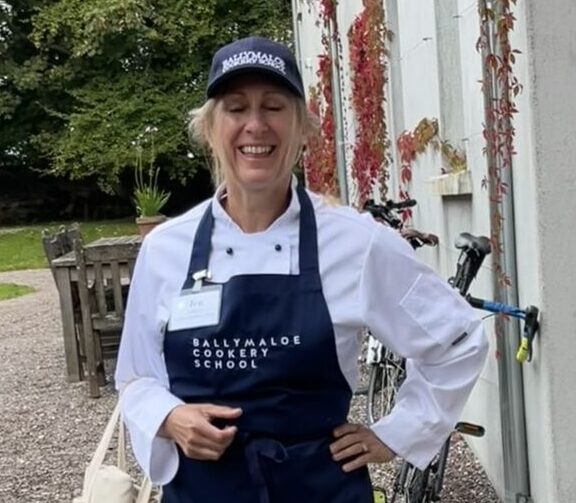
It’s been quite a journey already! Before all this, I was a lawyer, a Navy linguist, a stay-at-home mom, a bartender, a farmer, a baker, a cheesemaker at Boxcarr Handmade Cheese, a cidery sales rep, and a farmers market vendor. In meantime, I studied mushroom cultivation, permaculture, foraging, and completed the 12 week course at Ballymaloe Cookery School. These days, I am behind the cheese counter at Formaggio Kitchen, in Cambridge, Massachusetts.

Joining Crumb & Rind is the natural next chapter in a life built around curiosity, connection, and craft. As a matter of fact, I have always wanted to combine all of my interests, and share it with others. Nowadays, I am excited to plan classes that revolve around yummy snacks, but weave in science, history, art & crafts, literature, magic, and a bit of mischief.

As far as food people go, I am and will always be a bit of a novice. I am not someone who was born being able to pick out flavors in a wine or cheese. In fact, it’s where I struggle the most. Sometimes the food world can be very intimidating, and I hope to make it less so. As a young mom, whether I was a student or busy working, I mostly cooked the same few dishes for my kids, with varying success. I’ve improved, but I very much relate to the weeknight cooks out there. But I have always loved good, wholesome food.

Cheese isn’t just food, it’s human resilience and pleasure combined. During every class I teach, I pay homage to those who came before. I believe in cheese boards that honor the makers and farmers behind each wheel. I love their history and culture, and in giving people somewhere to taste something real.

If you’d like to learn more, take a class, or talk about just about anything, I’d love to hear from you. Please fill out the form below, and we’ll be in touch!
Name
A Crumb & Rind Welcome

A Crumb & Rind Welcome

We wish to welcome you to Crumb & Rind! We host classes and seasonal feasts, pairing artisan cheese with everything from tarot to textile arts. Jennifer, our traveling lecturer, storyteller, and sharer of snacks would love to put together a thoughtful spread of cheese, charcuterie,