Tag: Artisan Cheese

Yoredale Wensleydale

Yoredale Wensleydale

Yoredale from Curlew Dairy in the Yorkshire Dales, is real farmhouse Wensleydale, brought back from extinction. For many people, Wensleydale means the industrial blocks in the supermarket, studded with cranberries at Christmas. Yoredale shows what the cheese was meant to be. It’s one of my 

Kirkham’s Lancashire

Kirkham’s Lancashire

Kirkham’s Lancashire is an English Territorial, one of the Crumblies, and one of my favorites. It’s buttery, tangy, and as one of my colleagues said, “fluffy.” However, when people see Kirkham’s Lancashire on the counter, they figure it’s another cheddar. With this post, we’re hoping 

Cheddaring

Cheddaring

Often I hear, “Oh, I just like boring cheese like cheddar” or if I suggest a cheddar to try, they look disappointed. But it’s a fantastic cheese! Cheddar is the cheese most of us know by name, but very few of us truly know. When we say “cheddar,” we might mean anything from a clothbound wheel aged in a stone cellar to a shrink-wrapped orange slice from the supermarket. At its core, though, cheddar is not a flavor, it is a method for making cheese! (In another post, we’ll talk about capital “C” Cheddar from the West Country of England, but for now we’re just talking about lower case “c” cheddar. It’ll make sense soon, I promise!

Starting at the Beginning

Cheese begins as milk, warmed and inoculated with cultures. For cheddar, mesophilic cultures are used, and they like it warm, but not hot. These microbes feast on lactose, producing lactic acid, and begin the transformation from milk into curds and whey. It’s the same as when lemon lands in milky tea: acid makes the proteins pull together.

Eglantine: Aye, this is where it all begins. Some makers use a packet of cultures, others save a ladle of whey from yesterday’s batch, like a sourdough starter. And if the milk’s raw, it’s already carrying a good share of its own microbes from the farm. That’s why each cheddar tastes a bit different, even when the recipe’s the same. You can’t pull the curd away from the land it comes from.

Rennet comes next, helping the casein proteins bond into a springy mass. After resting, the curd is cut into small pieces to let the whey escape. The finer the cut, the drier and firmer the final cheese. Cheddar curds are stirred and gently heated, removing even more moisture. The less water and lactose left behind, the safer the cheese will be to age. Microbes love damp, sugary environments, and cheddar’s healthy future depends on denying bad microbes a place to grow.

Aritz: This is control. By chasing out moisture, they shut the door on spoilage and give power to the microbes they want. 

Cheddaring

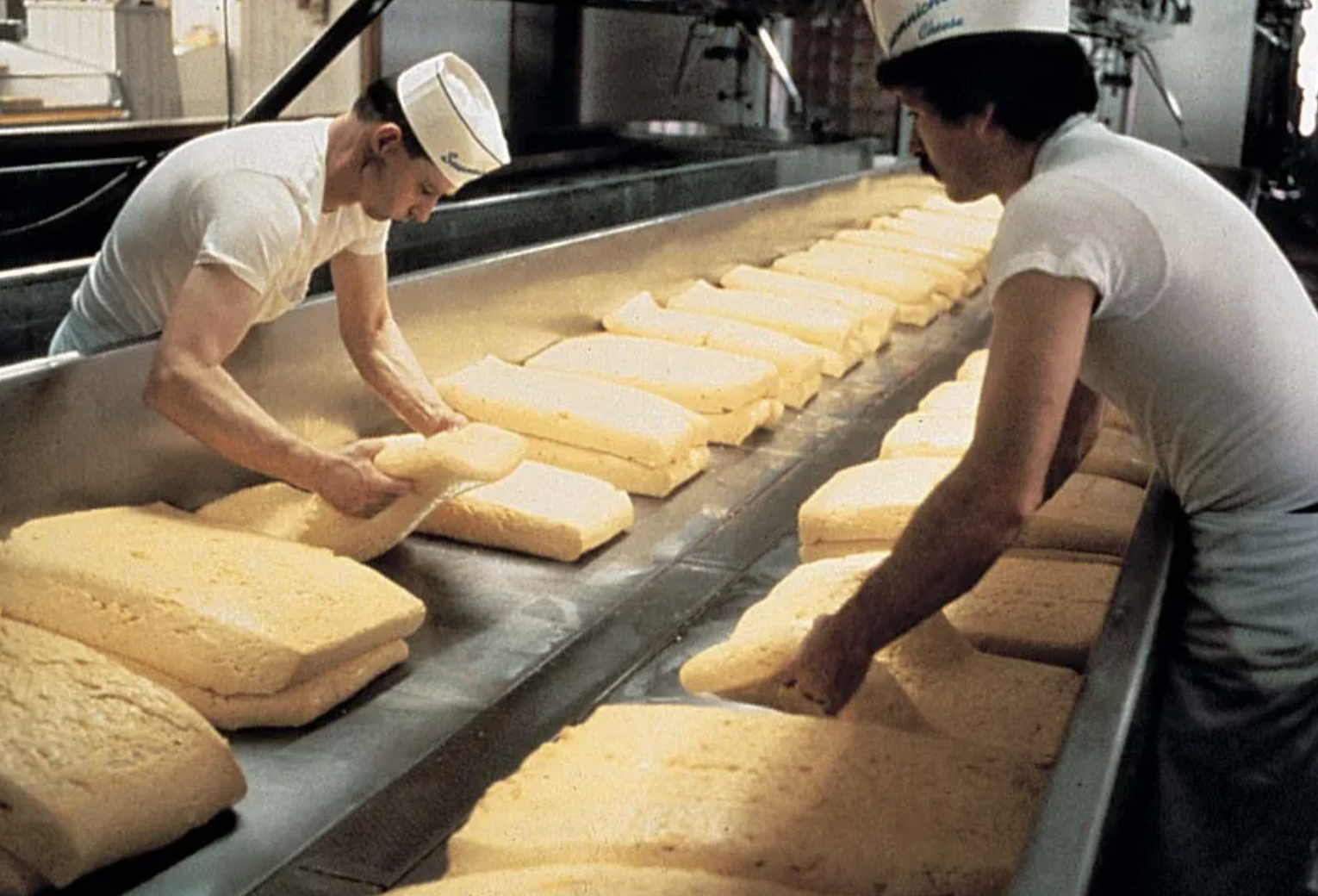
And then comes cheddaring! The curds are cut into slabs, stacked, cut apart, and stacked again. Over and over, the cheesemaker lifts, flips, and presses the warm curd. Each repetition drives out more whey and reshapes the proteins, giving the curd its distinctive layered texture. It’s heavy, physical work, more like kneading bread or stretching mozzarella than anything else in cheesemaking. When the curd is ready, it is milled into small pieces and salted by hand.

Eglantine: When you’re stacking and turning those slabs, you can feel the curd firming under your hands. It’s hard work, but that’s where cheddar gets its backbone. By the time it’s milled and salted, it’s ready to stand up to pressing and months in the cave.

Aritz: Don’t forget the labor. Microbes do the heavy lifting, but for the humans, cheddaring is back-breaking work. Industrial block cheddar is cheap because machines do the lifting and stacking. In farmhouse dairies, it’s still people’s bodies doing it. If you value the cheese, you value their work.

The Finish

Salted curds are then pressed into hoops, where they knit into solid wheels under heavy weight. Once out of their molds, the cheeses are ready for aging. Cheddar can be aged months, sometimes years.

What we’re used to, even in the US and UK (the cheddar nations) are the block cheddars. Instead of being aged in caves, with natural or clothbound rinds, they are vacuum sealed. They retain a bit more moisture and do not develop the earthy flavors of a cheddar that has aged in a cave. Some of them are quite good, and there are artisanal choices. If you are able, I encourage you to try the less industrial versions.

Cheddaring transforms a simple curd into something sturdy, complex, and built to last. It is a style of making that spread from Somerset across the world, but always tied to the unique act of stacking slabs of curd, again and again, until the milk becomes something greater.
Blue Cheese Family

Blue Cheese Family

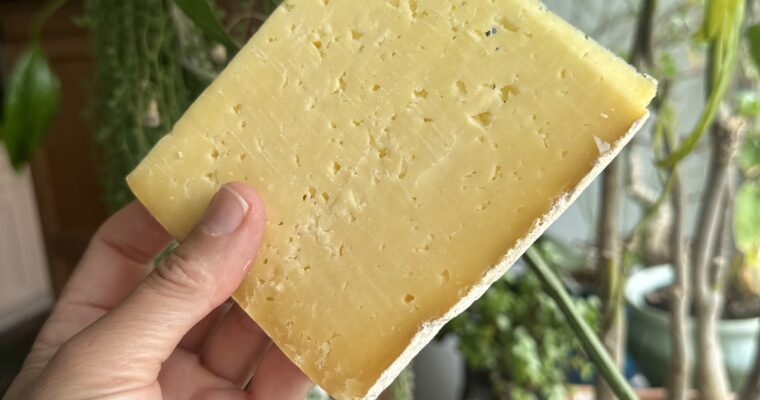
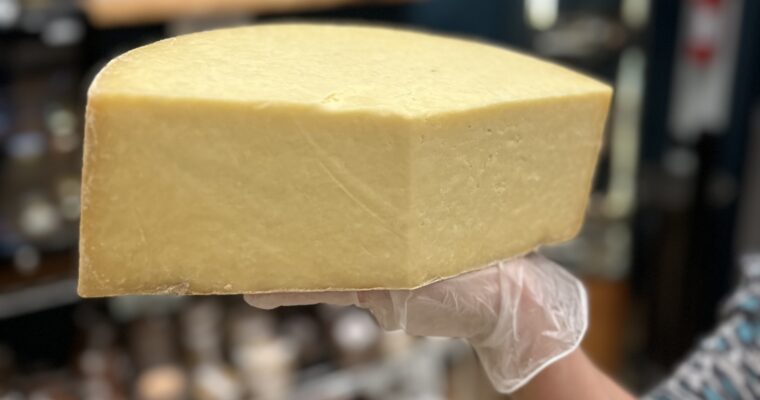
Do not be afraid! When I’m on the cheese counter at Formaggio Kitchen, helping a customer put together a board, I always ask if there are any cheeses to avoid. The second most common answer is “Blue cheese!” (The most common is “Nope!”). I understand 

Our Founders

Our Founders

It is time to more fully introduce our founders, Eglantine Crumb and Artiz Rind. As I mentioned in a previous post, there’s a bit of hesitation here. I’ve got two reasons. One is respect for their privacy. Two is that I’m not sure people will 

Boxcarr Handmade Cheese – Rocket’s Robiola

Boxcarr Handmade Cheese – Rocket’s Robiola

Where I Began

This post about Boxcarr Handmade Cheese and their Rocket’s Robiola will be a bit longer and sentimental compared to our other posts. I wrote this post without help from Eglantine or Aritz, since it is where my cheese journey truly began. I was a fan of cheese before, of course. Someone gave me The Oxford Companion to Cheese for Christmas. And when my daughters were young I would treat myself to little offcuts from the Whole Foods cheese counter. I loved everything I brought home, but I didn’t think too much about it. It was not until Boxcarr that I began to understand cheese. (This post will be updated with better cheese pics soon!)

In late 2019, while still running our farm, I saw a post on Instagram that Boxcarr Handmade Cheese was hiring. Since I already loved their Winsome and Cottonbell, I applied for the dishwashing job. I thought it would be a fun off-farm role. Soon I was also washing cheeses in the aging rooms, and eventually I stepped into a cheesemaker’s role. I first learned robiola. To be honest, before Boxcarr I had never even heard of robiola, so it was also the first cheese I researched in earnest.

Gratitude, Magic, and Cheese

During training, Sam showed me the magic and reverence I now try to bring to the cheese counter and classroom. When four of us gathered around the vat to quickly cut the Redbud curd into tiny bits, it felt like tending a witches’ cauldron. It never felt mundane. It always felt like magic. When training me to cut the robiola curd, Sam told me that monks would bless cheese as they made it. She suggested that it would not hurt to say, or even just think, a few words of gratitude for the animals and farmers who brought us the milk. That sense of gratitude has stayed with me. It is essential to the enjoyment of life and entirely appropriate when speaking of cheese.

Cheese in the hot room
Behind me, whey draining from newly moulded cheese

The Boxcarr Children

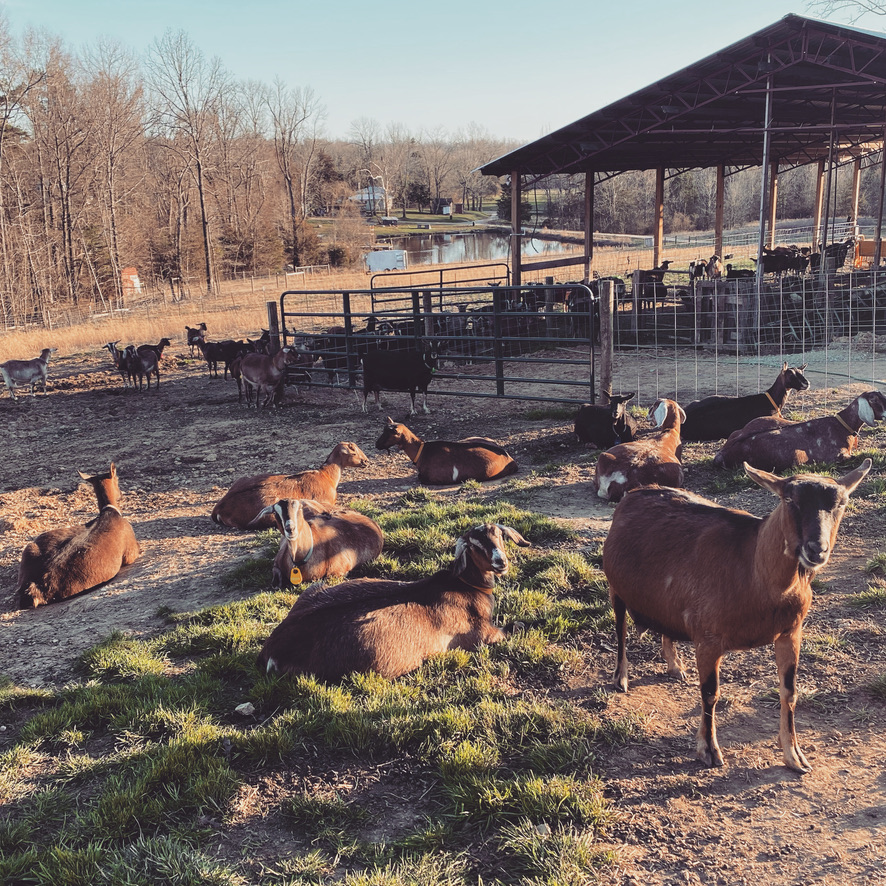
The Genke siblings founded Boxcarr together with their families. Sam was a respected cheesemaker long before starting Boxcarr. Her brother Austin, a chef and graduate of the Culinary Institute of America. His wife Dani, who runs the goat farm and serves as creative director, rounded out the team. How all three of them manage to be so talented I do not know.

Beyond their skill, they also have tremendous hearts. During Covid they shifted their production and donated farmers’ cheese to food pantries and schools. If you were an out-of-work service worker, you could stop by and pick up a box of beautiful cheese, often with a few vegetables from local farms tucked in. I often think of them when I think about why it matters so much to support local farmers and artisanal food producers. 

Robiola in Italy

Robiola itself is one of Italy’s oldest cheeses, stretching back to Roman times. The name most likely comes from the town of Robbio in Lombardy, though today robiola is most closely tied to Piedmont and Lombardy. These were places of small, mixed farms. Families kept a cow or two, some sheep, maybe a goat, and cheeses were often made from whatever milk was on hand, resulting in mixed-milk wheels.

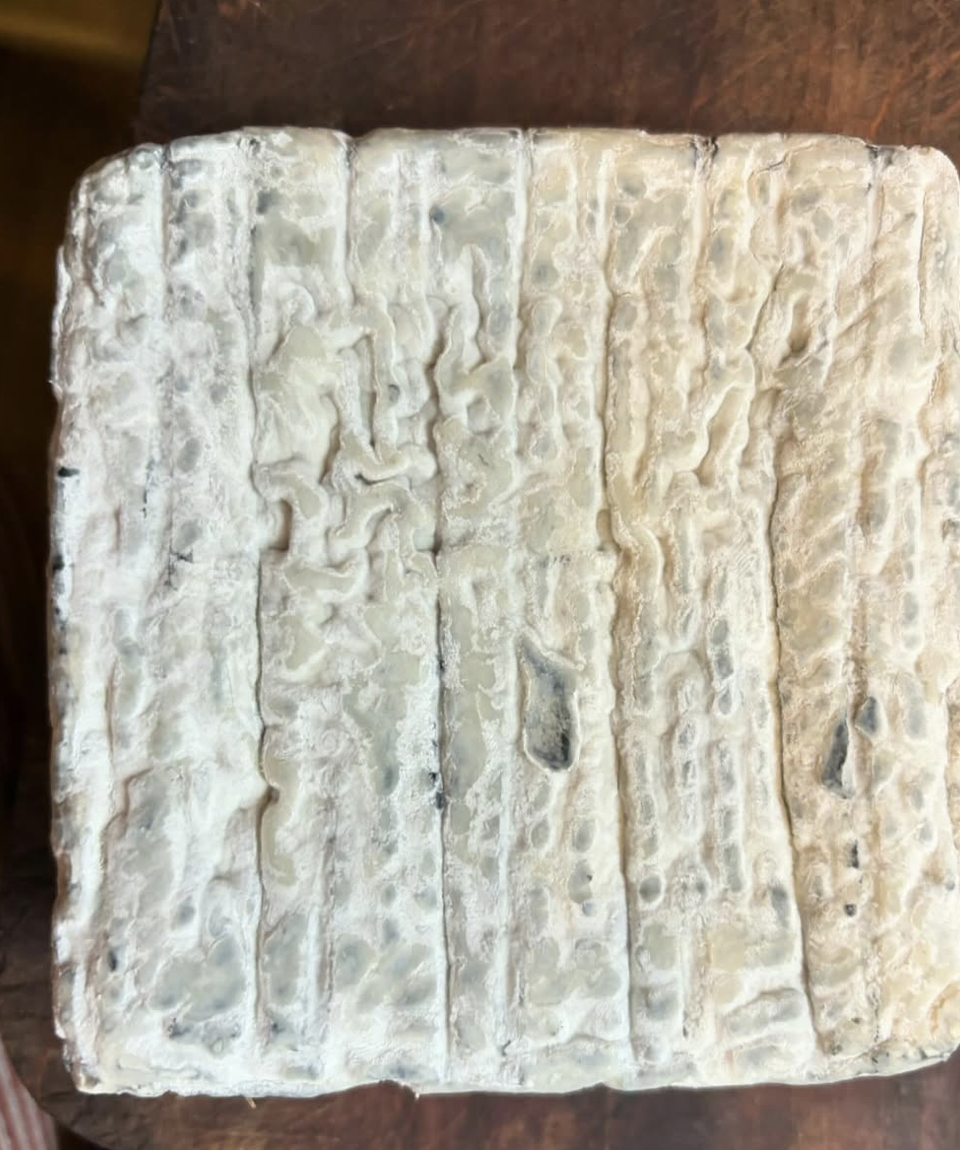
Unlike the long-aged cheeses of northern Europe, robiolas do not take long to mature. Their small format made them easy to sell at local markets, and their delicate rinds and creamy interiors suited the rhythms of farm life. Some were wrapped in cabbage leaves, others bloomed with a fine white mold, and some developed the wrinkly geotrichum coat that we still see today. Robiola was a true farmstead cheese, shaped by necessity, place, and tradition.

Rocket's Robiola

Young Rocket’s Robiola

Rocket’s Robiola

American cheesemakers are not bound by the same naming rules and traditions as their European counterparts. Because North America did not have its own indigenous dairy culture, most artisan cheeses here borrow Old World styles. For example, the bloomy-rinded triple crèmes of Normandy inspired Cowgirl Creamery’s Mt Tam, and the ash-ripened goat cheeses of the Loire Valley inspired Humboldt Fog from Cypress Grove. They have become distinct in their own right. Similarly, most of Boxcarr’s cheeses draw on Italian inspiration.

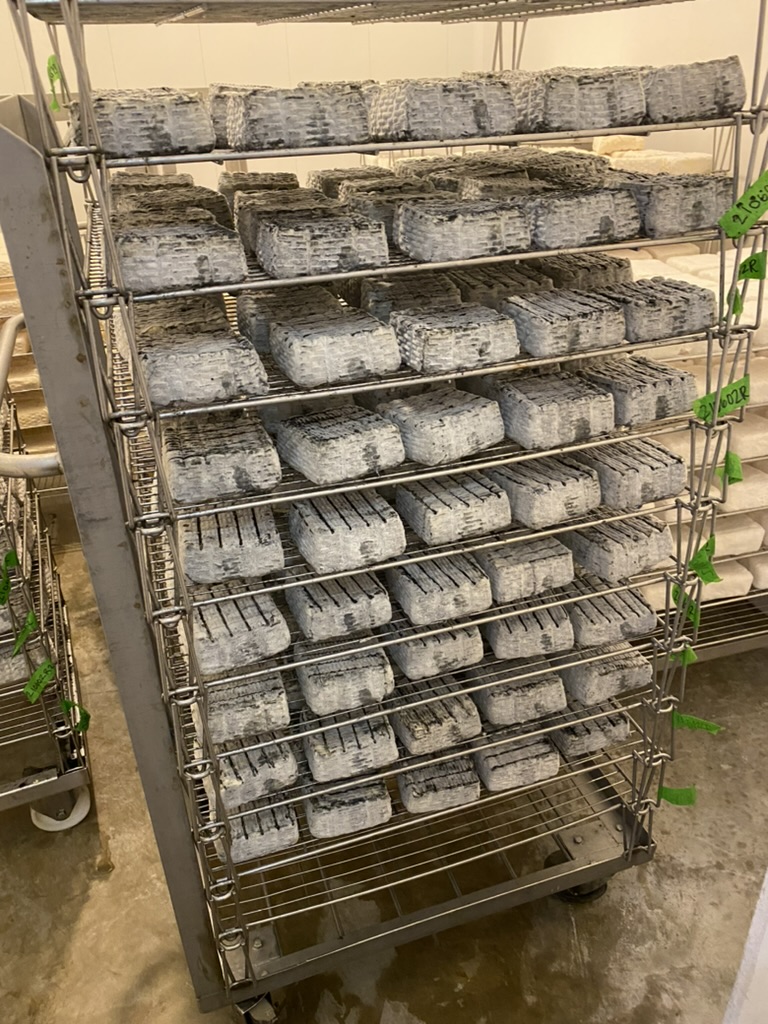
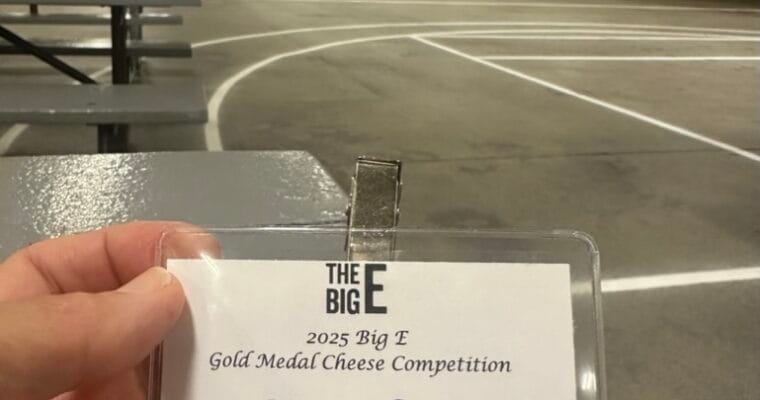
Boxcarr Handmade Cheese and their Rocket’s Robiola nods to that heritage, including the Genkes’ own Italian roots, but it also stands apart as an American original. When I was judging at the Big E, one of my fellow judges said Rocket’s Robiola was his favorite American Original. The cheesemaker gently cuts and jiggles, never stirs the curd. This cow’s milk cheese develops a wrinkly, ashed geotrichum rind. The ash is not traditional for a robiola, but since it slightly lowers the surface pH, it encourages that beautiful rind to flourish. Very clever! It also looks striking on a cheese board. Despite being an all-cow cheese, Sam named the cheese after one of her first goats, Rocket.

Boxcarr goats
Boxcarr goats

How to Eat It

And now, a whole post without a word about flavor or pairings! It’s definitely not an afterthought, I just had to get all my feelings out!

Rocket’s Robiola has a supple, luscious paste with flavors that begin lactic and yogurty, then deepen into earthy, mushroomy, and slightly tangy notes as it ripens. The rind adds a faint nuttiness and a gentle contrast to the cream beneath.

For pairings, try:

  • Drinks: Sparkling wine, crisp dry cider, or a minerally white like Vermentino.
  • Food: Fresh stone fruit or berries, a drizzle of wildflower honey, and slather it on charred sourdough bread.
  • Boards: Its ashed-rind makes it a natural centerpiece. Slice into it and let the gray-and-white contrast shine. 

Appleby’s Cheshire

Appleby’s Cheshire

It’s our first cheese post! Here we go! Appleby’s Cheshire comes from Hawkstone Abbey Farm in Shropshire, England. The Appleby family founded the farm in 1952, and now Paul Appleby and his wife Sarah carry on the work, with help from their five children. They 

British Cider and British Cheese

British Cider and British Cheese

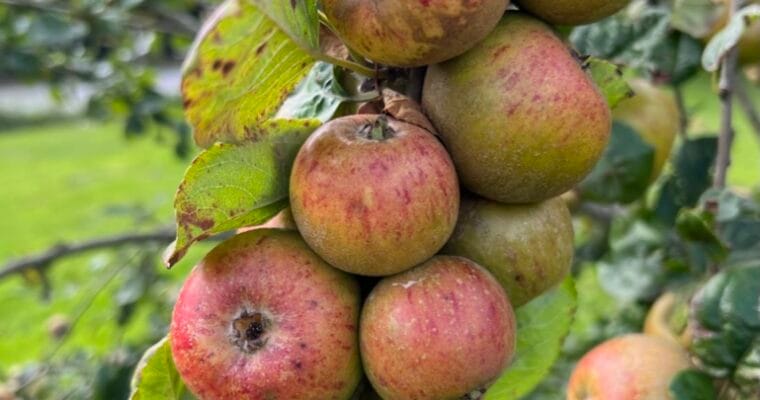
I’m teaching a British Cheese and Cider class this weekend, so I thought I’d share a little about why I’m so excited about it. While I’m currently the British Cheese Buyer at Formaggio Kitchen, I used to work at a natural cidery, Botanist & Barrel. 

Annatto

Annatto

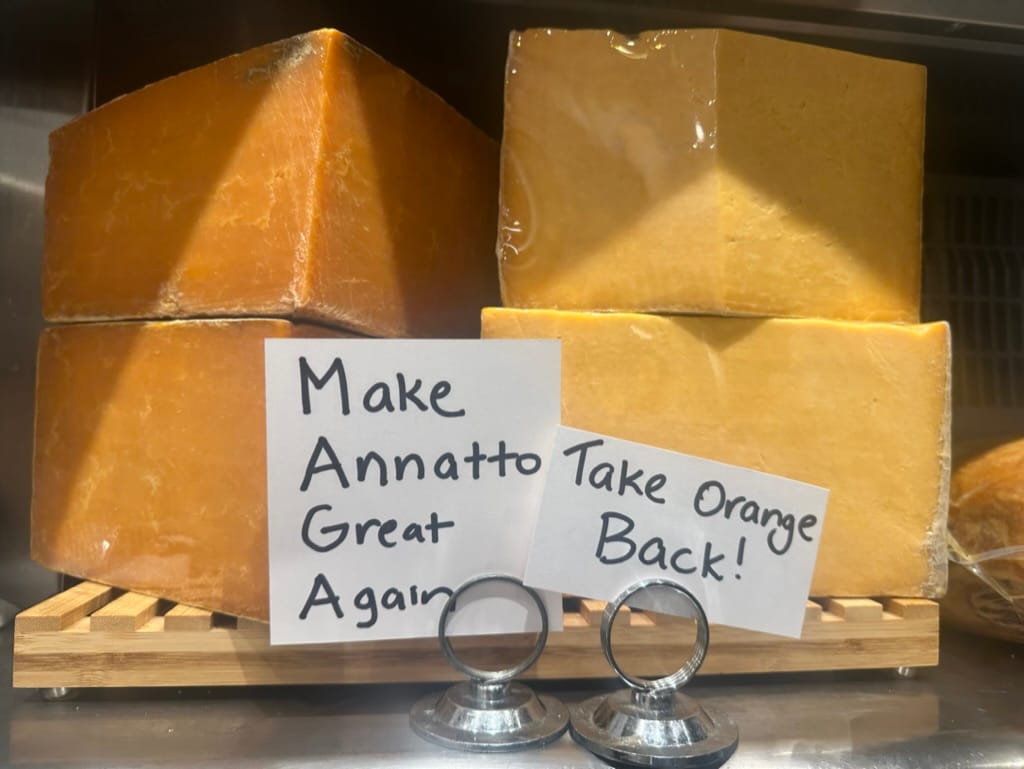
Take Orange Back! Make Annatto Great Again

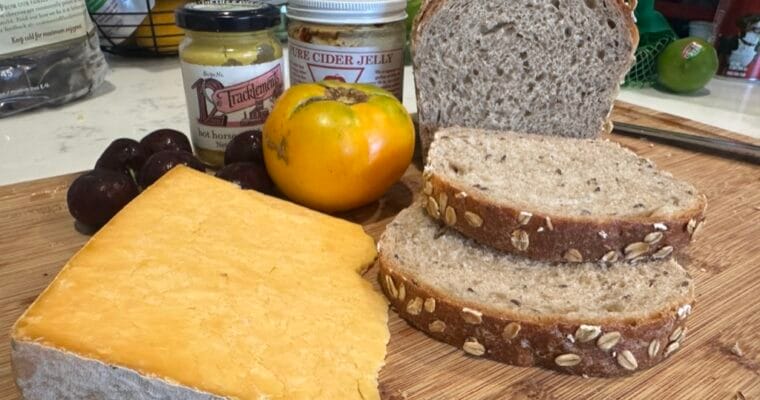
A common refrain we hear as cheesemongers: “I don’t want any of that fake orange cheese!” I get it. Growing up in the 70s and 80s in the U.S., I know exactly the waxy, chemical-laden cheese they mean. Though, full confession: I’ll always have a soft spot for the Velveeta mac that my mom would make. And who among us hasn’t reached for that blue box with the powdered cheese packet in pinch? But that stuff is truly artificial. Ironically, it’s trying to echo cheeses that are naturally orange with annatto.

The orange comes from an additive, but it’s a natural one. It’s called annatto, made from the seeds of the achiote tree (Bixa orellana), native to the Americas. You can often find it in your local Latin American grocery store, sold for cooking or as a dye.

Annatto is Traditional

Traditionally, annatto shows up in cheeses like Cheddar, Red Leicester, and Mimolette, as well as one of our own homegrown American styles, Colby. It’s not the same as the orange on washed-rind cheeses, though. That color comes from bacteria that makes cheese stinky. According to The Oxford Companion to Cheese, even the humble slicing cheese Muenster gets a dip in annatto to mimic the funkier orange of Alsatian Munster.

So why pretend to be funky when you’re not, (I ask myself often.) Why add the color at all? There are lots of theories. Before annatto was known in Europe, British cheesemakers dyed their wheels with marigolds or ladies’ bedstraw. Some think it was to disguise the paler milk of winter, when cows ate hay instead of lush summer grass. (Has anyone ever seen a baby turn orange from eating too many carrots? My little brother did.) There’s also evidence it was used to mask the milk that had been skimmed to make butter, for profit and tax evasion purposes.

Orange Can Be Good

Whatever the reason, the practice stuck. Consumers came to expect that orange color, and cheesemakers obliged. These days, annatto doesn’t change the flavor much (except when you use A LOT, looking at you, Mimolette,) but it sure does look gorgeous on a cheese board.

Sources on Annatto:

The Oxford Companion to Cheese

Ned Palmer’s A Cheesemonger’s History of the British Isles

Post Script

My partners Eglantine and Aritz don’t have anything to add to this post on annatto, as it mostly has to do with consumer behavior, which neither of them care about.

Cheese Judge

Cheese Judge

The Big E Cheese Judge In July, I got to be an aesthetic cheese judge for The Big E. As a cheese judge, I focused on the flavor, taste, and overall presentation of cheese. While I am still early in my journey to develop my