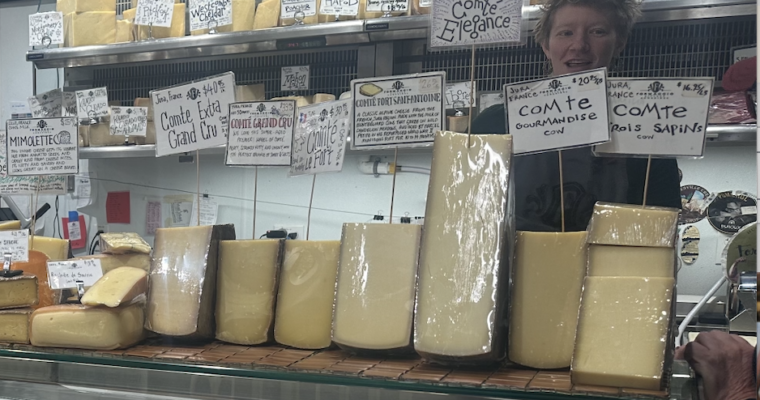
Now that we’re back from our winter break, it’s time to start the year with the heavyweights. It is still snowing as I write this, and there is no better “snow day” cheese than a cooked-curd Alpine. The two neighbors, Swiss Le Gruyère AOP from …
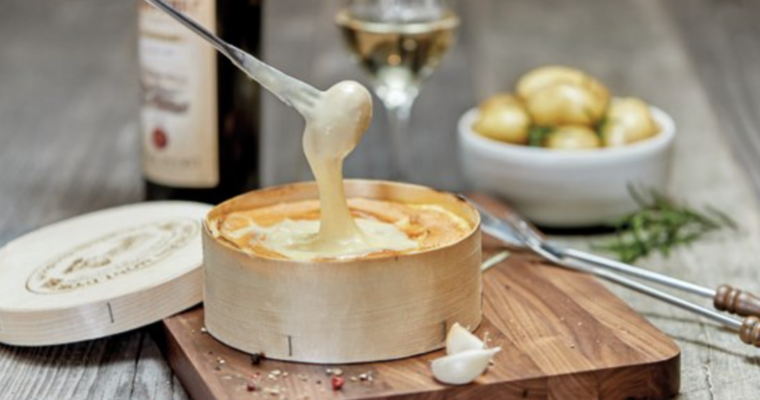
The Cheese for the Coldest Months Vacherin Mont d’Or is the ultimate holiday season cheese, and that has less to do with marketing than with timing. It is made in the colder months, when alpine herds have come down from high pastures and milk is …
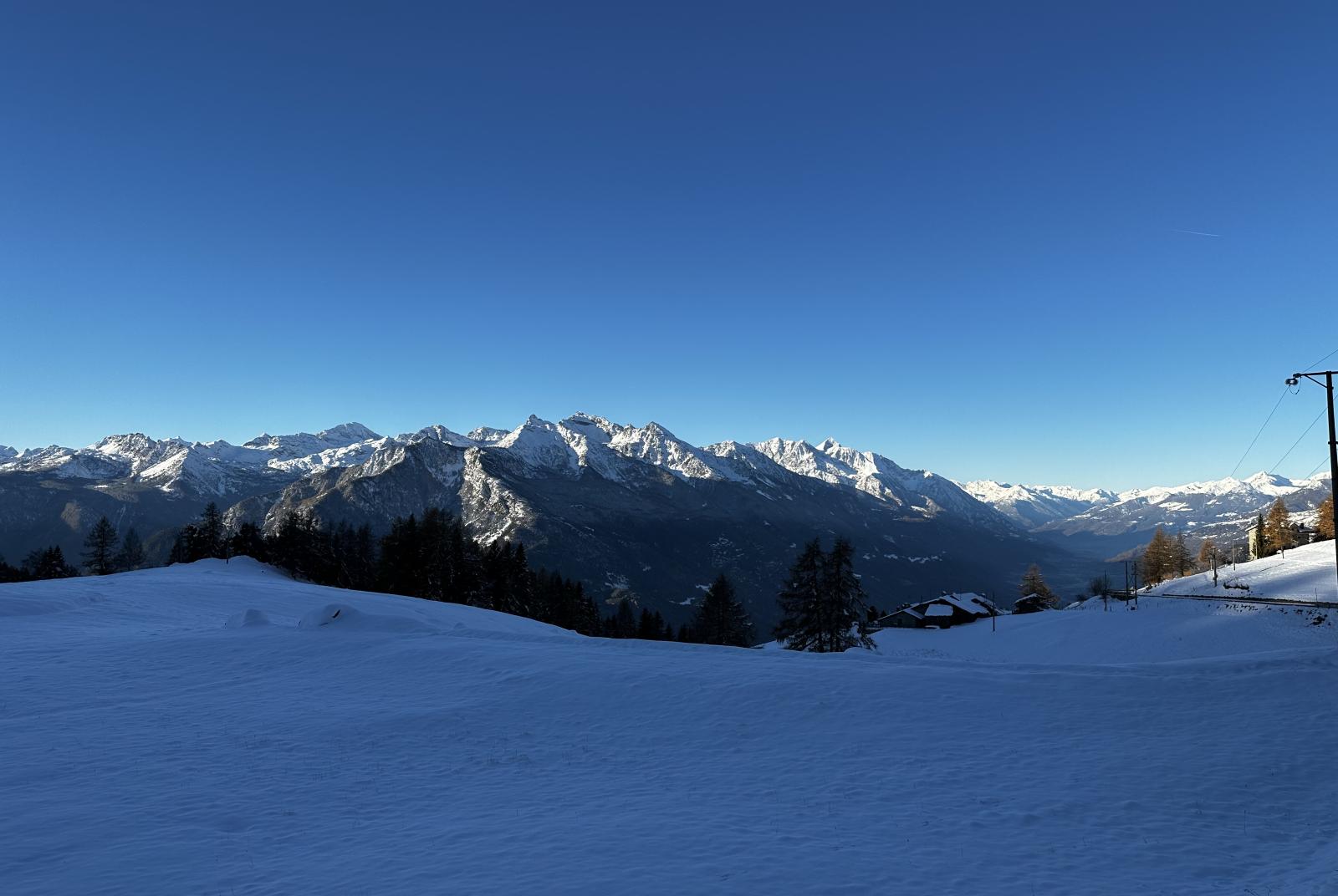
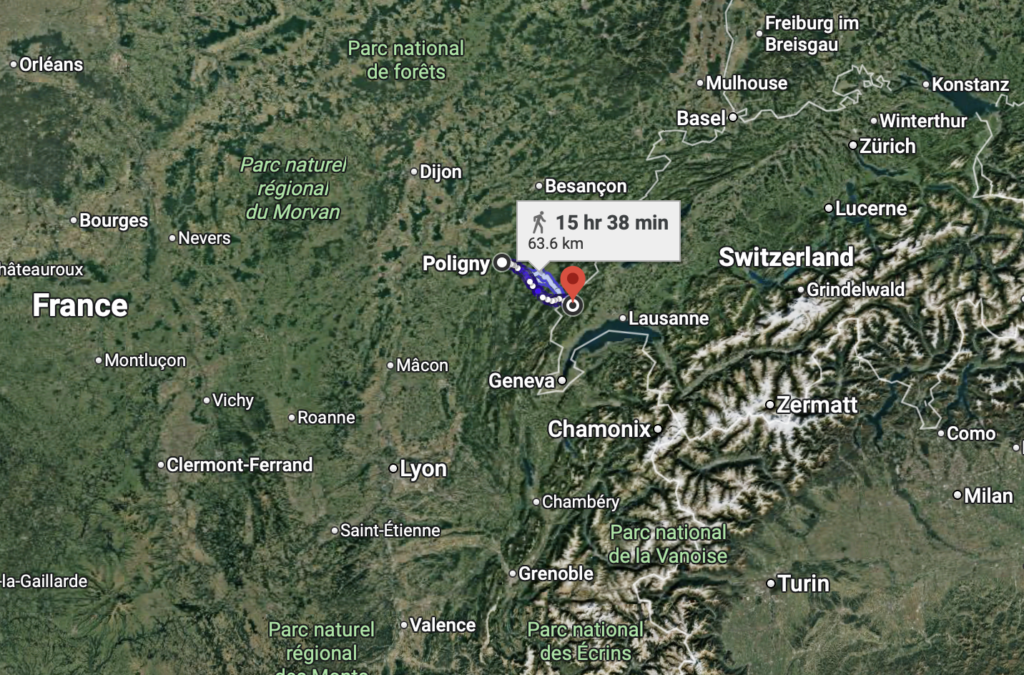
Eglantine Crumb’s Field Notes Full Moon, Snow Settled Vallée de Joux, Jura Near the French-Swiss Border
I’ve been in the Jura for a time. How much time? I don’t know. But I have a curious feeling of being very aware of time, and not especially bothered by it.
I came to this region to learn about Comté, but I stayed for Vacherin Mont d’Or. It was a day’s journey from the fruitière, so no trouble at all. Back in Yorkshire, I read about this cheese. I always meant to go into Leeds and track it down at a cheeseshop, but somehow never quite managed it. So I thought, if I was ever going to understand it properly, it had to be now.
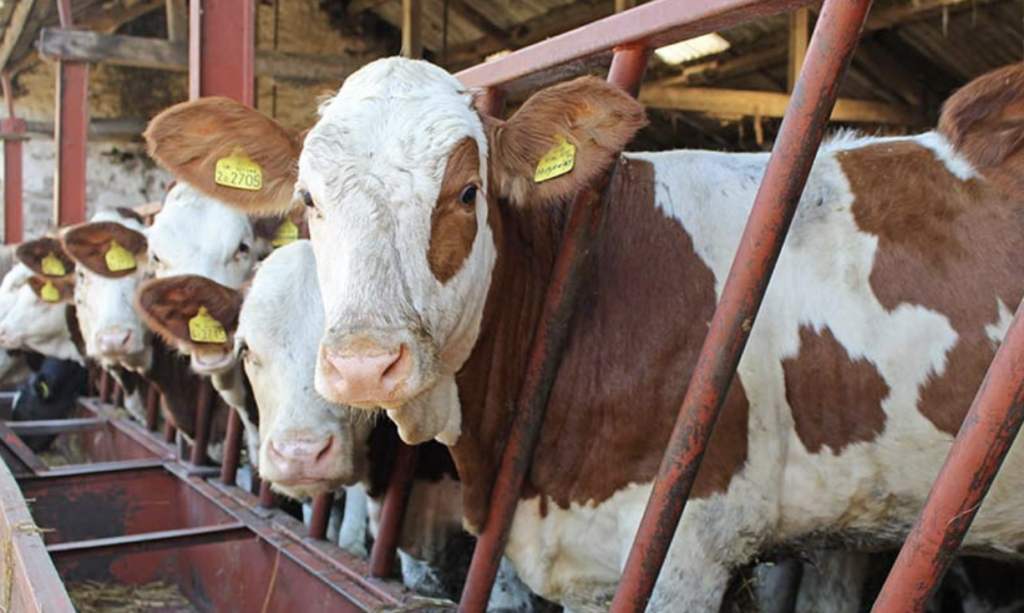
The cold air here seems to settle and stay. When farm work slows, people need something steady to occupy their hands, and so watchmaking took hold. It’s delicate, patient work. People here became attentive to measuring time. One of the Montbéliarde cows I met, all snug in her barn, told me she only cared whether it was winter or summer, and that there was no real need for watches (at least for cows) at all in the Jura!
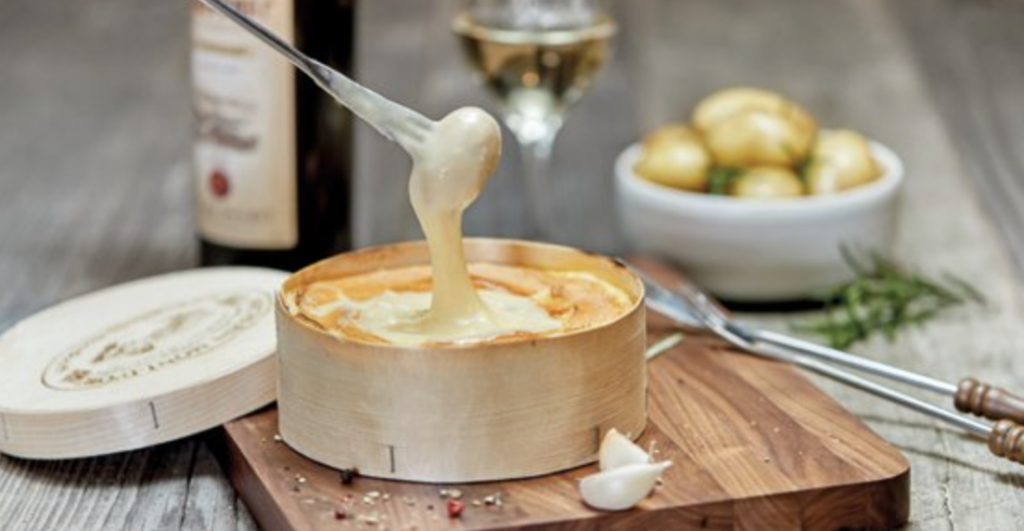
Vacherin Mont d’Or is also about time. It’s a cheese many people make a point of finding at Christmas, though here it feels more like part of the season than a celebration. It is an unusually rich cheese, made only from winter milk, wrapped in spruce bark and almost begging to be eaten fireside. Mont d’Or isn’t aged long, and its time is brief, but that’s the point. It must be eaten now, in the winter, though not with urgency. There is no need to rush.
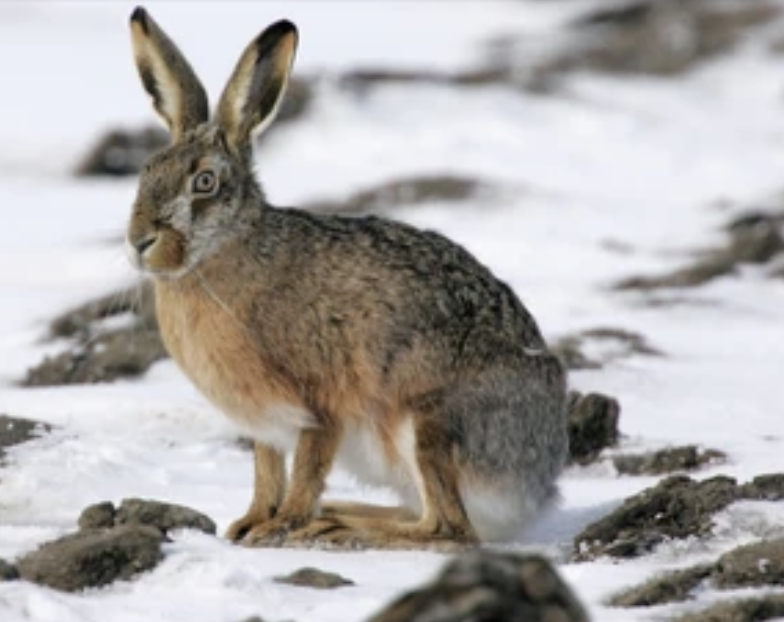
As usual, Aritz found me an excellent guide and host. Brune is one of the most patient hares I’ve ever met. I was feeling a bit lonesome before, missing Christmas at home. She takes winter as it comes. No complaining about the early darkness or the cold. No romanticizing it either. Just a steady acceptance of the present.
She has a collection of watch parts, which she returns to the watchmakers when they need them. She can’t quite explain why she finds them when they are lost, only that she comes from a long line of helpers. Sometimes she finds gloves or buttons and returns them too, but her favorites are the watch pieces, the springs and cogs. She keeps them carefully in a wooden cupboard alongside her other winter things.
Snow stayed on the ground for weeks, and the cold air didn’t seem to budge. Even in the Alps, with all the changes in altitude, you sometimes get a break from the worst of it. Here in the Jura, which is lower in elevation, the wind rips across the plateau, but the cold itself seems unmoved. Still, I’ve found it a welcome pause from my travels. No big parties in chalets here!
For my last night, we toasted a Vacherin with a bit of garlic and rosemary, paired with a Jura white wine. The wine was almost nutty, and not a bit of oak in it.
Later in the evening, after we had finished the Vacherin and our glasses of Chardonnay, Brune showed me one of her favorite ways of lengthening a winter night. Make a winter’s night longer, she said. I thought she was the maddest hare since Lewis Carroll. Suddenly Aritz appeared, not even bothering to say hello, acting as though he’d been there all along.
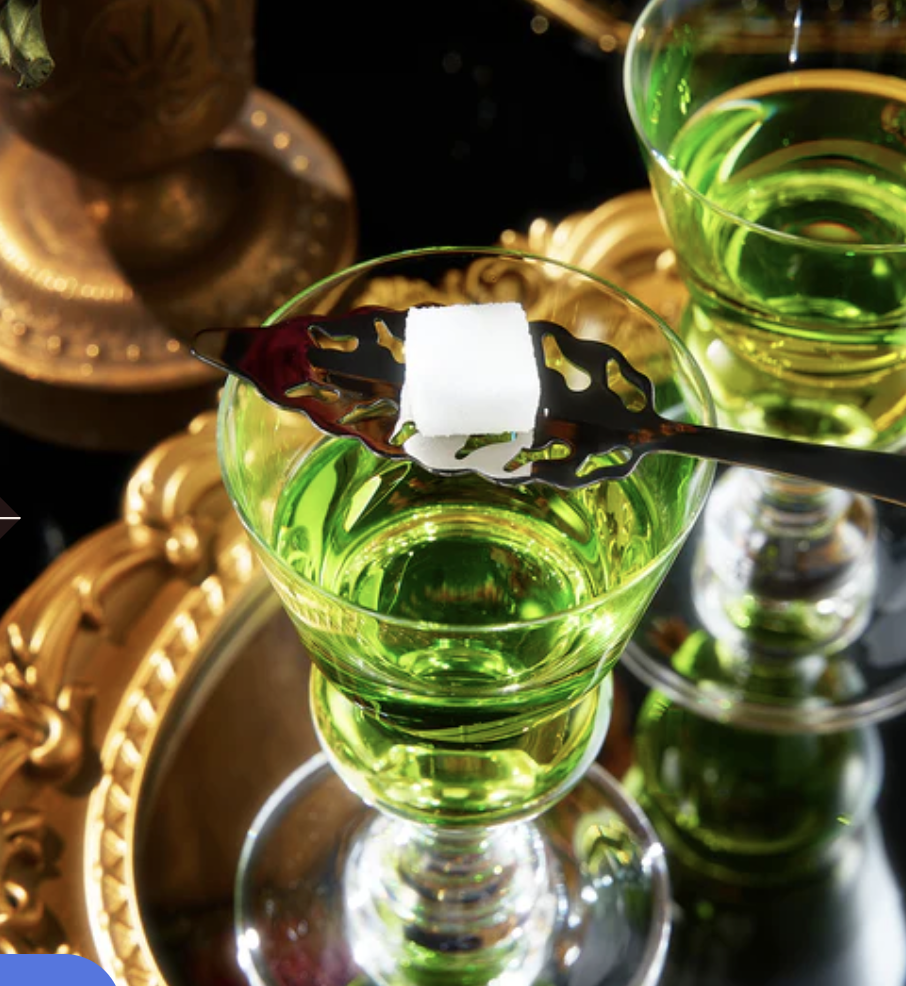
Brune pulled an antique bottle of green liquid and a small slotted spoon from the back of her cupboard of springs and cogs. She set out little glasses, each with a small bubble at the bottom. Then she said that’s how you know how much Absinthe to pour.
Brune explained that although the Absinthe was made in Pontarlier, technically in France these days, the herbal spirit was a part of life here. She poured just enough to fill the bubble, placed a sugar cube on the spoon over the glass, and let cold water drip slowly over it. Drip, drip, drip. Like a clock ticking. She said the important thing was not to rush. The green liquid slowly turned cloudy. Brune said the clouding is the “louche.”
I admitted I had always thought you lit the sugar cube on fire. She laughed and said that we were not in a Paris tourist trap! Aritz called me Toulouse-Lautrec, waved a hand dismissively, and said it’s a myth. And it burns off the aromatics. The flame makes the drink worse, not better.
Aritz explained that the stories about wormwood, thujone poisoning, and the green fairy were mostly nonsense. Absinthe had simply become too popular, and big business preferred people drinking wine instead. He said it was also a drink associated with bohemians and The Poor. It was easier to demonize a drink than to compete with it. It was his usual habit of blaming capitalist conspiracy for everything, but Brune politely agreed.
The lovely herbal bitterness and warmth were just what I needed. We talked late into the night. It’s still night now, actually. I swear it was hours, though perhaps we started early. I might have to nick one of them watches!
Eglantine Crumb, is a Yorkshire Cheesemaker who happens to be a Mouse. Not long ago, she found herself trapped in a shipping container was transported far from home. This is one of her journal entries.
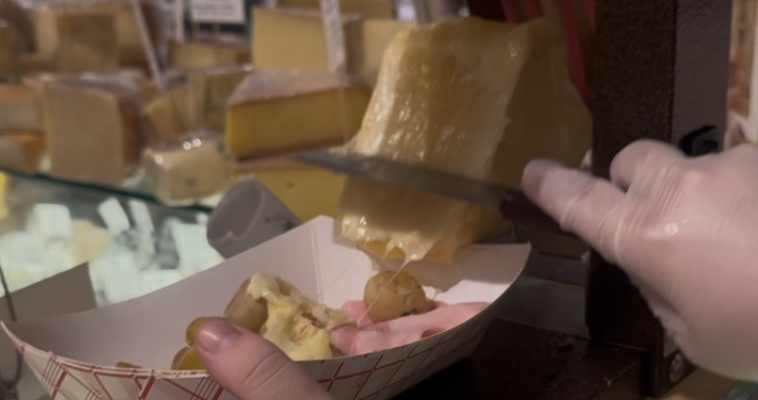
We’re serving raclette at the South End Formaggio Kitchen this winter season where I work as a Cheesemonger. Happily, I’m also teaching a class on raclette (and fondue) at the Formaggio Kitchen in Cambridge. We’re keeping it seasonal around here! What is Raclette? Raclette can …
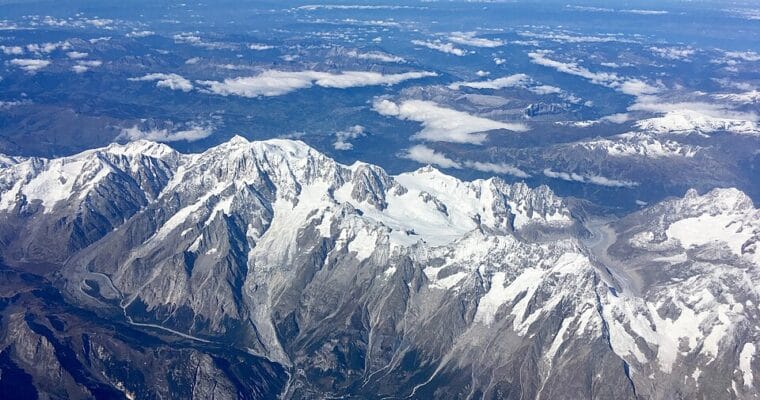
Eglantine Crumb’s Field NotesWaxing Rind Moon, Snow Deepening Chalet above Martigny, near La FoulyCanton of Valais, Switzerland On my last evening with Aritz in Aosta, we had what he called a simple meal, though it felt quite grand to me. We were on the banks …
It’s our first post in a while that’s actually about cheese. It’s November and I’ve just finished teaching class on Stilton and Port, the perfect duo for these cold nights. They’re a classic pairing, and I thought I’d write about them together. What I realized, though, is that the post became extremely long, so I split it in two. There’s just so much to say! So let’s get started!
British Cheese Delivery
Stilton PDO
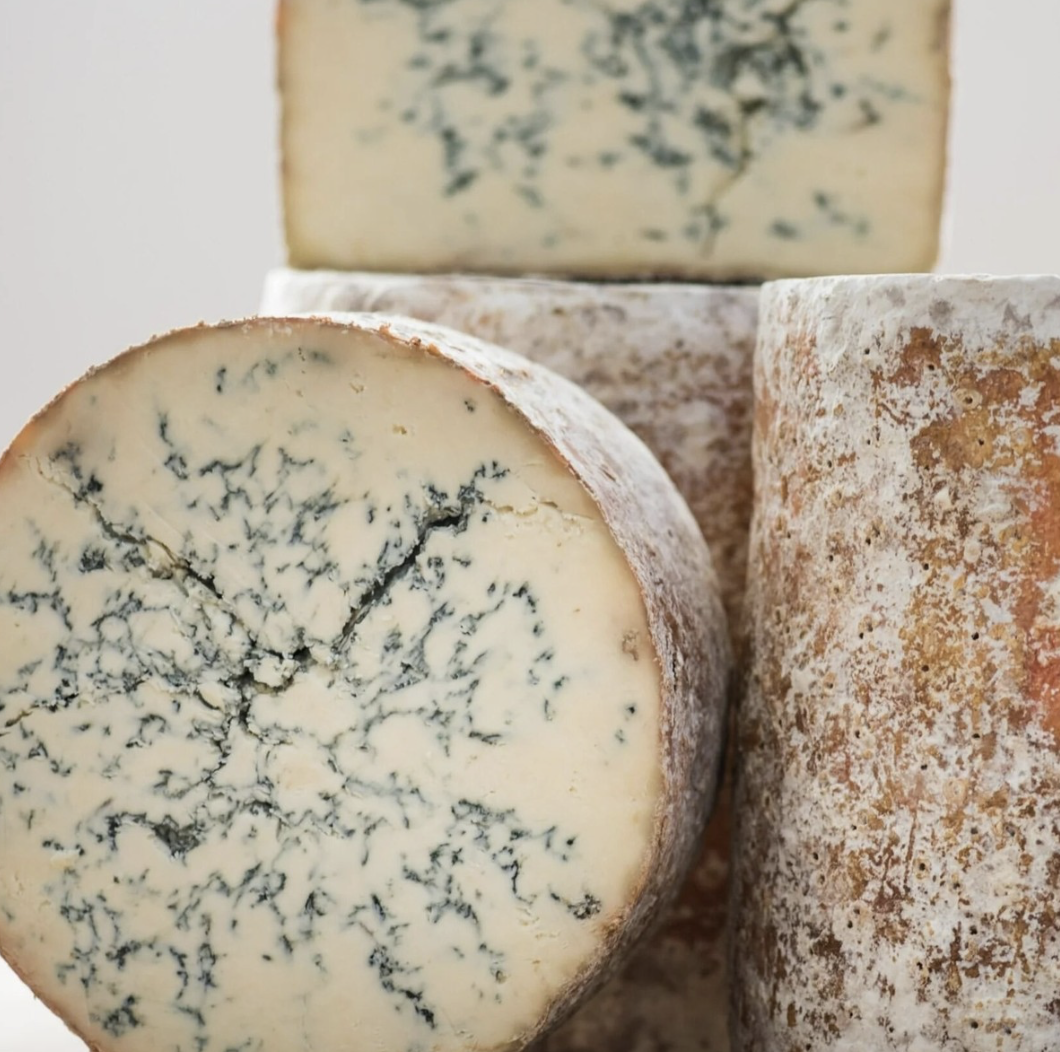
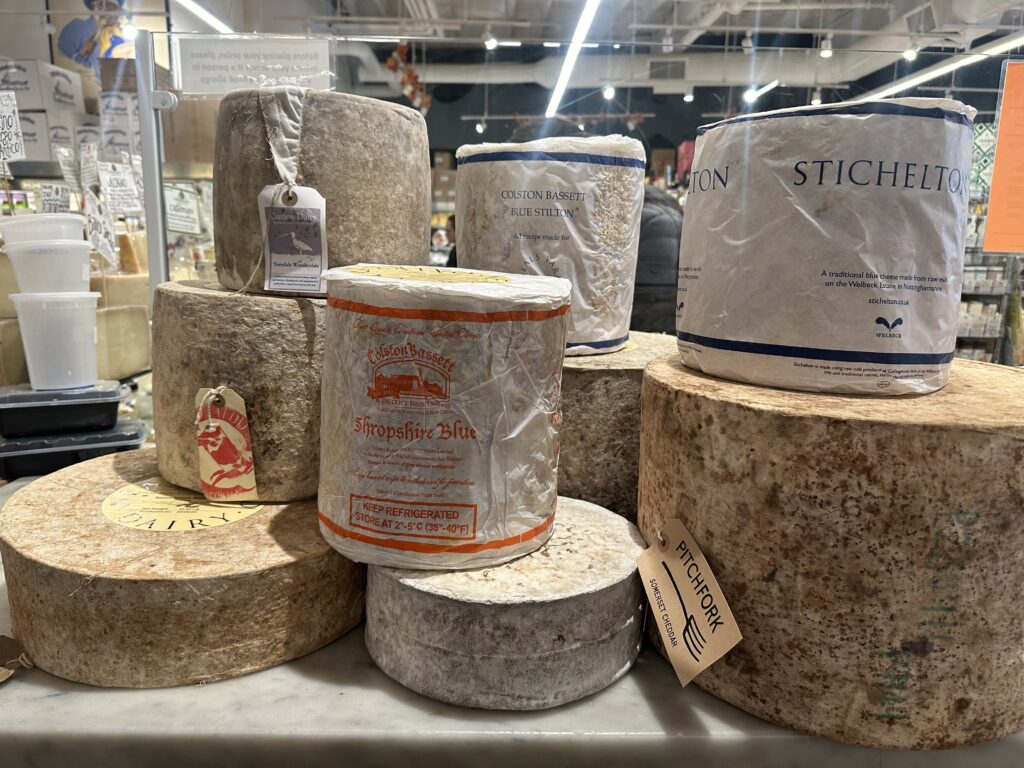
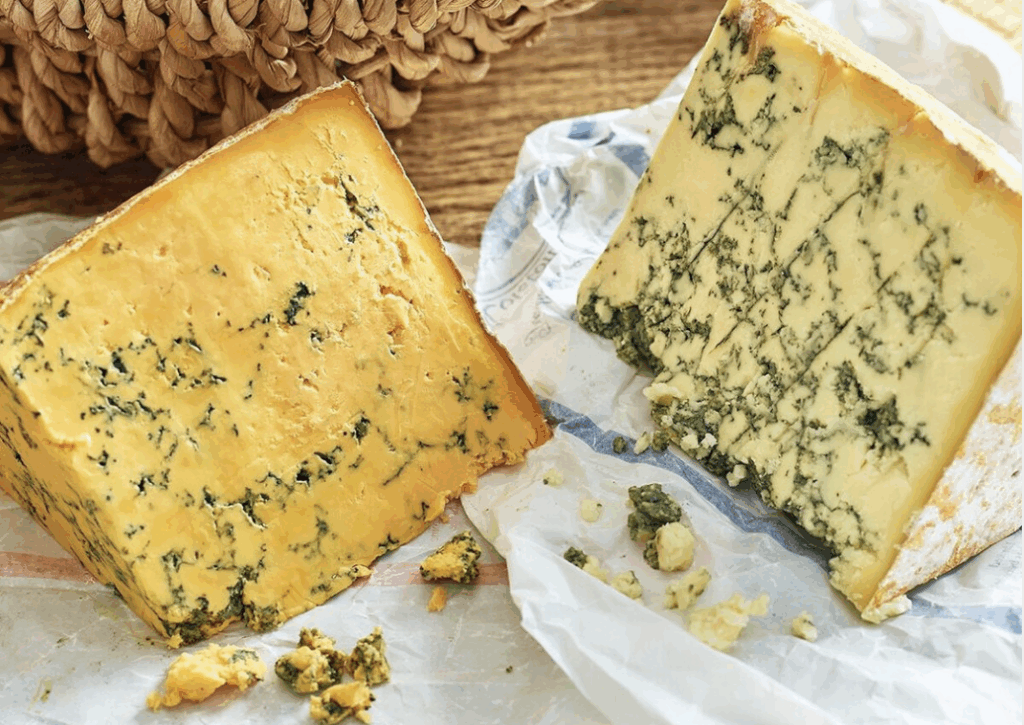
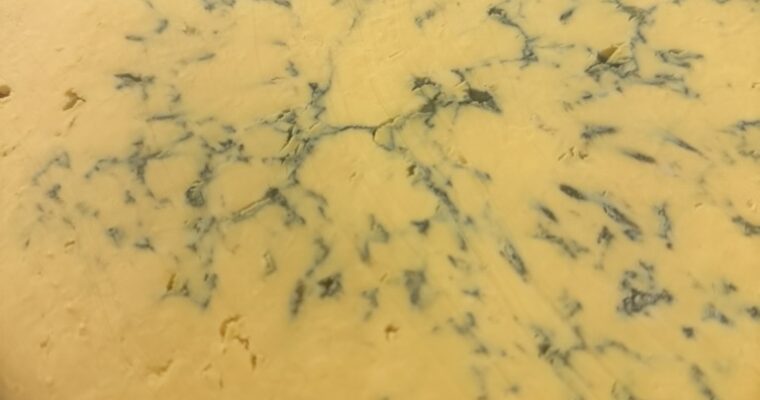
Around the world, Stilton, even more so than Cheddar, is THE quintessential British cheese. It’s the only blue cheese with Protected Designation of Origin (PDO) status in the United Kingdom. Stilton must be made in Derbyshire, Nottinghamshire, or Leicestershire from pasteurized cow’s milk. The wheels are nearly a foot wide and a foot tall. It’s got a creamy yet crumbly texture, and a gorgeously rich, fudgy flavor. We wrote an article about the blue cheese family if you’d like to learn more about what creates those lovely blue veins.
Eglantine: If you’re nervous about blue cheese, I’ve a trick for you. Take a bit of Stilton and a chocolate chip together, just the one. See what you think. If you like it, grand. Then try the Stilton without the chocolate. And if you don’t like it, eat a handful of chocolate chips and call it a day. No shame in that. But you might surprise yourself!
There is nothing wrong with not liking something. It doesn’t mean anything about your quality as a human being. But it’s awesome to be open minded and try new things!
Chocolate is fantastic paired with Stilton. They’ve got a similar consistency, they’re both complex in a way that only fermented food can be. (Yes, chocolate is fermented!) The sweetness of the chocolate balances the blue’s intensity, and the saltiness of the cheese sharpens the chocolate’s flavor.
History of Stilton
Like many cheeses, Stilton is named after a place. What makes this story a little more fun, is that Stilton is not made in Stilton today. Stilton is a village on the Great North Road, which connects London and Edinburgh, and is not in the counties where the cheese is made.
One story goes that the Bell Inn, owned by Cooper Thornhill in the early 1700s, sold the cheese, which was made by Thornhill’s sister-in-law, Mrs. Pawlett. Londoners loved the cheese so much they brought it south with them. But it was named after the village where the travelers could get the cheese, not where it was made.
A lesser-known story says it was made in the village, also starting in the early 18th century. The Stilton-not-from-Stilton story seems to have convinced more people, but no one knows! These apocryphal stories are very common in the cheese world, not just with Stilton. If you’d like to read more about British cheese history, I highly recommend Ned Palmer’s very entertaining book.
Stilton Makers
I have another of Ned Palmer’s books, Compendium of British & Irish Cheese right here next to me, published in 2021, and it lists six Stilton makers. That felt like a small number, but two more have since closed. Tuxford & Tebbutt had been in production since 1780, and just closed in August of 2024.
Tuxford & Tebbutt will be the second Stilton maker to stop production in the past four years, following the closure of the 150-year-old family business Webster’s Dairy in Leicestershire in 2020. That will leave just four blue Stilton-makers left in the UK: Clawson in Leicestershire, Hartington in Derbyshire, and Cropwell Bishop and Colston Bassett in Nottinghamshire. Matthew O’Callaghan, organiser of the Melton Mowbray Artisan Cheese Awards, said sales of Stilton had suffered in recent years because of its reliance on sales at Christmas. “Tastes have changed with people moving away from the traditional Christmas dinner,” he said.
Eglantine: Save Christmas and eat more Stilton! It’s proper winter food. A bit by the fire with a glass of Port or a cup of coffee, tree twinkling, someone telling a ghost story. That’s Christmas sorted. They say Stilton gives you wild dreams. I reckon that crumb of cheese old Scrooge blamed for seeing Jacob Marley was Stilton. Good for him, too! Woke him right up, didn’t it?
Aritz: Eat more fungus. Let your ghosts sit at the table. The living have too much to say anyway.
Jen and Billy Kevan
Colston Bassett
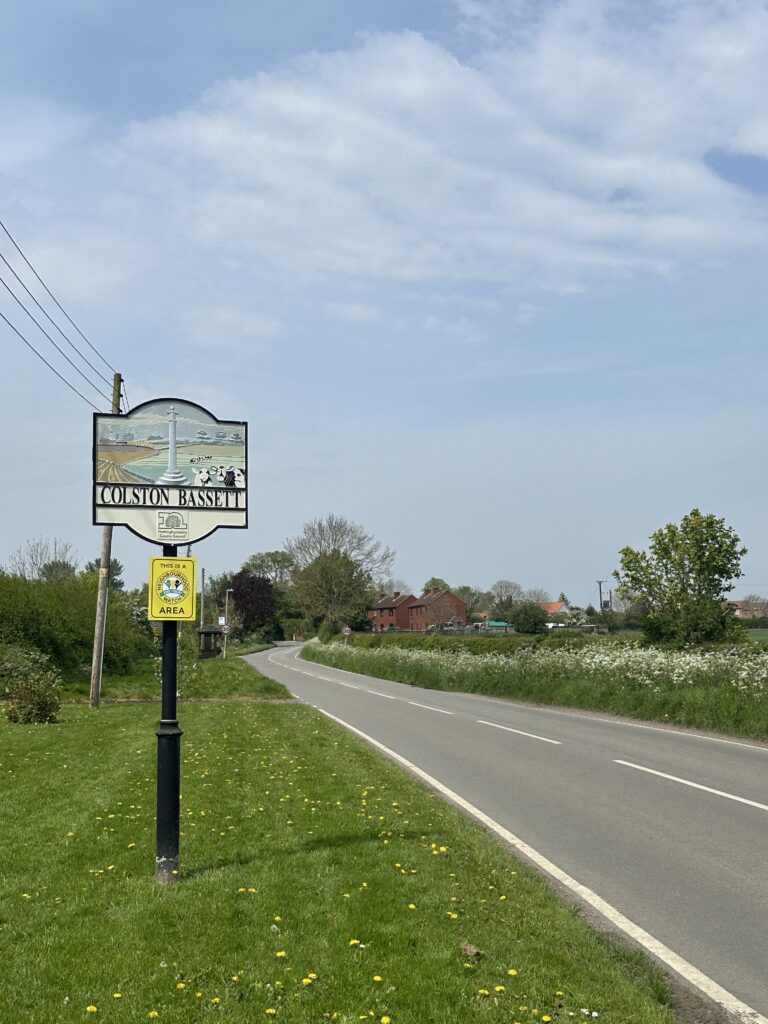
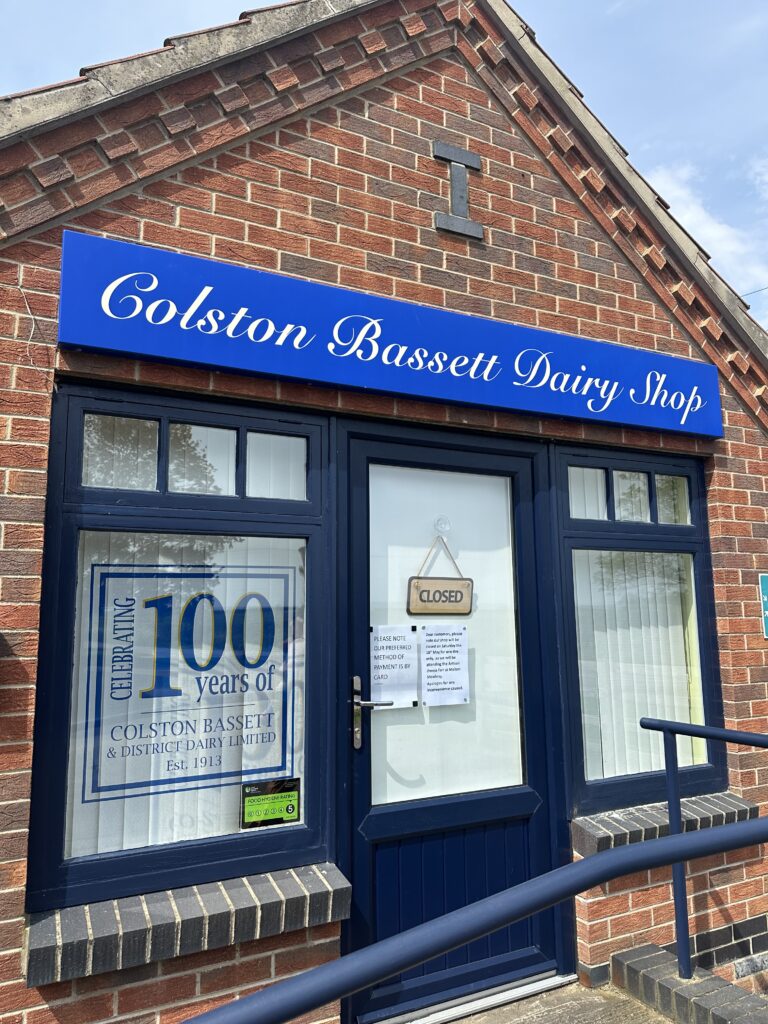
When I was visiting my daughter in Derby, we drove out to Colston Bassett. The countryside was beautiful, and of course I stopped at the creamery for some cheese. I admit I was hoping for a bit of Colston Bassett swag. That was my American showing.
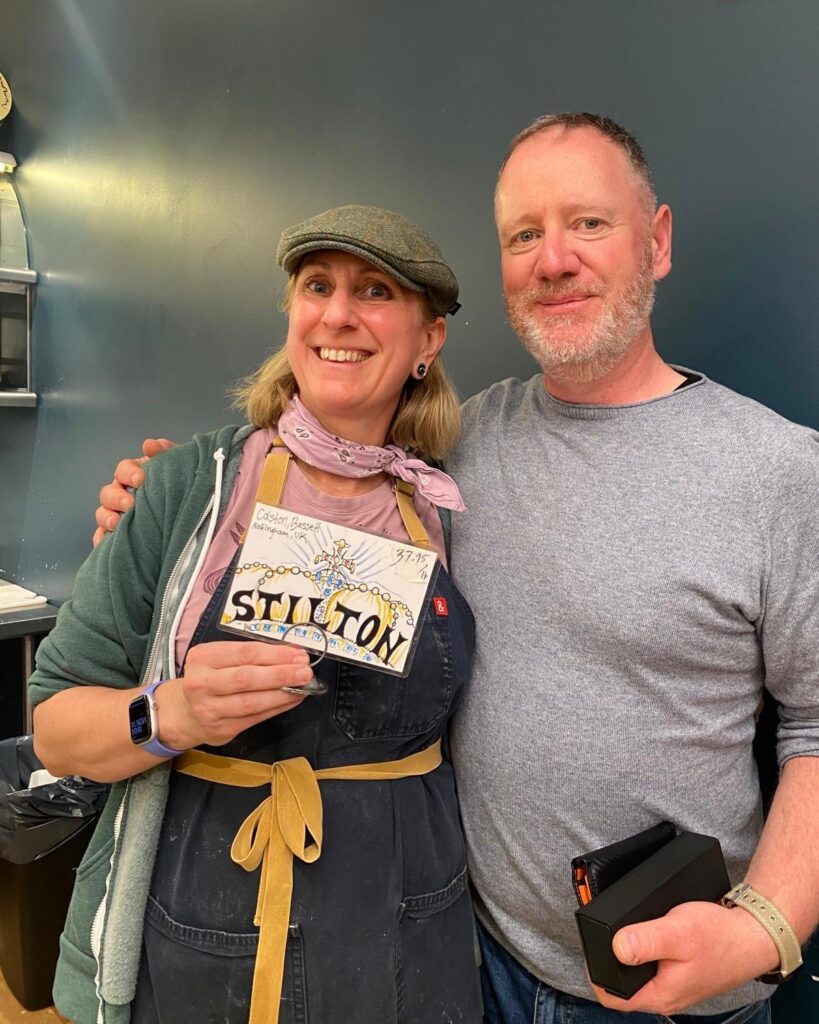
Colston Bassett was founded in 1912 in Nottinghamshire and is one of the last remaining Stilton producers. It’s run by head cheesemaker Billy Kevan, who visited Formaggio Kitchen with Neal’s Yard Dairy in April 2025. It was fantastic to hear him discuss Stilton and the challenges facing artisanal cheesemakers. In over 100 years of Stilton-making, Billy is only the fourth head cheesemaker. He’s a passionate advocate for Stilton and cheesemakers overall.
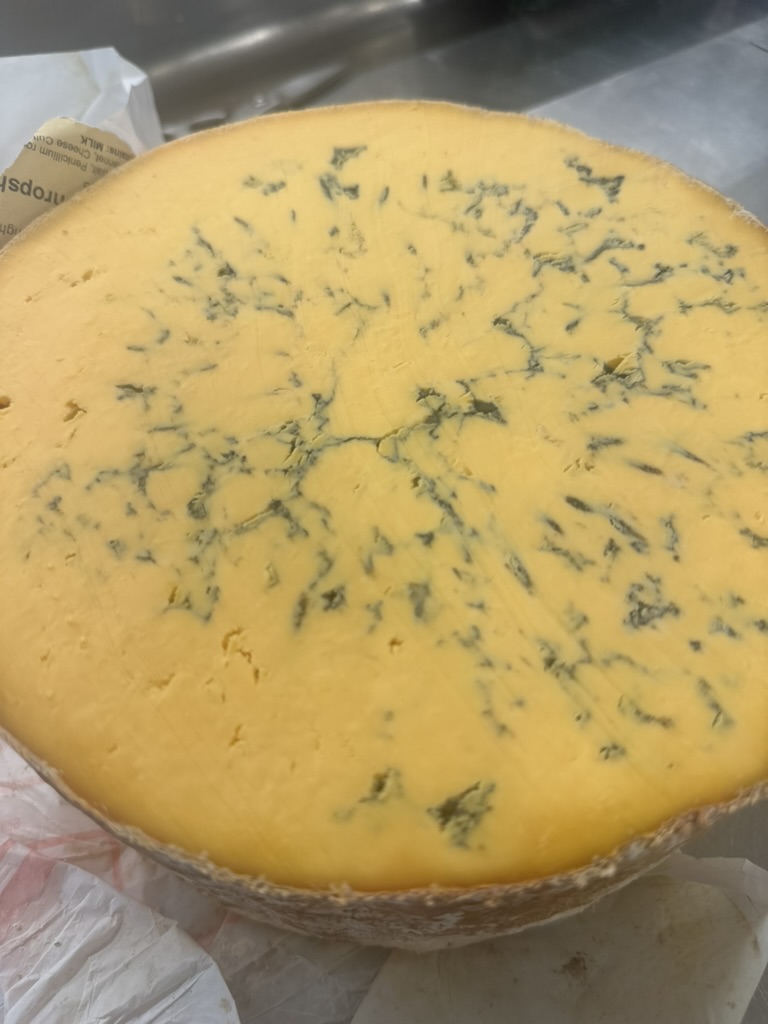
Colston Bassett Shropshire BlueStilton and Shropshire, stolen from Colston Bassett’s Insta
Colston Bassett’s Shropshire Blue is made in the same style, but colored with annatto, that beautiful orange hue that looks especially festive this time of year. I think the annatto changes the taste and texture somewhat, but I can’t tell if it’s just psychological. It seems a bit less crumbly and more creamy to me. If you’d like to learn more about annatto, we’ve got a post for that!
Eat Stilton and Save the World!
We’d like to encourage you to eat more Stilton. Let’s help save the last four remaining Stilton makers. Eating Stilton may summon ghosts that help you be a better person. And if you’re a bit scared of blue cheese, Stilton is a fantastic place to start. It’s always good to try new things!
Coming soon: Eglantine’s Chocolate and Stilton Truffle
Sources
A Cheesemonger’s Compendium of British and Irish Cheese by Ned Palmer
A Cheesemonger’s History of the British Isles by Ned Palmer
I’ve always been drawn to Caerphilly. It’s a Southern Welsh cheese, and family lore says my great-grandparents on my mother’s side were Welsh coal miners before they emigrated to Pennsylvania. Beyond that though, I think Gorwydd Caerphilly maybe the prettiest cheese I’ve ever seen. What …
Yoredale from Curlew Dairy in the Yorkshire Dales, is real farmhouse Wensleydale, brought back from extinction. For many people, Wensleydale means the industrial blocks in the supermarket, studded with cranberries at Christmas. Yoredale shows what the cheese was meant to be. It’s one of my …
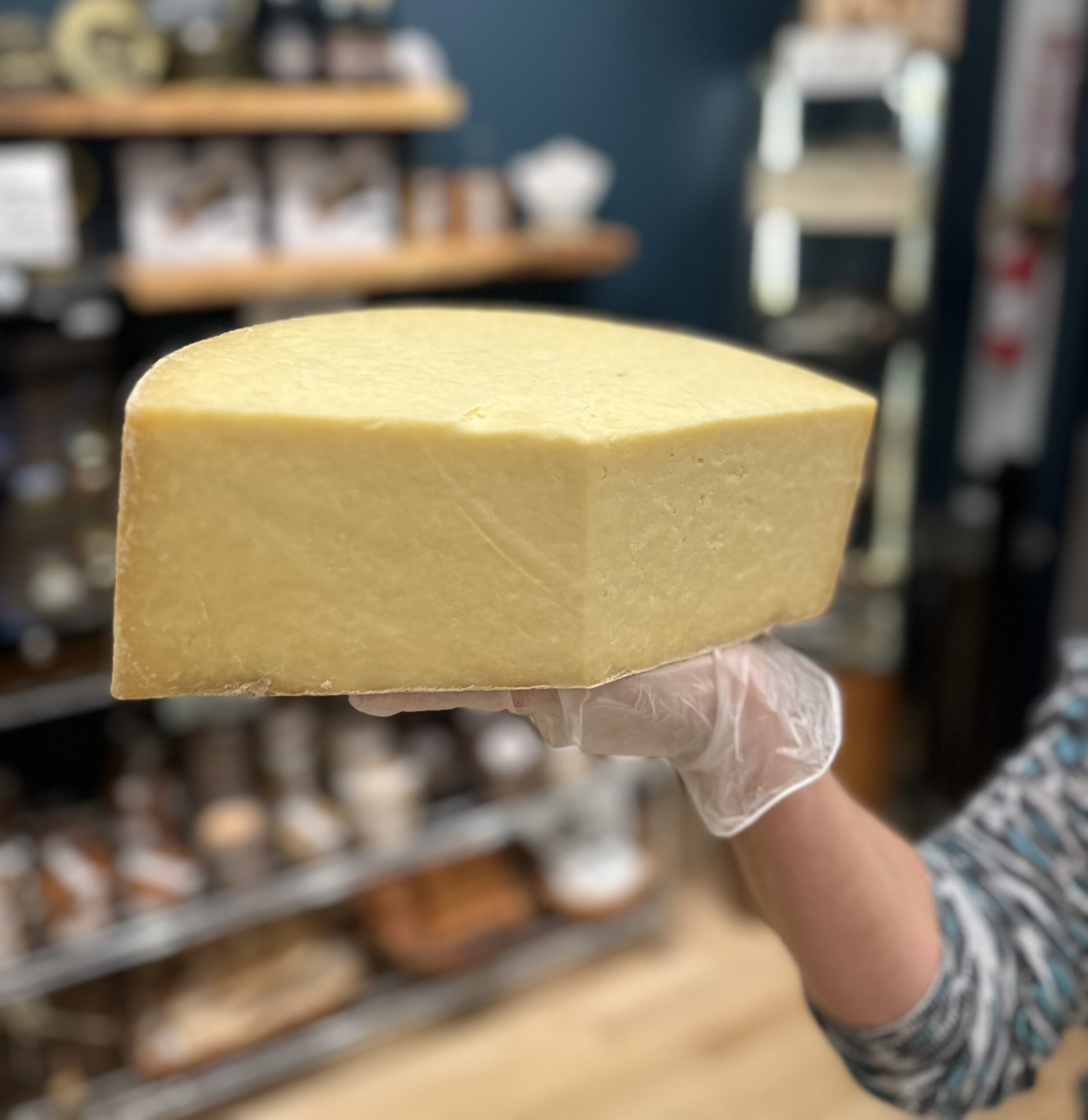
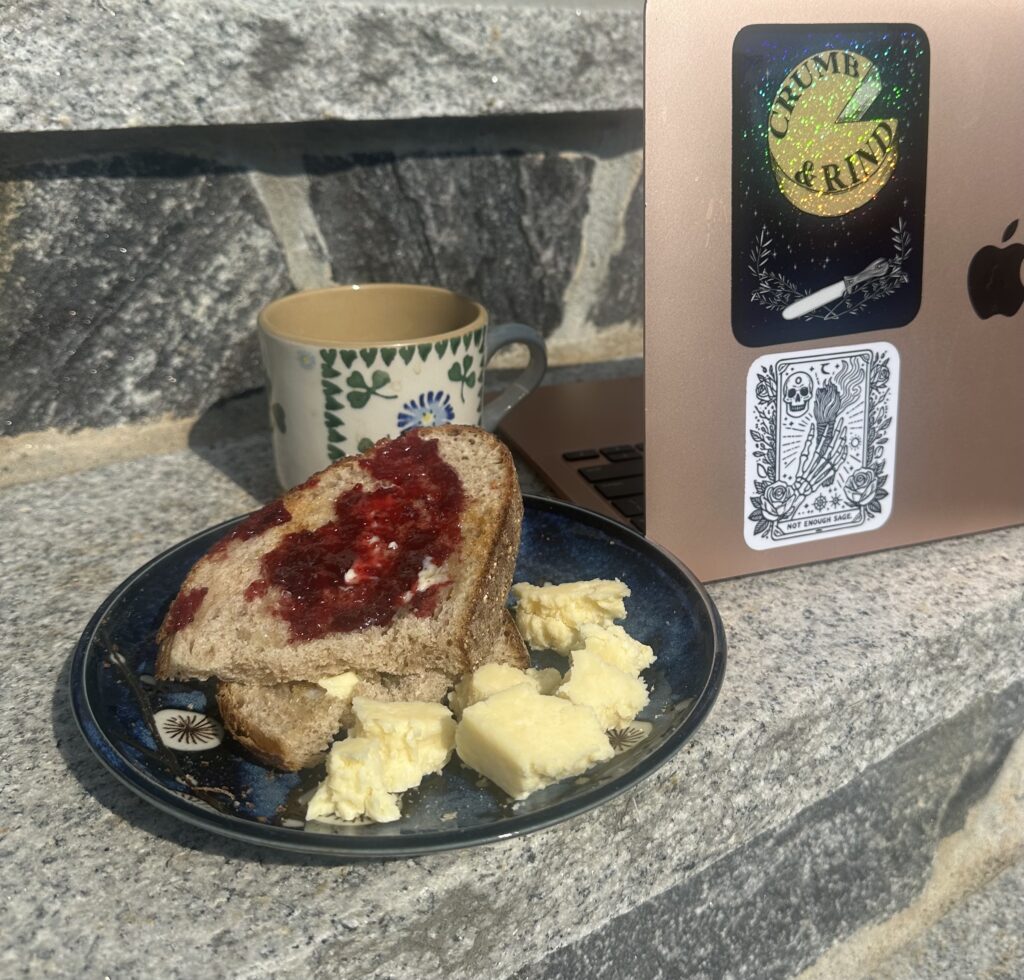
Kirkham’s Lancashire is an English Territorial, one of the Crumblies, and one of my favorites. It’s buttery, tangy, and as one of my colleagues said, “fluffy.” However, when people see Kirkham’s Lancashire on the counter, they figure it’s another cheddar. With this post, we’re hoping to help change that. Lancashire has its own story, its own taste, and its own place in the world. We hope you find it belongs on your table. Try it with a strong black tea, a bitter ale, or a dry glass of cider. I brought some home, and my plan was to do something special with it for this post. But I gobbled it up with toast and jam. Not photogenic, but delicious!
My Kirkham’s Lancashire breakfast
How Lancashire is Made
Lancashire is from blended curds from several days’ milk. So on day one, they drain the curds, salt the curds, and store them cool, and keep them loose and pliable. On day two (and sometimes day three), they make fresh curd and break it up together with the older curd. The older curd brings tang and structure, the younger brings sweetness and moisture. When they’re milled together, their surfaces “reset,” so that once they go into the mold and under the press, they knit into a single cheese. The result is a texture you won’t find in cheddar. It’s crumbly yet buttery, with little fault lines from the patchwork of curds. That crumbly-but-creamy character is Lancashire’s hallmark.
Industrialization Changes Everything
There was a time when Lancashire was everywhere. In the early 20th century, more than 200 dairies were registered as Lancashire makers. And before that, before industrialization, there were likely thousands of farmhouse versions. But as the 19th and 20th centuries reshaped Britain, rural families left the land to work in factories and mills, and small dairies couldn’t compete with the efficiency of industrial creameries. People moving to the cities needed cheap, easy-to-ship food. The curd-blending method that made Lancashire unique was too slow, too impractical for the factory system. By the 1980s, only one farmstead producer remained.
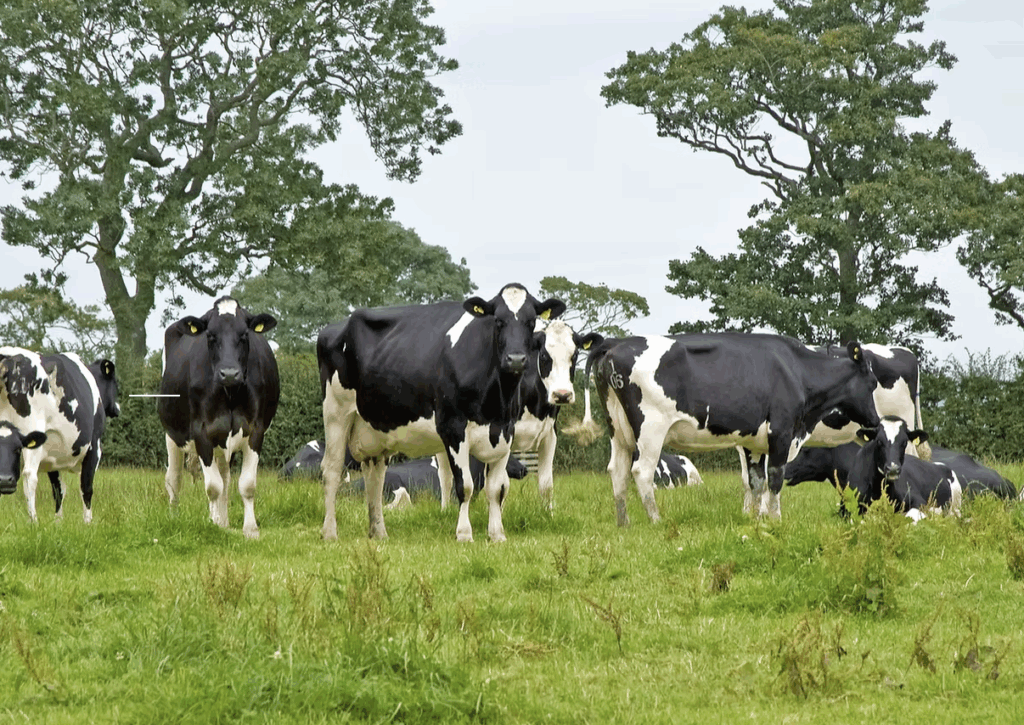
Kirkham’s cows, photo stolen from their website
Making Kirkham’s Lancashire
Eglantine:The Kirkhams milk a mixed herd, mostly Friesians with some Shorthorn and Montbéliarde. They are bred for sturdy health and good milk rather than yield alone. Because the cows graze their own pastures, the family knows exactly what’s going into the milk and how the land is faring. That’s the strength of a farmhouse dairy. The herd and the soil work together. When farms get pushed into industrial systems, they breed animals for volume, not longevity, and they treat soil like a factory floor. You lose resilience. Kirkham’s Lancashire shows what’s possible when the farm and the cheese stay tied to the same ground.
Aritz: Capitalism demands uniformity, efficiency, profit. It destroys diversity, tradition, and the small farms that held communities together. Industrial cheddar dominates because it could be made in factories, rationed in wartime, shipped cheaply. Lancashire, with its slower method and delicate texture, could not. Every bite of Kirkham’s is a vote against the idea that only what is profitable deserves to survive.
Aritz is not pulling punches here! It is true that Lancashire is not as easily scalable as cheddar. While labor intensity and good taste don’t necessarily correlate, I feel better eating food made by real people who care of the land and animals, and are part of their communities.
Kirkham’s Lancashire Today
You can still find something called “Lancashire” in British supermarkets today, but it’s a different cheese entirely. The industrial version is factory-made, pasteurized, aged only a few weeks, and designed for efficiency. It’s blocky, mild, and smooth. It bears little resemblance to the farmhouse Lancashire that Mrs. Kirkham refused to abandon.
Mrs. Kirkham, working out of Beesley Farm in Goosnargh, carried the tradition through the years. Now her son Graham leads the dairy, joined by the next generation. Together, the family keeps alive a cheese that could have vanished last century. Kirkham’s is the last of its kind. It’s raw-milk, hand-ladled, and made on the same family farm where the cows graze.
Kirkham’s isn’t alone in this fight for survival. Appleby’s Cheshire, Gorwydd Caerphilly, and a handful of other farmhouse makers across Britain tell the same story: once-thriving regional traditions nearly erased by industrialization, saved only by the grit of a few families who refused to let them vanish. Lancashire is just one piece of that larger pattern, a reminder that when you choose a cheese like this, you’re keeping more than flavor alive. You’re keeping history, land, and culture on the table.
Do not be afraid! When I’m on the cheese counter at Formaggio Kitchen, helping a customer put together a board, I always ask if there are any cheeses to avoid. The second most common answer is “Blue cheese!” (The most common is “Nope!”). I understand …