Annatto
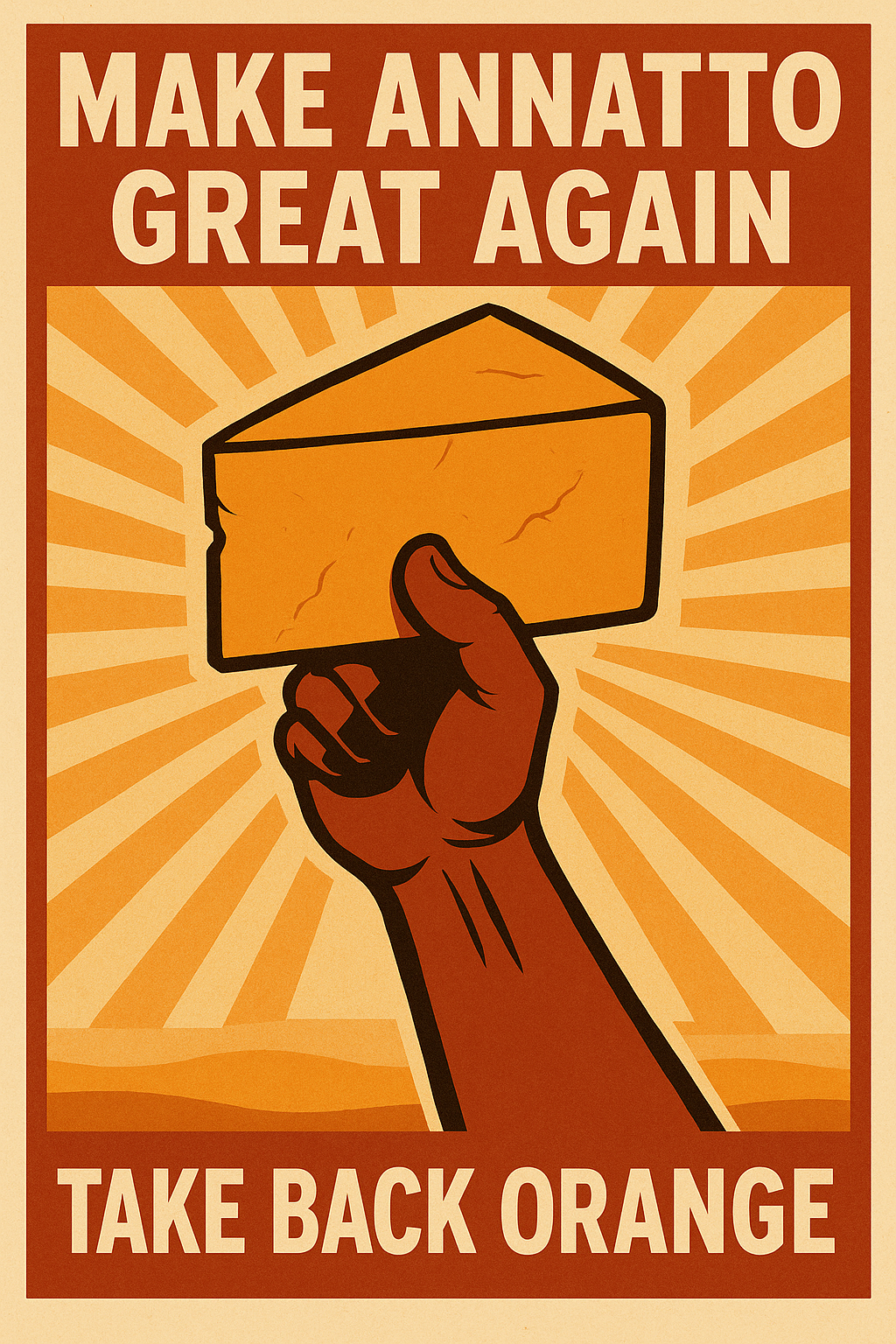
Take Orange Back! Make Annatto Great Again
A common refrain we hear as cheesemongers: “I don’t want any of that fake orange cheese!” I get it. Growing up in the 70s and 80s in the U.S., I know exactly the waxy, chemical-laden cheese they mean. Though, full confession: I’ll always have a soft spot for the Velveeta mac that my mom would make. And who among us hasn’t reached for that blue box with the powdered cheese packet in pinch? But that stuff is truly artificial. Ironically, it’s trying to echo cheeses that are naturally orange with annatto.
The orange comes from an additive, but it’s a natural one. It’s called annatto, made from the seeds of the achiote tree (Bixa orellana), native to the Americas. You can often find it in your local Latin American grocery store, sold for cooking or as a dye.
Annatto is Traditional
Traditionally, annatto shows up in cheeses like Cheddar, Red Leicester, and Mimolette, as well as one of our own homegrown American styles, Colby. It’s not the same as the orange on washed-rind cheeses, though. That color comes from bacteria that makes cheese stinky. According to The Oxford Companion to Cheese, even the humble slicing cheese Muenster gets a dip in annatto to mimic the funkier orange of Alsatian Munster.
So why pretend to be funky when you’re not, (I ask myself often.) Why add the color at all? There are lots of theories. Before annatto was known in Europe, British cheesemakers dyed their wheels with marigolds or ladies’ bedstraw. Some think it was to disguise the paler milk of winter, when cows ate hay instead of lush summer grass. (Has anyone ever seen a baby turn orange from eating too many carrots? My little brother did.) There’s also evidence it was used to mask the milk that had been skimmed to make butter, for profit and tax evasion purposes.
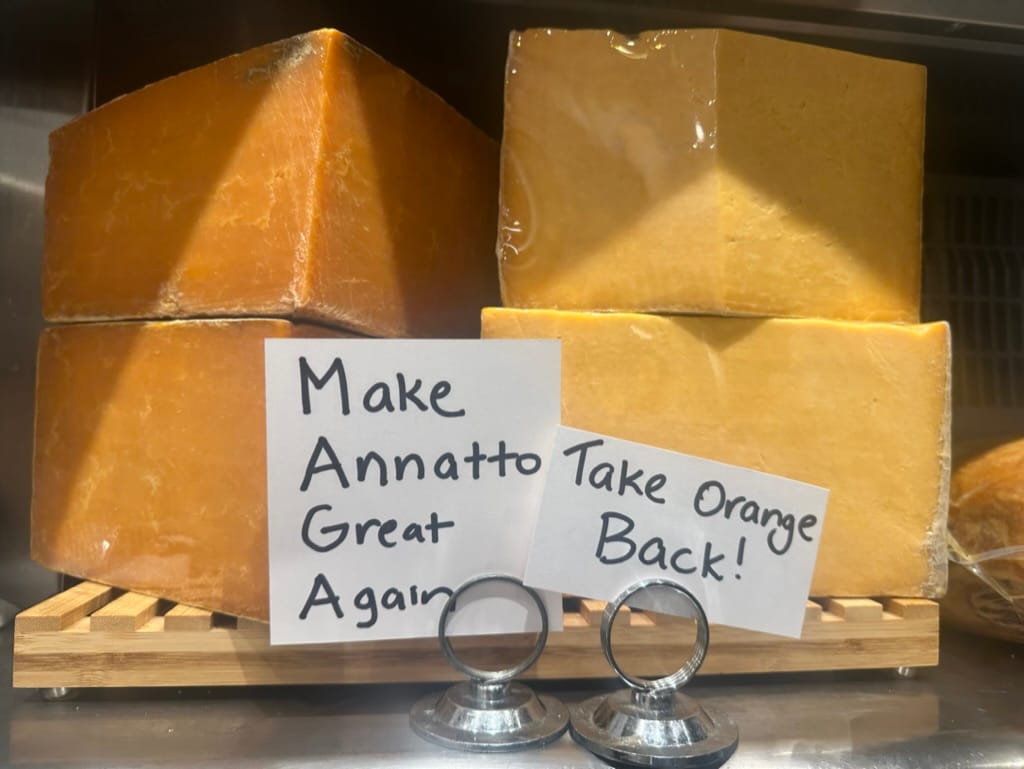
Orange Can Be Good
Whatever the reason, the practice stuck. Consumers came to expect that orange color, and cheesemakers obliged. These days, annatto doesn’t change the flavor much (except when you use A LOT, looking at you, Mimolette,) but it sure does look gorgeous on a cheese board.
Sources on Annatto:
The Oxford Companion to Cheese
Ned Palmer’s A Cheesemonger’s History of the British Isles
Post Script
My partners Eglantine and Aritz don’t have anything to add to this post on annatto, as it mostly has to do with consumer behavior, which neither of them care about.
1 thought on “Annatto”