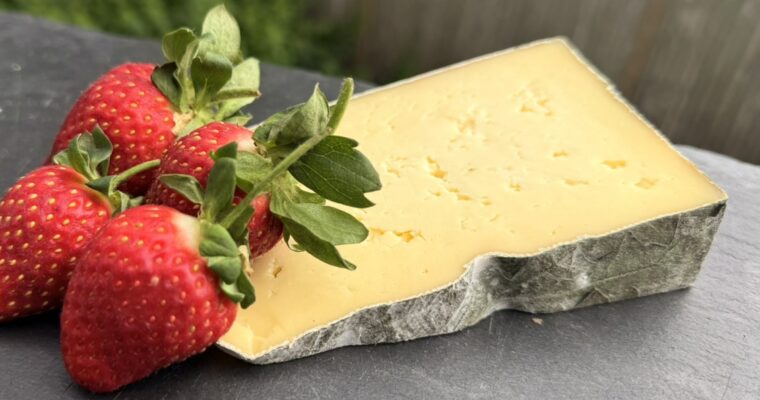
Wrapped in stinging nettles before it matures, Cornish Yarg is one of the most recognizable cheeses in Britain. The nettles encourage a delicate bloomy rind while the interior stays creamy, fresh, and lightly tangy. It’s the kind of cheese I always associate with summer: perfect …
I ran the final miles with my heart hammering against my ribs, but the relief kept me moving. My fur was dull and matted with the dust of the road. My body was so much stronger than when I left, but I was weary. Yesterday, …
It’s our first post in a while that’s actually about cheese. It’s November and I’ve just finished teaching class on Stilton and Port, the perfect duo for these cold nights. They’re a classic pairing, and I thought I’d write about them together. What I realized, though, is that the post became extremely long, so I split it in two. There’s just so much to say! So let’s get started!
British Cheese Delivery
Stilton PDO
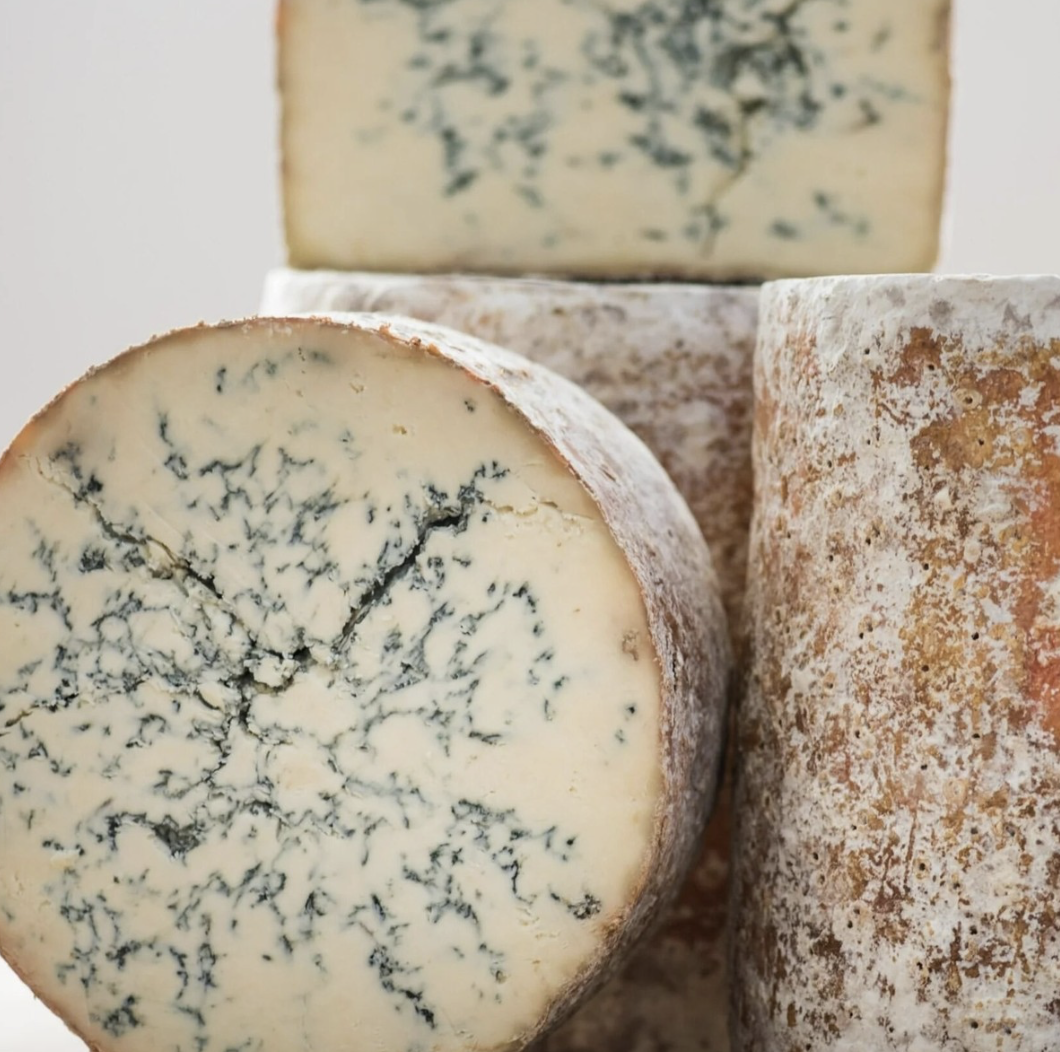
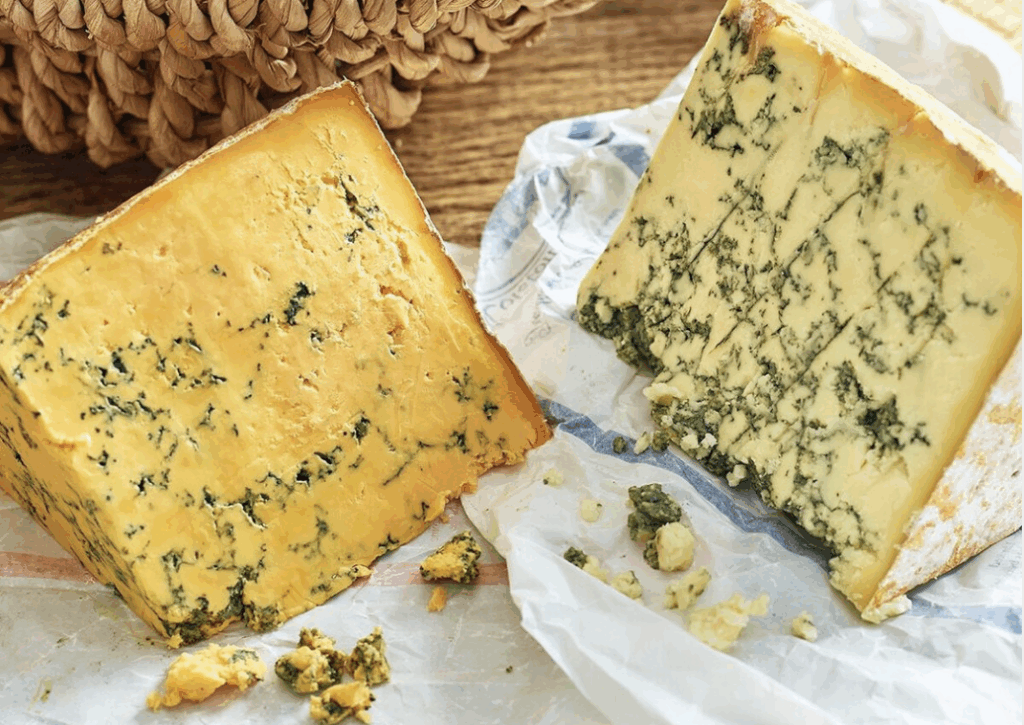
Around the world, Stilton, even more so than Cheddar, is THE quintessential British cheese. It’s the only blue cheese with Protected Designation of Origin (PDO) status in the United Kingdom. Stilton must be made in Derbyshire, Nottinghamshire, or Leicestershire from pasteurized cow’s milk. The wheels are nearly a foot wide and a foot tall. It’s got a creamy yet crumbly texture, and a gorgeously rich, fudgy flavor. We wrote an article about the blue cheese family if you’d like to learn more about what creates those lovely blue veins.
Eglantine: If you’re nervous about blue cheese, I’ve a trick for you. Take a bit of Stilton and a chocolate chip together, just the one. See what you think. If you like it, grand. Then try the Stilton without the chocolate. And if you don’t like it, eat a handful of chocolate chips and call it a day. No shame in that. But you might surprise yourself!
There is nothing wrong with not liking something. It doesn’t mean anything about your quality as a human being. But it’s awesome to be open minded and try new things!
Chocolate is fantastic paired with Stilton. They’ve got a similar consistency, they’re both complex in a way that only fermented food can be. (Yes, chocolate is fermented!) The sweetness of the chocolate balances the blue’s intensity, and the saltiness of the cheese sharpens the chocolate’s flavor.
History of Stilton
Like many cheeses, Stilton is named after a place. What makes this story a little more fun, is that Stilton is not made in Stilton today. Stilton is a village on the Great North Road, which connects London and Edinburgh, and is not in the counties where the cheese is made.
One story goes that the Bell Inn, owned by Cooper Thornhill in the early 1700s, sold the cheese, which was made by Thornhill’s sister-in-law, Mrs. Pawlett. Londoners loved the cheese so much they brought it south with them. But it was named after the village where the travelers could get the cheese, not where it was made.
A lesser-known story says it was made in the village, also starting in the early 18th century. The Stilton-not-from-Stilton story seems to have convinced more people, but no one knows! These apocryphal stories are very common in the cheese world, not just with Stilton. If you’d like to read more about British cheese history, I highly recommend Ned Palmer’s very entertaining book.
Stilton Makers
I have another of Ned Palmer’s books, Compendium of British & Irish Cheese right here next to me, published in 2021, and it lists six Stilton makers. That felt like a small number, but two more have since closed. Tuxford & Tebbutt had been in production since 1780, and just closed in August of 2024.
Tuxford & Tebbutt will be the second Stilton maker to stop production in the past four years, following the closure of the 150-year-old family business Webster’s Dairy in Leicestershire in 2020. That will leave just four blue Stilton-makers left in the UK: Clawson in Leicestershire, Hartington in Derbyshire, and Cropwell Bishop and Colston Bassett in Nottinghamshire. Matthew O’Callaghan, organiser of the Melton Mowbray Artisan Cheese Awards, said sales of Stilton had suffered in recent years because of its reliance on sales at Christmas. “Tastes have changed with people moving away from the traditional Christmas dinner,” he said.
Eglantine: Save Christmas and eat more Stilton! It’s proper winter food. A bit by the fire with a glass of Port or a cup of coffee, tree twinkling, someone telling a ghost story. That’s Christmas sorted. They say Stilton gives you wild dreams. I reckon that crumb of cheese old Scrooge blamed for seeing Jacob Marley was Stilton. Good for him, too! Woke him right up, didn’t it?
Aritz: Eat more fungus. Let your ghosts sit at the table. The living have too much to say anyway.
Jen and Billy Kevan
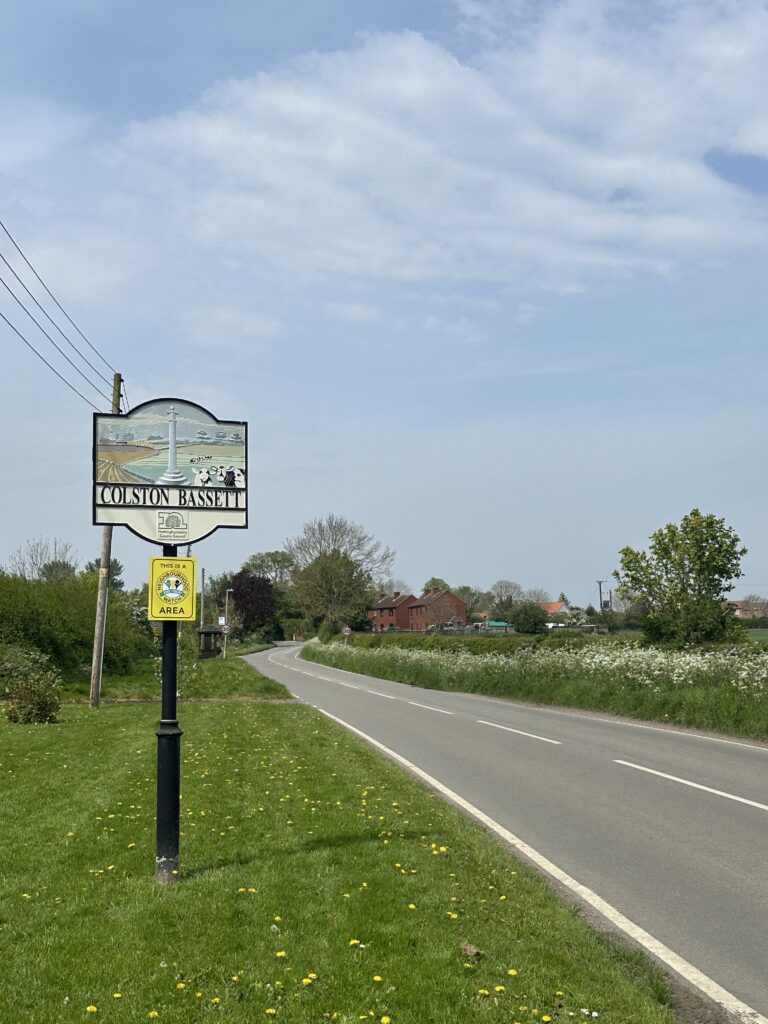
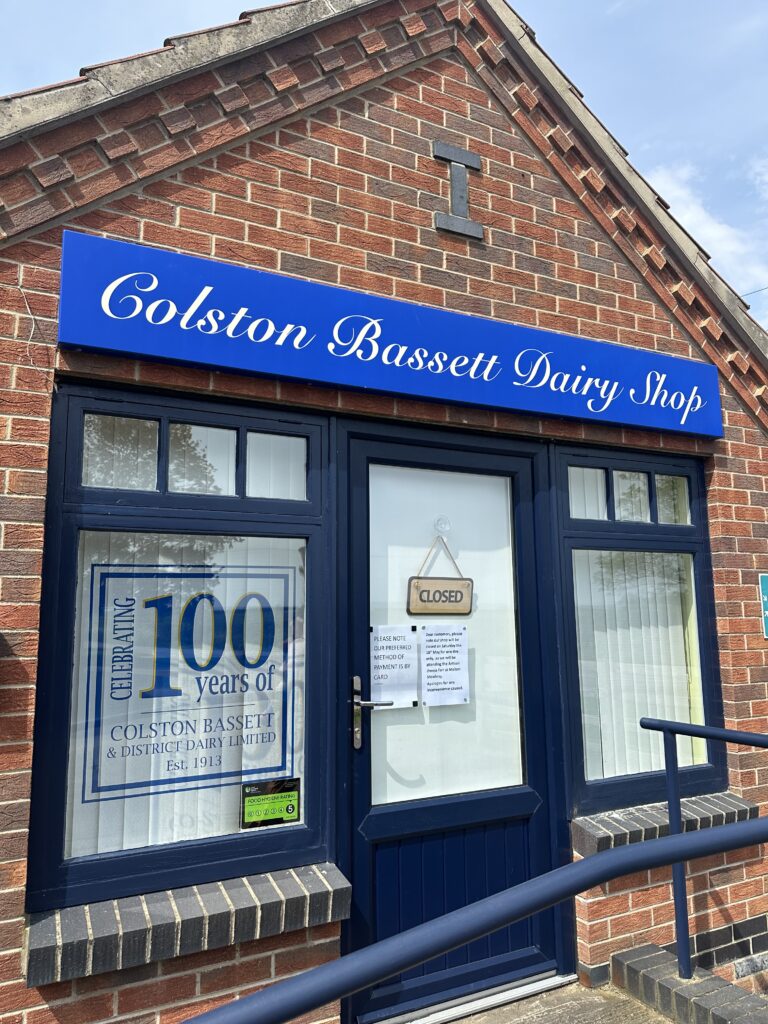
Colston Bassett
When I was visiting my daughter in Derby, we drove out to Colston Bassett. The countryside was beautiful, and of course I stopped at the creamery for some cheese. I admit I was hoping for a bit of Colston Bassett swag. That was my American showing.
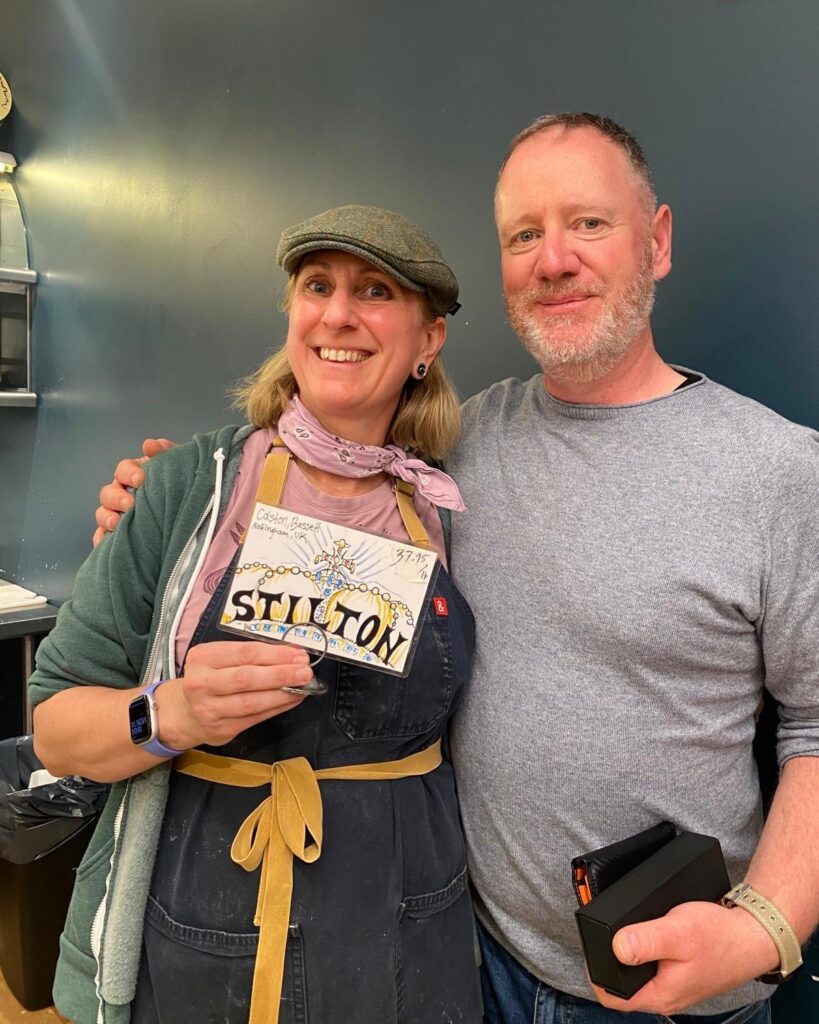
Colston Bassett was founded in 1912 in Nottinghamshire and is one of the last remaining Stilton producers. It’s run by head cheesemaker Billy Kevan, who visited Formaggio Kitchen with Neal’s Yard Dairy in April 2025. It was fantastic to hear him discuss Stilton and the challenges facing artisanal cheesemakers. In over 100 years of Stilton-making, Billy is only the fourth head cheesemaker. He’s a passionate advocate for Stilton and cheesemakers overall.
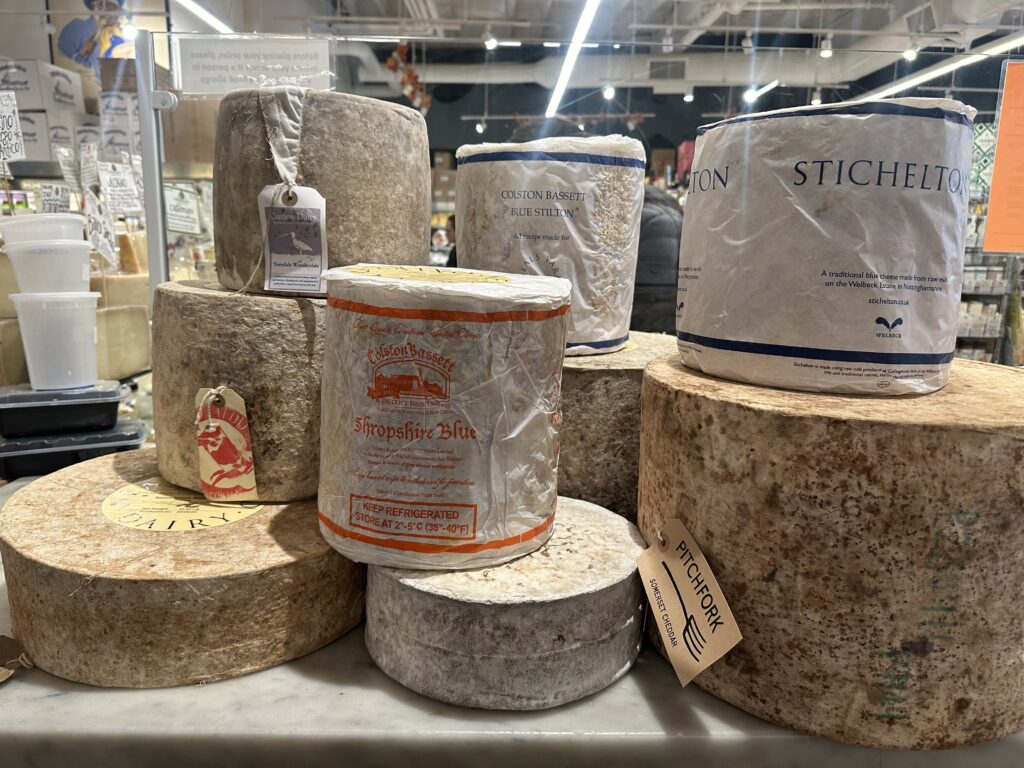
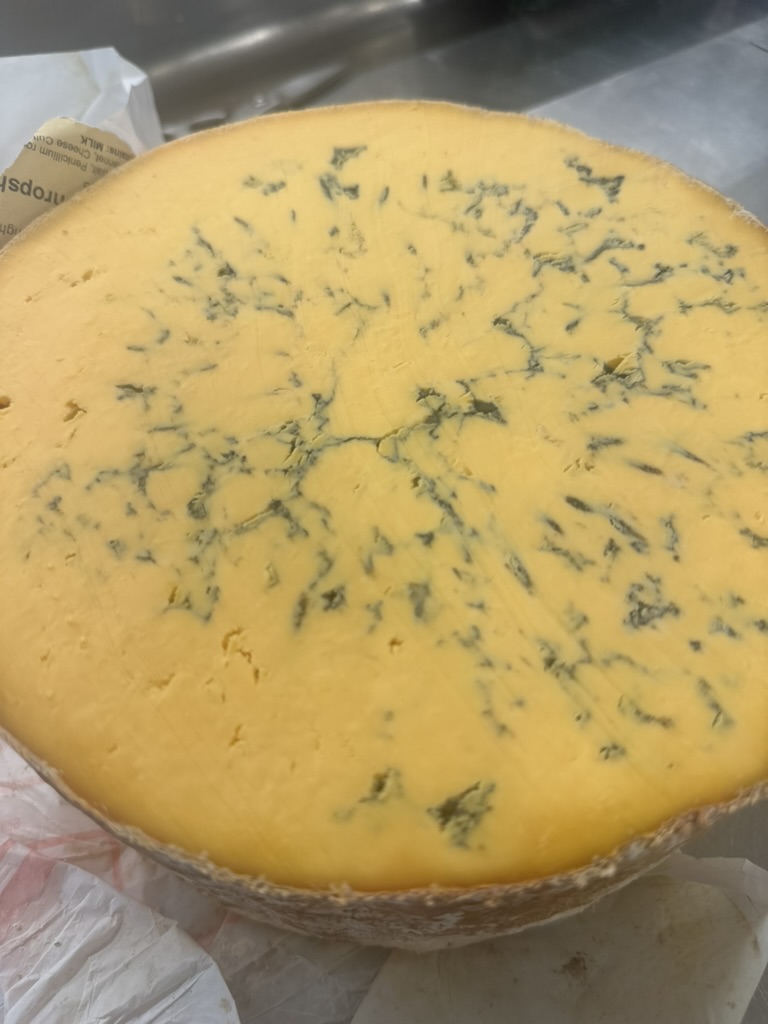
Colston Bassett Shropshire BlueStilton and Shropshire, stolen from Colston Bassett’s Insta
Colston Bassett’s Shropshire Blue is made in the same style, but colored with annatto, that beautiful orange hue that looks especially festive this time of year. I think the annatto changes the taste and texture somewhat, but I can’t tell if it’s just psychological. It seems a bit less crumbly and more creamy to me. If you’d like to learn more about annatto, we’ve got a post for that!
Eat Stilton and Save the World!
We’d like to encourage you to eat more Stilton. Let’s help save the last four remaining Stilton makers. Eating Stilton may summon ghosts that help you be a better person. And if you’re a bit scared of blue cheese, Stilton is a fantastic place to start. It’s always good to try new things!
Coming soon: Eglantine’s Chocolate and Stilton Truffle
Sources
A Cheesemonger’s Compendium of British and Irish Cheese by Ned Palmer
A Cheesemonger’s History of the British Isles by Ned Palmer
Our previous post was about the Trethowan Brother’s Gorwydd Caerphilly, so we decided it made sense for our next post to be about Pitchfork Cheddar, a West Country Farmhouse PDO Cheddar, also made by the Trethowans! When the brothers left Wales, where they had already …
I’ve always been drawn to Caerphilly. It’s a Southern Welsh cheese, and family lore says my great-grandparents on my mother’s side were Welsh coal miners before they emigrated to Pennsylvania. Beyond that though, I think Gorwydd Caerphilly maybe the prettiest cheese I’ve ever seen. What …
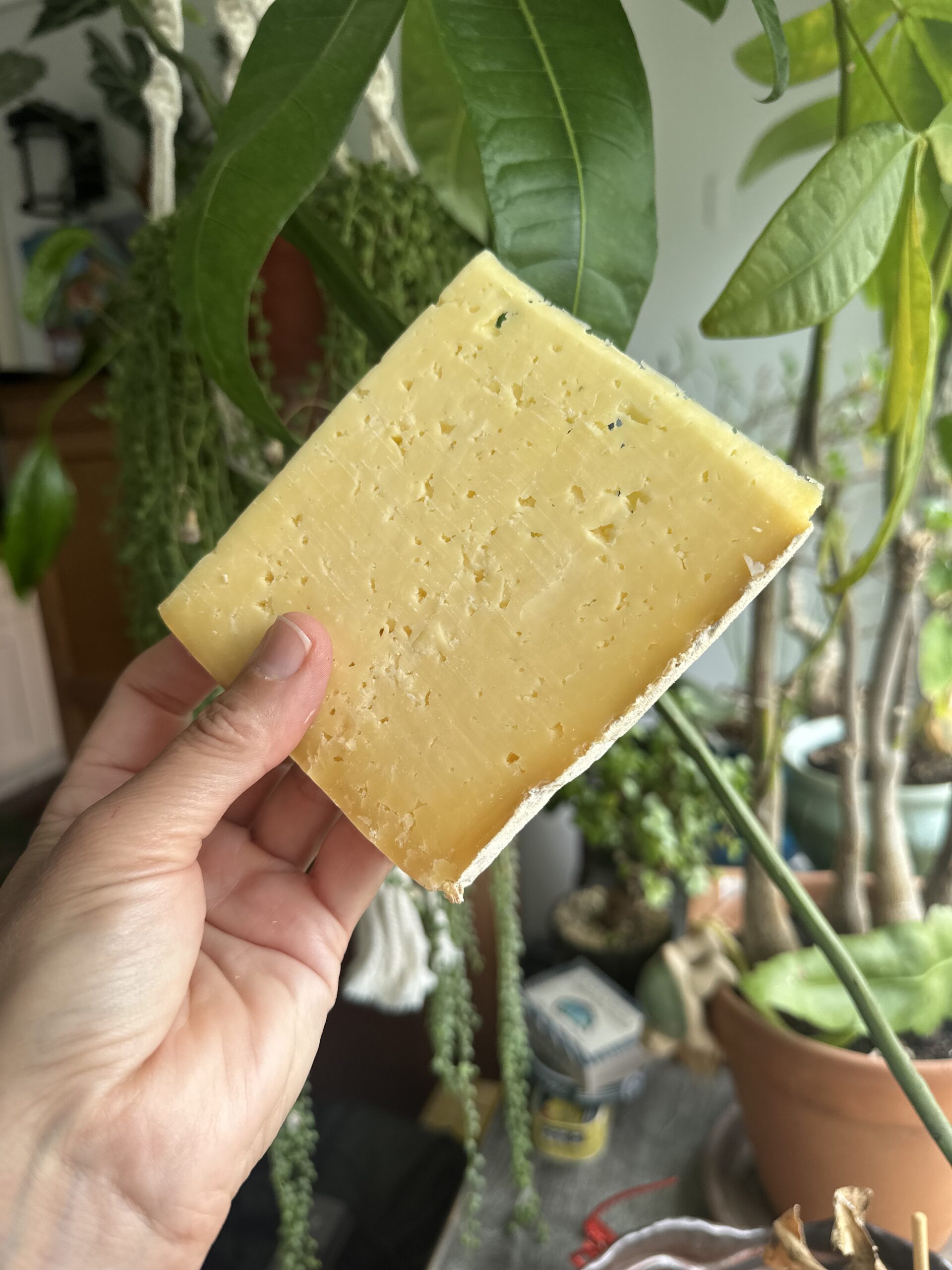
Yoredale from Curlew Dairy in the Yorkshire Dales, is real farmhouse Wensleydale, brought back from extinction. For many people, Wensleydale means the industrial blocks in the supermarket, studded with cranberries at Christmas. Yoredale shows what the cheese was meant to be. It’s one of my favorites, and I hope you have the chance to try it!
The History of Wensleydale in Yorkshire
Wensleydale was born in Yorkshire when French Cistercian monks arrived with their cheese-making skills. Later, when Henry VIII’s minister Thomas Cromwell oversaw the Dissolution in the 1530’s, stripping the abbeys of their land and wealth, the recipe was passed along to farmers’ wives. (I’m on my third book about Thomas Cromwell this year, so I just had to throw that in.)
Wallace and Gromit on The Moon
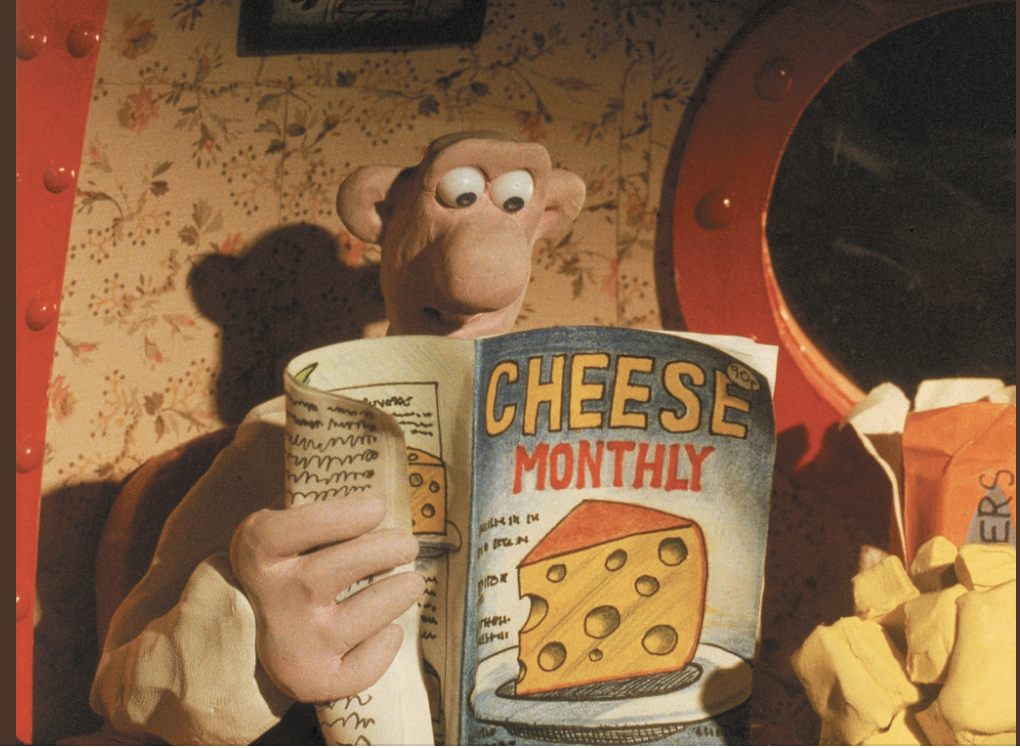
Cheese, Gromit!
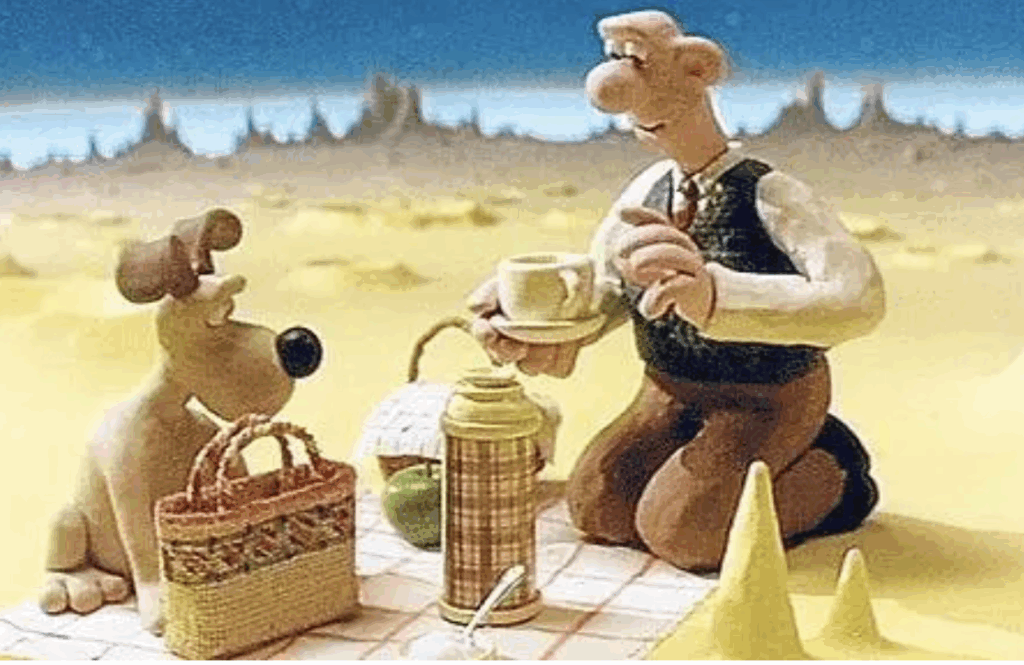
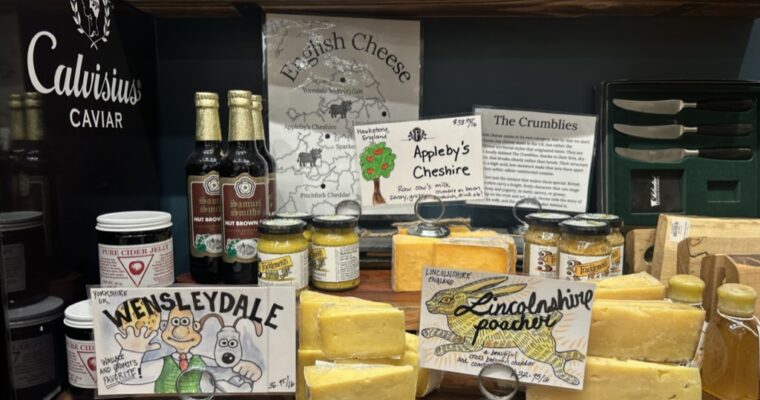
By the late 20th century, traditional farmhouse Wensleydale nearly disappeared. We talked about the effects of Industrialization in our post on Kirkham’s Lancashire. Production had long moved into factories, and the old ways of making it on small farms were gone. The last creamery in Hawes was even set to close in the 1990s. What saved it, oddly enough, was Wallace and Gromit! Their love of Wensleydale in the films sent demand soaring, giving Wensleydale Creamery a lifeline and sparking interest in real Yorkshire cheese again. That surge of interest set the stage for Sam and Ben Spence at Curlew Dairy to help bring real farmhouse Wensleydale back to life.
Making Yoredale Wensleydale
Eglantine: I grew up in Yorkshire, so I’ll tell you straight, Wensleydale belongs to this place. For centuries in the Dales, farmers’ wives made Wensleydale, using up the surplus milk when the cows were flush in summer. The cheese is best young and fresh, often eaten with bread and ale at the table, or taken down to the markets. It was never meant to be fancy. It was everyday cheese, proper food for working people, and part of the rhythm of the farm.
That is what Curlew Dairy brought back with Yoredale. They use milk from Holstein and Ayrshire cows, well suited to cheesemaking and to the rough ground of the Dales. The herd grazes on high pastures for much of the year, feeding on grass and wildflowers that give the milk its clean, lactic character. In winter, they eat gorgeous haylage grown on the farm, giving the milk an even sweeter taste. They use the milk the same day, raw and full of its natural flora, to make Yoredale in their dairy in North Yorkshire.
Wallace Reading Cheese Monthly
Curd Size
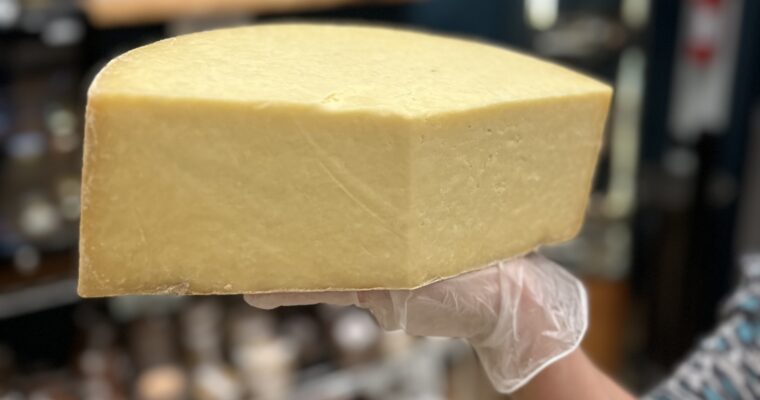
Eglantine: The trick with Wensleydale is in the curd. We cut it bigger and stir it less, so it keeps hold of more whey, and we press it only lightly. That is what makes the cheese moist and crumbly instead of hard and dry. If you press it too much or cut the curd too fine, you end up with something closer to Cheddar. Done right, Wensleydale stays fresh, clean, and lactic with that touch of honey sweetness. It is honest cheese, proper to the Dales.
Aritz: Yoredale Wensleydale ages three to four months. Because the curds are large and hold more whey, the cheese cannot be kept for long aging like Cheddar or Comté. I have nothing more to add, Eglantine has done a beautiful job explaining this cheese.
This is a good moment to notice how curd size affects a cheese. Large curds hold more whey, so the cheese stays juicier and fresher, with a crumbly but moist bite. Small curds, cut fine and stirred longer, drain more thoroughly and set the stage for firm, long-aged cheeses like Cheddar, Parmigiano Reggiano, or Gouda. The make begins with the curd, and the curd decides much of the cheese. If you’re not sure what curd is, stay tuned for an explanation!
Flavor and Pairing
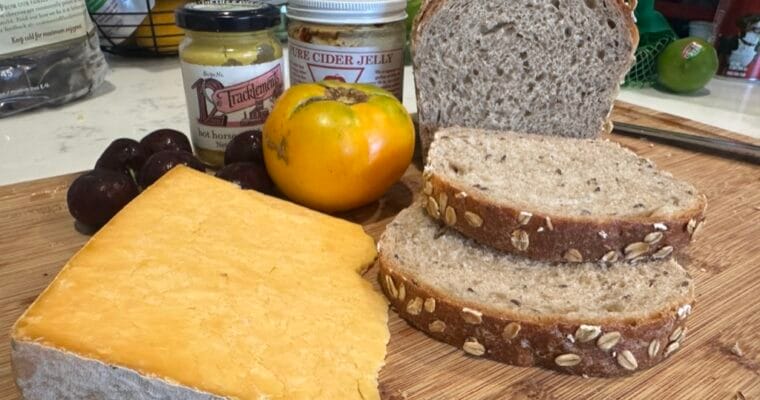
The flavor of Yoredale is a lovely balance of freshness and depth. It has a clean lactic tang, hints of grass and herbs, and a gentle sweetness. It pairs beautifully with crisp apples, ripe pears, and fresh figs. A glass of cider or a light ale will echo its bright acidity, while a floral white wine will bring out its delicate sweetness.
There are two other farmhouse Wensleydales you can find at Neal’s Yard Dairy, but Yoredale is the only one they bring over to the United States. Please comment if you’ve tried the others!
Kirkham’s Lancashire is an English Territorial, one of the Crumblies, and one of my favorites. It’s buttery, tangy, and as one of my colleagues said, “fluffy.” However, when people see Kirkham’s Lancashire on the counter, they figure it’s another cheddar. With this post, we’re hoping …
It’s our first cheese post! Here we go! Appleby’s Cheshire comes from Hawkstone Abbey Farm in Shropshire, England. The Appleby family founded the farm in 1952, and now Paul Appleby and his wife Sarah carry on the work, with help from their five children. They …
I’m teaching a British Cheese and Cider class this weekend, so I thought I’d share a little about why I’m so excited about it. While I’m currently the British Cheese Buyer at Formaggio Kitchen, I used to work at a natural cidery, Botanist & Barrel. Before finding them, I was more of a beer and wine enthusiast. I always thought cider was sweet and insipid, not something adults drank. They truly opened my eyes.
When I moved to Hillsborough, North Carolina to start our farm, I found there were no breweries nearby, just Botanist & Barrel, the South’s first natural cidery. It’s a gorgeous spot, with a pond and a decades-old blueberry farm. I tried a flight in their tasting room, and I was hooked. Later I joined the team, working the tasting room and selling cider at farmers’ markets. I even made cider at home, and it was amazing. Now that I live in New England, land of apples, I think it’s time to start again!
I want to thank Eglantine Crumb and Aritz Rind for sharing their perspectives and expertise. This is our first post written together, and I look forward to many more collaborations!
Pairing British Cheese and Cider
Cider isn’t just historically linked with British cheese, it’s also a natural partner in flavor. British farmhouse cheese like cheddar, Cheshire, Red Leicester often have a savory, earthy depth, sometimes even a bit of tang. Traditional ciders, especially from the West Country, bring bright acidity, gentle tannins, and a touch of sweetness. That balance cuts through the richness of the cheese and lifts it, the way a squeeze of lemon can transform a dish. Together, they create something greater than either alone.
Eglantine: A well-made cider has that sparkle of acidity, like a crisp autumn morning. It clears the palate, so when you return to the cheese you taste it afresh, more layers, more nuance. And the tannins, ever so soft, seem to catch hold of the cheese’s creaminess, carrying it further.
Aritz: For me it is simple. Cheese is fat, cider is acid. They fight, then they dance. But also, both are of the land. Working people drank cider, ate cheese, because it was theirs. Just apple and milk, what the land gave. That is why the pairing is honest.
British Apple Origins
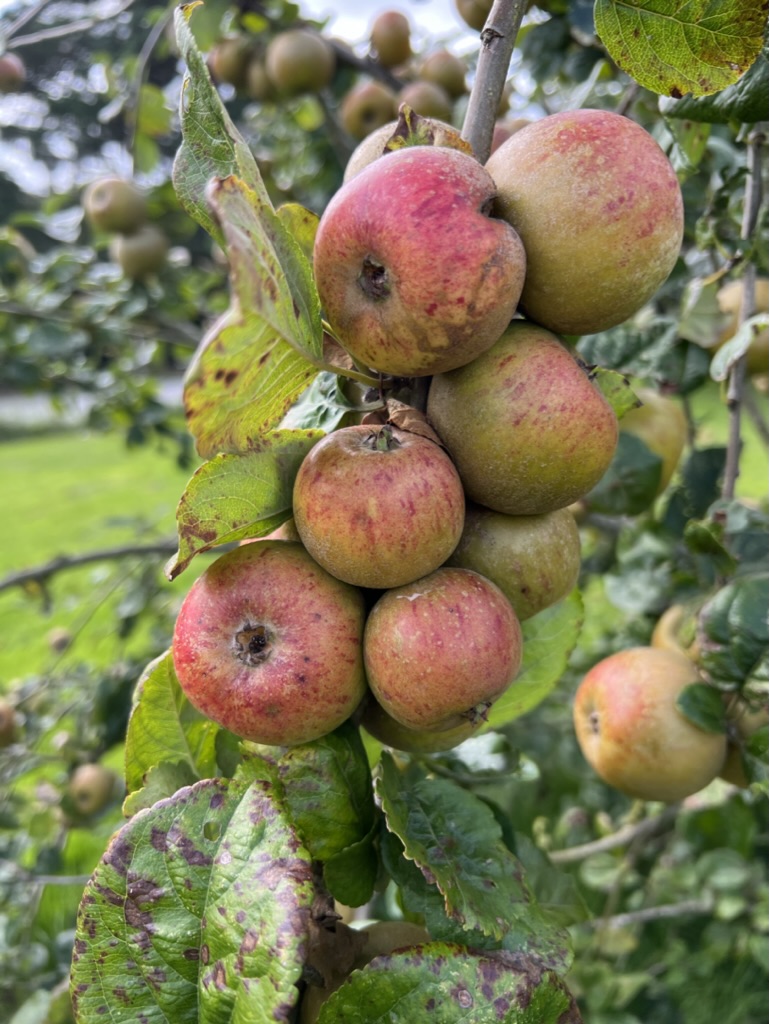
The old saying, “What grows together, goes together,” applies not just to seasonality of fruits and veg, but to geography as well. While the apple is not indigenous to the British Isles, it has been there a very long time. Apples originated in Kazakhstan, and spread by many means. Bears were among the first Johnny Appleseeds, eating apples, swallowing the seeds, and spreading them far and wide in their scat.
Eglantine: It’s an interesting distinction, isn’t it? A plant that arrives on the back of the wind or in the belly of a bird, over centuries, eventually becomes part of the landscape. We don’t call it “non-native.” That word we reserve for what humans cart about: the seeds in their pockets, cuttings on their ships, intentional or not. Nature makes her own introductions.
Here’s Your Roman Empire
When the Romans invaded Britain, folks were already making cider with the wild crabapple. Those crabapples had been there since the Stone Age. They’re not the tastiest for eating, and can make a very sharp and tart cider. The Romans’ apples increased the bounty as well as the quality. Because apples grown from seed do not match their parents’ characteristics, to get consistent quality, you need to graft tasty fruiting branches onto rootstock. The Romans brought that horticultural knowledge with them.
Eglantine: Apple trees are fussy about their winter’s sleep. They need “chill hours” to go dormant, to allow proper rest to wake and fruit again. The West Counties in England are especially perfect, with cool winters, sunny slopes, soils that drain. New England is a heaven for apples!
Cider quickly became Britain’s drink of choice. A glut of apples ripening all at once begs for preservation, and fermentation is a merry answer. There’s that old tale of unsafe water in medieval and early modern times, cider and ale being safer to drink. Saxons brought the ale, but ale meant firewood for brewing, and Britain’s forests were already thinned. Orchards were the wiser path. Later, when the Normans arrived, they brought with them new apples and methods, layering another chapter onto the story. Truly, you can sip British history in a glass of cider.
Aritz: Fermentation was all wild. No packets of yeast, no labs. Just the microbes already living on the skins of the fruit. This is how cider should be, in my view. My favorite English cider is Scrumpy. “Scrumping” is stealing windfall apples from the orchard floor. To the landlords, it was theft. To the poor, it was survival. Scrumpy is rough, cloudy, and sometimes fierce. Stronger too, because the apples have already begun their beautiful change. But it tastes of freedom. Of not paying rent for every drop you drink.
British cheese exists in its own category. And by that we don’t just mean any cheese made in the UK, but rather the traditional territorial styles that originated there. They are often fondly dubbed The Crumblies, (specifically Cheshire, Caerphilly, Wensleydale, and Lancashire,) thanks to their …