Blue Cheese Family
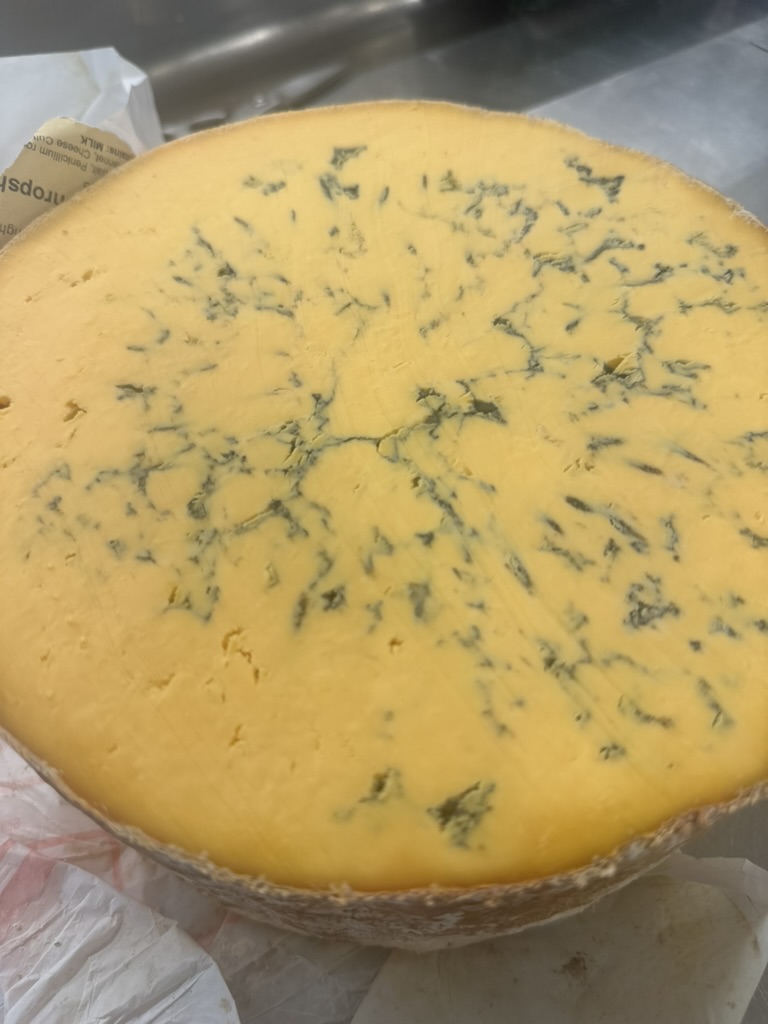
Do not be afraid!
When I’m on the cheese counter at Formaggio Kitchen, helping a customer put together a board, I always ask if there are any cheeses to avoid. The second most common answer is “Blue cheese!” (The most common is “Nope!”). I understand completely — the idea that cheese is moldy milk is right there in your face with blue. It can be a lot to handle. I have to admit, I struggle with Roquefort myself, especially when it turns very peppery. At its best, though, it can taste like the limestone cave where it was aged, buttery and earthy, and absolutely divine. Does that make sense?
The Magic of Mold
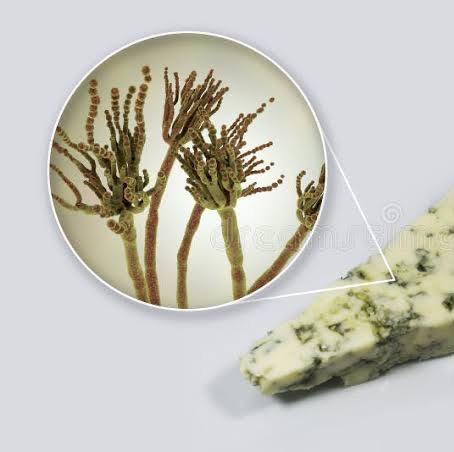
At the heart of most blue cheese is a fungus called Penicillium roqueforti. Another, Penicillium glaucum, is milder and used in cheeses like Gorgonzola Dolce and Fourme d’Ambert. Cheesemakers may add the mold to the milk before the curds form, sprinkle it into the curd, or spray it on the wheels.
Aritz: People talk about mold as if it is an enemy of cheese. But it is everywhere — in the soil, in the air, in the caves, in the cheese. Different strains of Penicillium roqueforti and Penicillium glaucum give different shades: green, blue, even gray or brown. Without microbes, there is no cheese.
In blue cheese, the curd is left open, not pressed tight with weights. Air can move and mold can grow. After the curds are molded, cheesemakers pierce the cheese with long needles — needling — to let oxygen in so the mold can bloom. Once oxygen reaches the interior, the mold creates those streaks of green and blue. British blues like Stilton often have a drier natural rind and long, fine veins. Continental blues are wrapped in foil, with sticky rinds and wider veins.
Blues of Legend
The tale goes that a shepherd left his bread and curd in a cave, distracted by a pretty girl. When he came back, the cheese was covered in mold. Hunger won, and he tasted it. Thus was born Roquefort. The truth is probably more complicated, but stories like this make sense when you think about how little people once knew of microbes and chemistry. Of course cheese seemed magical.
Types of Blue Cheese
Eglantine: Some blues are creamy as butter. Gorgonzola Dolce melts like a dream. Others crumble like damp earth, salty and strong, like a wedge of Stilton. Cow’s milk is the most common, but sheep’s milk brings richness, and goat’s milk a touch of wildness.
There are many ways to categorize blue cheese. By milk: cow, goat, sheep, buffalo. By rind: natural, rindless, or even blue. Monte Enebro, a goat’s milk cheese from Spain, has no blue inside, only on the outside. Some, like Bleu de Bresse from France, even have a bloomy rind.
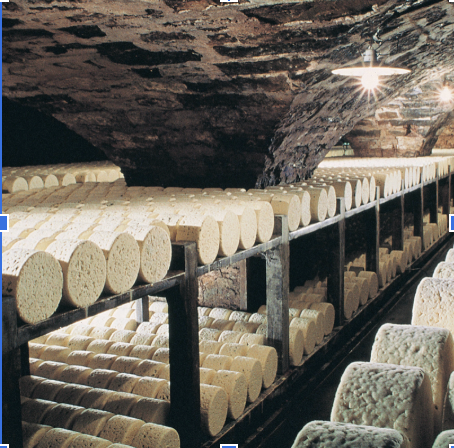
This is also a good moment to talk about protected names. Certain cheeses can only carry their names if they meet strict rules about where and how they are made. Roquefort, for example, must be made with raw Lacaune sheep’s milk and aged in the caves of Roquefort-sur-Soulzon to earn the Appellation d’Origine Protégée (AOP). Stilton must come from pasteurized cow’s milk, have a natural rind, and be produced in Derbyshire, Leicestershire, or Nottinghamshire to carry Protected Designation of Origin (PDO). We’ll do a full post on protected cheeses soon. Stay tuned!
A Taste of Today
Across Europe you’ll find the greats: Roquefort, Stilton, Gorgonzola. Each stands as a landmark in flavor, history, and place. Closer to home, American cheesemakers have built their own blue traditions. Jasper Hill’s Bayley Hazen Blue is fudge like and nutty, approachable even for the blue cautious. Their Withersbrook Blue, washed with ice cider, is sweet and appley. Check out Parish Hill’s West West Blue, which follows a traditional two curd Gorgonzola recipe, with honeyed richness.
Pairing Blue Cheese
Blue cheese often tastes surprisingly sweet, even when it’s sharp or salty. That sweetness comes from how Penicillium roqueforti breaks down milk fats and proteins during aging. The mold releases compounds (methyl ketones, secondary alcohols, esters, lactones, free fatty-acids,) that remind us of caramel, cocoa, or butterscotch. At the same time, blue cheeses usually have a lot of salt, and salt makes our taste buds more sensitive to sweet flavors. The contrast of salty and savory with those sweet-like notes is what makes a bite of blue cheese feel so complex and lingering.
Eglantine: Blue longs for sweetness. A drizzle of honey, a pear, a glass of Port. A wedge of Roquefort with Riesling is pure bliss. Or stir crumbles into cream for a sauce over steak. Never let anyone tell you blue is only for salads.
Aritz: Sweetness balances salt, yes. But do not forget beer. A nut brown ale, a stout. Blue on a burger. Blue with dark chocolate. These are foods of workers as much as of kings.
Give the Blues a Chance
When someone tells me they will eat anything except blue, I don’t argue. (I may offer a taste though.) I remember feeling that way too. But I also know that blues are not all the same. Some are fierce and peppery, others soft and creamy, and some carry a sweetness that surprises people. The only way to know is to try them. And when you find the one that speaks to you, whether it is Roquefort, Stilton, or a Vermont original, it truly feels like discovering a secret you did not expect to love.
Sources
Ottogalli, G Global Comparative Method for Classification of World Cheeses Annals of Microbiology 50 (2000): 151-155
Cantor, MD et al Blue Cheese in Cheese: Chemistry and Microbiology V2 Major Cheese Groups pp 175-198
Oxford Companion to Cheese
Herbst Companion