Boxcarr Handmade Cheese – Rocket’s Robiola
Where I Began
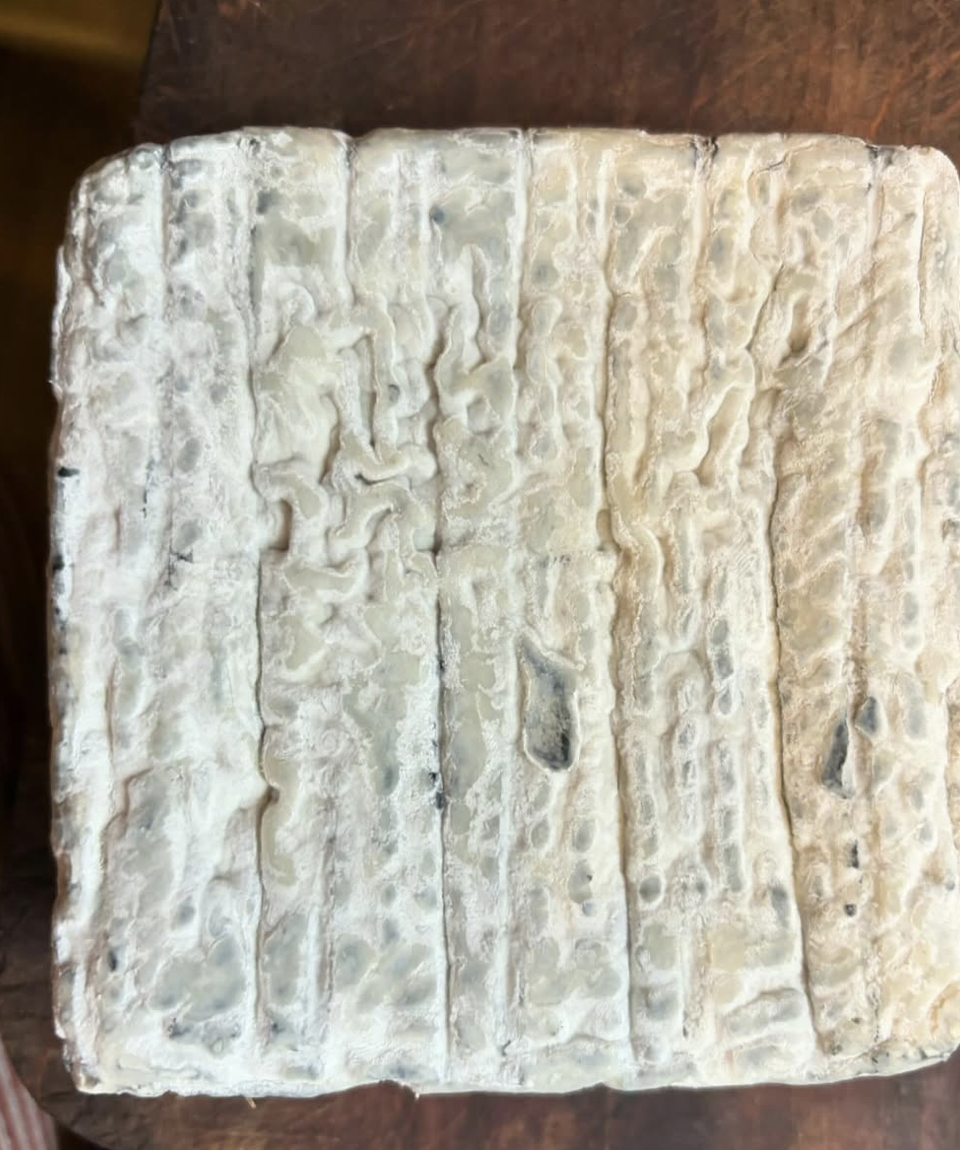
This post about Boxcarr Handmade Cheese and their Rocket’s Robiola will be a bit longer and sentimental compared to our other posts. I wrote this post without help from Eglantine or Aritz, since it is where my cheese journey truly began. I was a fan of cheese before, of course. Someone gave me The Oxford Companion to Cheese for Christmas. And when my daughters were young I would treat myself to little offcuts from the Whole Foods cheese counter. I loved everything I brought home, but I didn’t think too much about it. It was not until Boxcarr that I began to understand cheese. (This post will be updated with better cheese pics soon!)
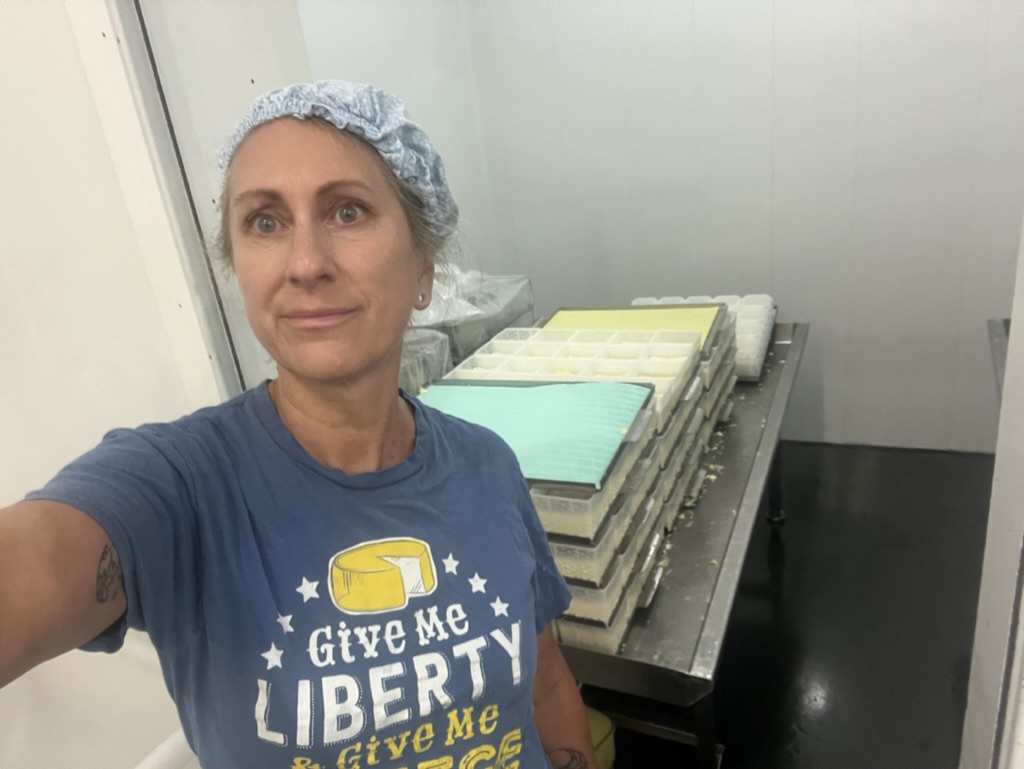
In late 2019, while still running our farm, I saw a post on Instagram that Boxcarr Handmade Cheese was hiring. Since I already loved their Winsome and Cottonbell, I applied for the dishwashing job. I thought it would be a fun off-farm role. Soon I was also washing cheeses in the aging rooms, and eventually I stepped into a cheesemaker’s role. I first learned robiola. To be honest, before Boxcarr I had never even heard of robiola, so it was also the first cheese I researched in earnest.
Gratitude, Magic, and Cheese
During training, Sam showed me the magic and reverence I now try to bring to the cheese counter and classroom. When four of us gathered around the vat to quickly cut the Redbud curd into tiny bits, it felt like tending a witches’ cauldron. It never felt mundane. It always felt like magic. When training me to cut the robiola curd, Sam told me that monks would bless cheese as they made it. She suggested that it would not hurt to say, or even just think, a few words of gratitude for the animals and farmers who brought us the milk. That sense of gratitude has stayed with me. It is essential to the enjoyment of life and entirely appropriate when speaking of cheese.
The Boxcarr Children
The Genke siblings founded Boxcarr together with their families. Sam was a respected cheesemaker long before starting Boxcarr. Her brother Austin, a chef and graduate of the Culinary Institute of America. His wife Dani, who runs the goat farm and serves as creative director, rounded out the team. How all three of them manage to be so talented I do not know.
Beyond their skill, they also have tremendous hearts. During Covid they shifted their production and donated farmers’ cheese to food pantries and schools. If you were an out-of-work service worker, you could stop by and pick up a box of beautiful cheese, often with a few vegetables from local farms tucked in. I often think of them when I think about why it matters so much to support local farmers and artisanal food producers.
Robiola in Italy
Robiola itself is one of Italy’s oldest cheeses, stretching back to Roman times. The name most likely comes from the town of Robbio in Lombardy, though today robiola is most closely tied to Piedmont and Lombardy. These were places of small, mixed farms. Families kept a cow or two, some sheep, maybe a goat, and cheeses were often made from whatever milk was on hand, resulting in mixed-milk wheels.
Unlike the long-aged cheeses of northern Europe, robiolas do not take long to mature. Their small format made them easy to sell at local markets, and their delicate rinds and creamy interiors suited the rhythms of farm life. Some were wrapped in cabbage leaves, others bloomed with a fine white mold, and some developed the wrinkly geotrichum coat that we still see today. Robiola was a true farmstead cheese, shaped by necessity, place, and tradition.
Young Rocket’s Robiola
Rocket’s Robiola
American cheesemakers are not bound by the same naming rules and traditions as their European counterparts. Because North America did not have its own indigenous dairy culture, most artisan cheeses here borrow Old World styles. For example, the bloomy-rinded triple crèmes of Normandy inspired Cowgirl Creamery’s Mt Tam, and the ash-ripened goat cheeses of the Loire Valley inspired Humboldt Fog from Cypress Grove. They have become distinct in their own right. Similarly, most of Boxcarr’s cheeses draw on Italian inspiration.
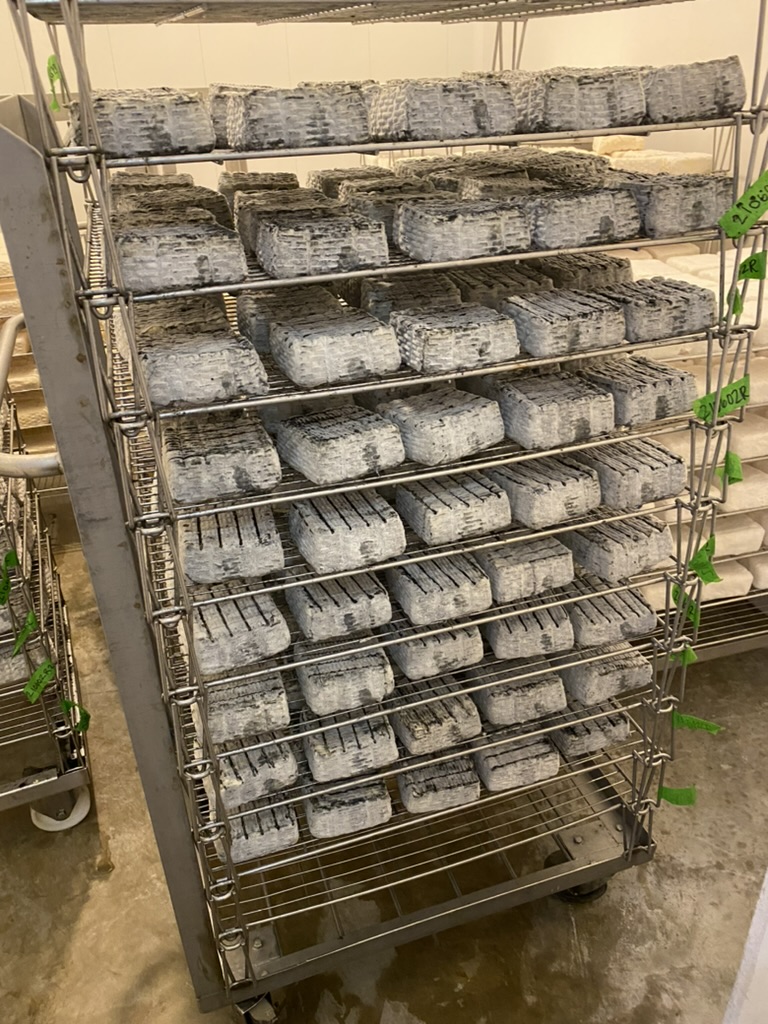
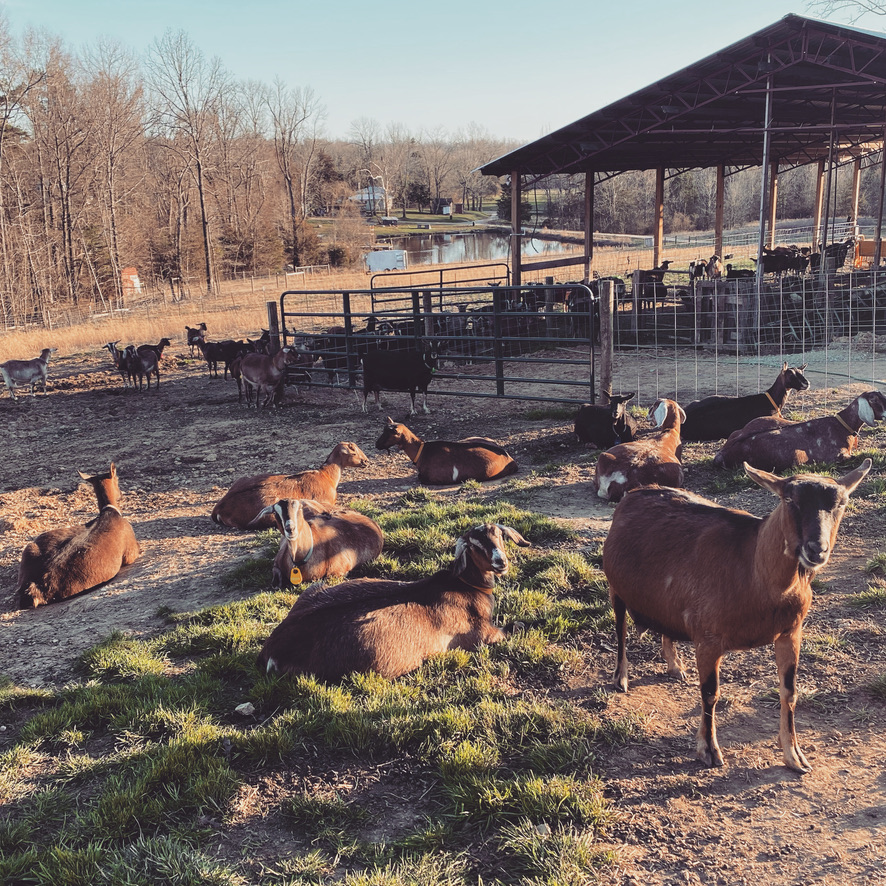
Boxcarr Handmade Cheese and their Rocket’s Robiola nods to that heritage, including the Genkes’ own Italian roots, but it also stands apart as an American original. When I was judging at the Big E, one of my fellow judges said Rocket’s Robiola was his favorite American Original. The cheesemaker gently cuts and jiggles, never stirs the curd. This cow’s milk cheese develops a wrinkly, ashed geotrichum rind. The ash is not traditional for a robiola, but since it slightly lowers the surface pH, it encourages that beautiful rind to flourish. Very clever! It also looks striking on a cheese board. Despite being an all-cow cheese, Sam named the cheese after one of her first goats, Rocket.
How to Eat It
And now, a whole post without a word about flavor or pairings! It’s definitely not an afterthought, I just had to get all my feelings out!
Rocket’s Robiola has a supple, luscious paste with flavors that begin lactic and yogurty, then deepen into earthy, mushroomy, and slightly tangy notes as it ripens. The rind adds a faint nuttiness and a gentle contrast to the cream beneath.
For pairings, try:
- Drinks: Sparkling wine, crisp dry cider, or a minerally white like Vermentino.
- Food: Fresh stone fruit or berries, a drizzle of wildflower honey, and slather it on charred sourdough bread.
- Boards: Its ashed-rind makes it a natural centerpiece. Slice into it and let the gray-and-white contrast shine.
1 thought on “Boxcarr Handmade Cheese – Rocket’s Robiola”