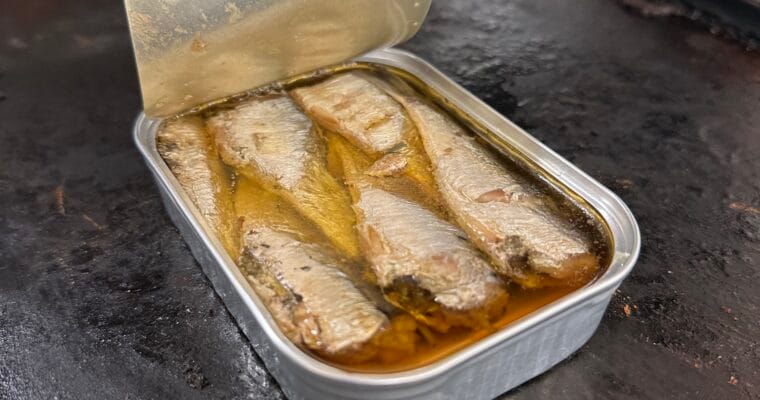
Tinned fish, called conservas in Iberian culture, has become popular in the U.S. in recent years, though it’s been beloved in Europe for decades. It’s sustainable, healthy, delicious, and the tins are undeniably cute. Conservas deserve a spot on any cheese and charcuterie board. I …
Shop Small If there was one thing I would ask of people, besides vote (or read a book,) it would be to shop small, especially at cheese shops. We’re heading into the holiday season, when most retail makes the profit that helps them through the …
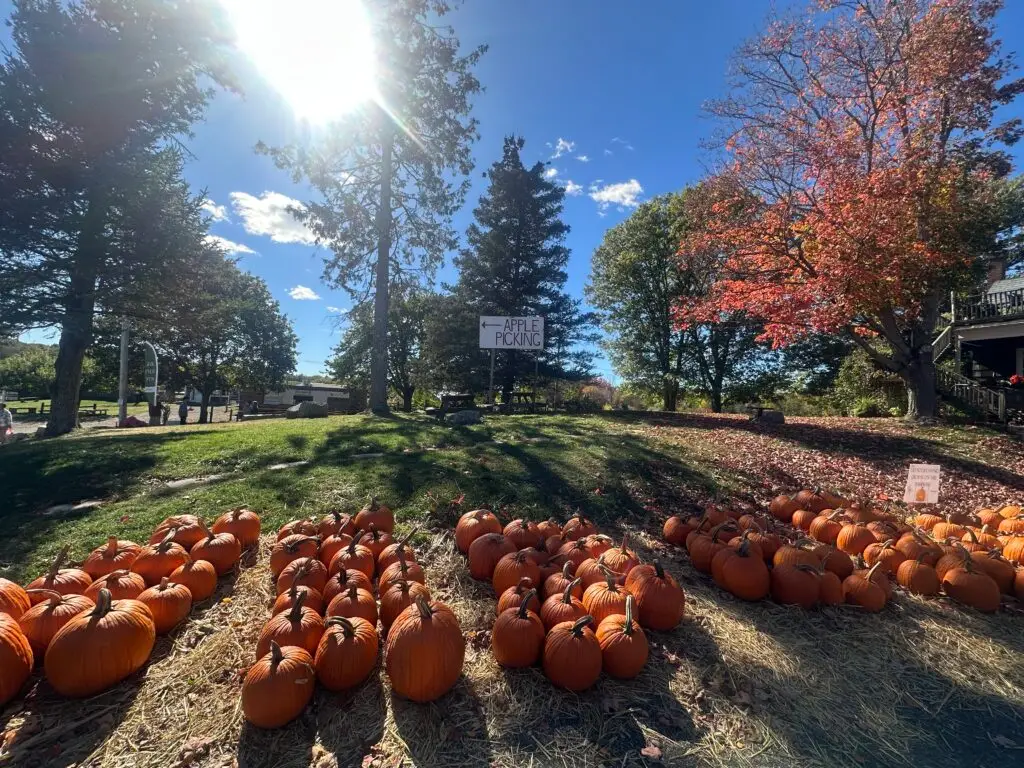
The change in season is upon us, and I’d like to talk about eating seasonally! Last night was our first frost warning in Boston. Foliage senescence is well under way. Halloween decorations are out. I just bought my second gallon of fresh pressed apple cider. I’m so excited to be in New England for fall. It’s the most autumnal and spooky of all the regions of the US. Not just because of the amazing foliage, Salem, Pilgrims, and Stephen King either. Could it be the apples?
Apples might be my favorite fruit. They are right now! Especially lately, with all of our recent posts about British Cheeses and Cider pairings. Apples and cider will never be as chemically complex as grapes and wine, but think of all the ways we use apples: from cobblers to braised short ribs, cheddar sandwiches and apple sangria. Sometimes you want the complexity of your food to shine. Simple pleasures like eating seasonally are always best.
Eat What’s Good Where You Are
And New England apples are among the best. Growing up in California, I only saw West Coast apples. They’re ok, but if they showed up in my lunchbox, I generally tossed them. Even here on the East Coast, you’ll still find plenty of mediocre apples from the West Coast. Why? They grow “better” out there, as the drier conditions mean fewer diseases and a bigger harvest.
But to me, it’s like Florida citrus. They’re just not as good as California citrus. Oranges might thrive in Florida, with all of that water and warm weather. But more isn’t better, not matter how hard Florida tries. The Mediterranean climate of Southern California, with cooler nights and sunny days, makes the oranges more flavorful. They do risk some frost, but we all benefit from going through a bit of adversity, fruit included. Life is too short for flavorless food. I went on a bit of a tangent- not so much about eating seasonally, but I throw shade at Florida any chance I get.
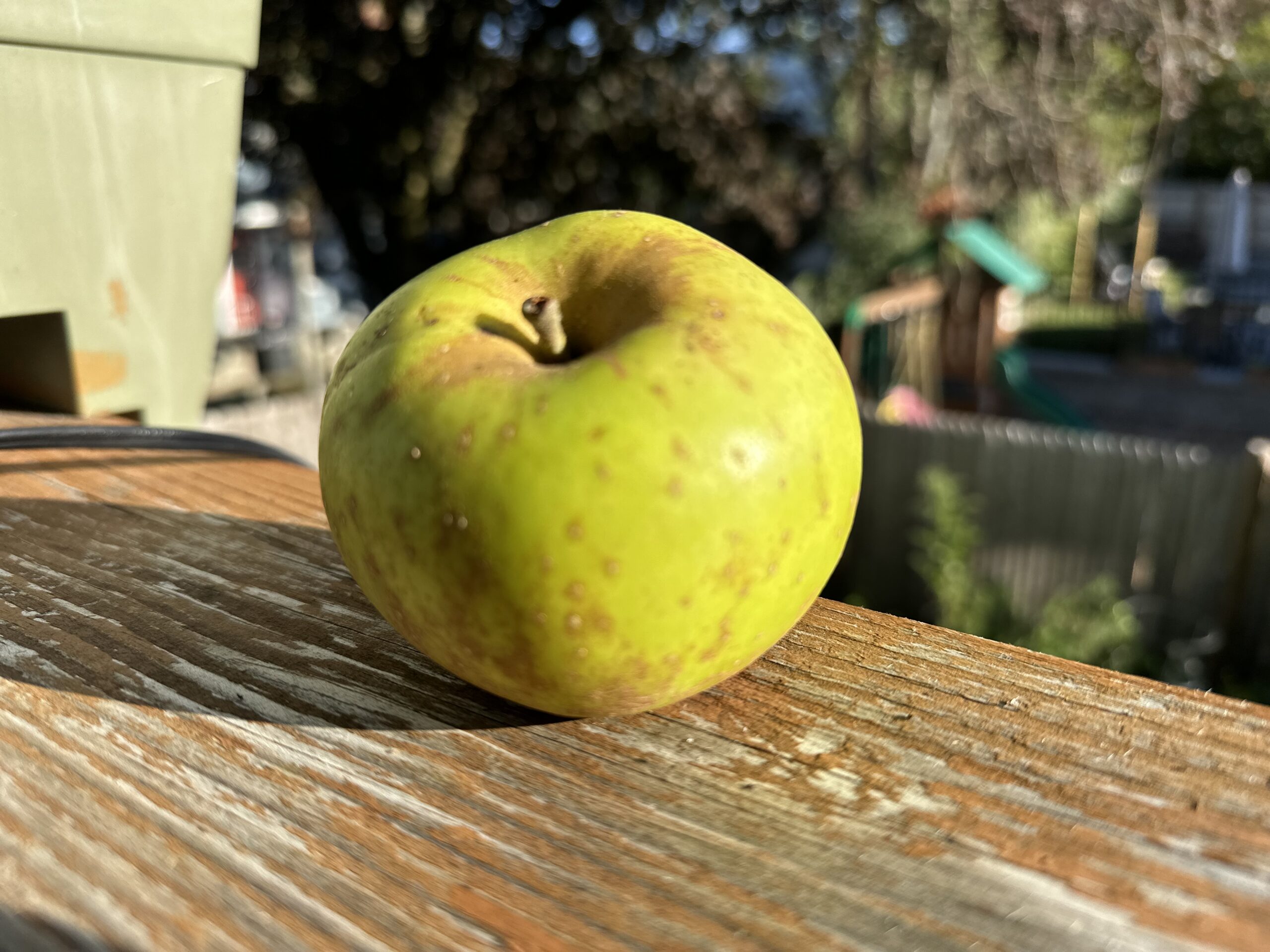
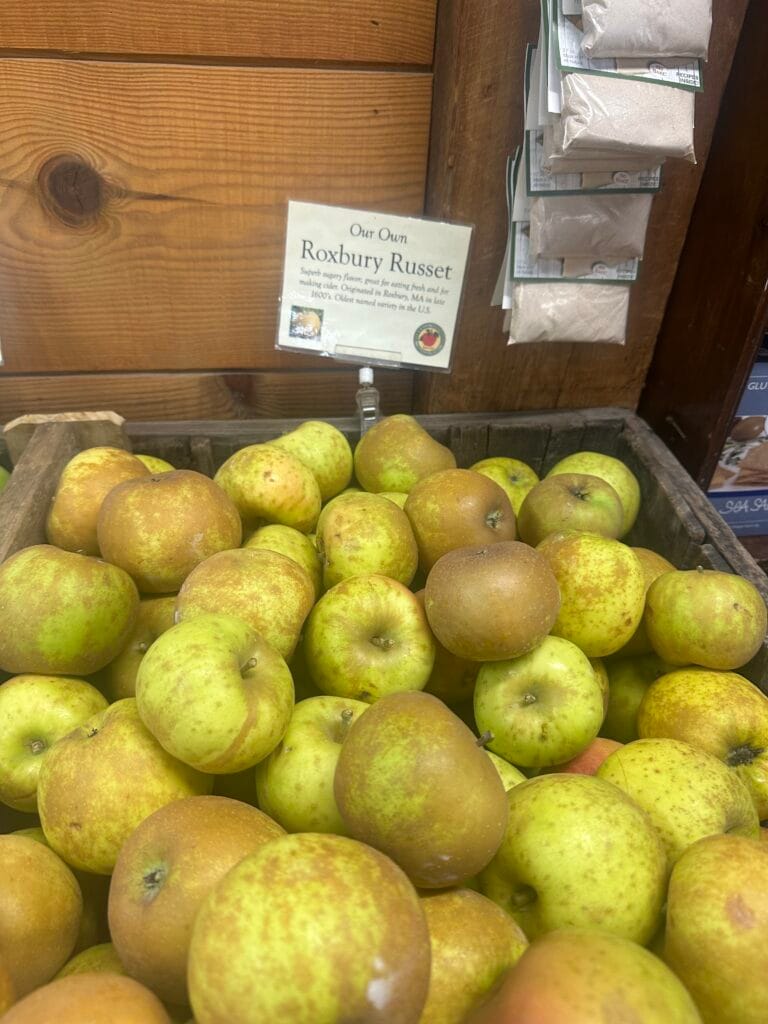
Roxbury Russett Apples
Seasonality of Food
I’ll get to the actual point. Seasonality. I thought of this today while watching a video of a cheesemonger preparing a wheel of Mont D’Or, a lovely winter holiday sort of cheese, while eating a piece of Halloween candy with my coffee. We all know there are seasons to fruit and vegetables, even if we don’t always obey the rules of nature. We can eat food out of season, shipping food all over the globe. But we all know it’s not as yummy. It’s also not good for the environment, or for the local communities growing food for export instead of their own stomachs.
But even as selfish creatures, we should want to eat the yummiest food. My big tip here is to eat seasonally. As Barbara Kingsolver wrote about in Animal, Vegetable, Miracle: Our Year of Seasonal Eating, it makes the year more fun. Eat all the asparagus when it’s in season, and when it’s not, look forward to next year. Keep it special. Don’t we all talk about how frustrating it is that Christmas decorations go up so early in shops? The novelty wears off. If you can always have something, you take it for granted.
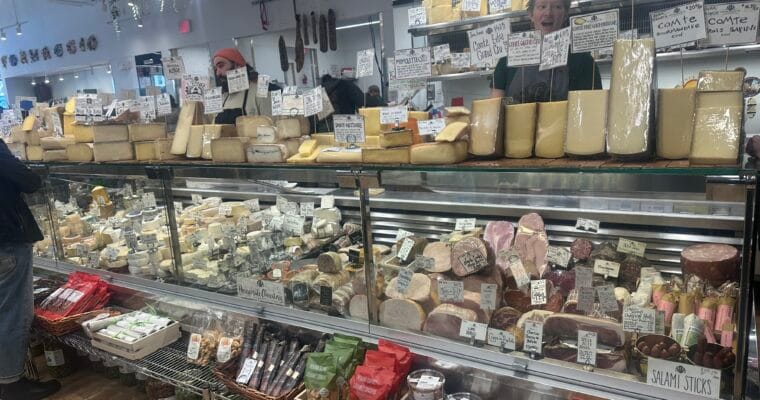
As a cheesemonger at a fancy shop like Formaggio Kitchen, I know there’s a reputation that we’re snobby and judgemental. But I can’t think of anyone pooh-poohing any one’s choices, except for seasonality. Like the guy getting prosciutto for his melon to serve at his Superbowl party, when clearly nachos are in season. Or people asking for raclette on a sweltering August day. It’s just not going to be as good!
Apple Picking
Seasonality of Cheese
So cheese has a season? Yes. 100%. And not just for eating. I didn’t know this until I worked at Boxcarr, for example, but goats aren’t in milk all year. They take the winters off. So fresh chèvre has a season, and it makes sense once you think about it. That fresh, lemony taste is so springtime. That Mont D’Or I mentioned earlier? It’s made during the cooler months. Eating seasonally just makes sense.
Winter milk really is different. When animals move from pasture to hay, their milk changes. It’s thicker, higher in fat, and lower in water. The flavors shift from grassy and bright to buttery and nutty, because dried hay and stored grains make for richer milk. That’s why so many Alpine and holiday cheeses are made in winter: Vacherin Mont d’Or or Haut-Doubs. Let’s not forget the fantastic US versions, Rush Creek Reserve and Winnimere. They’re born of cold barns and smoky fires, not sunny mountain pastures. It’s the dairy world’s equivalent of comfort food.
Eglantine: Winter milk is like cream in a wool sweater. Richer, slower, meant to rest. When animals stop grazing and start eating hay, their milk turns golden and dense, perfect for those soft, spoonable cheeses that only appear in the cold months.
The Natural Rhythm of Food
Apples have their own seasonality, too. There are early apples, the ones you eat straight from the tree in September, crisp and bright. And there are keepers, the ones meant to last all winter in a cool cellar. Cheese, can be eaten fresh or as a keeper too, like potatoes stored in the dark, waiting out the winter. Every farmhouse had its own calendar of ripening and resting. Seasonality gives us a reason to look forward. Fresh apples now, baked apples later. Richer milk for winter cheese. Maybe that’s the point of it all? We’re meant to look forward, and the wait is worth it.
Questions
Is Halloween Candy a seasonal food? What are seasonal foods for the Superbowl?
Cheesemonger tips:
-Think about the seasons when you’re building your cheeseboard, especially for the accompaniments. Think of adding seasonal fruit and flavors. -Don’t eat summer melons in the winter! -Next time you’re in a cheese shop, ask a cheesemonger to show you the different colors of paste between a winter cheese and a summer cheese. The summer wheels will be much more yellow!
Our previous post was about the Trethowan Brother’s Gorwydd Caerphilly, so we decided it made sense for our next post to be about Pitchfork Cheddar, a West Country Farmhouse PDO Cheddar, also made by the Trethowans! When the brothers left Wales, where they had already …
I’ve always been drawn to Caerphilly. It’s a Southern Welsh cheese, and family lore says my great-grandparents on my mother’s side were Welsh coal miners before they emigrated to Pennsylvania. Beyond that though, I think Gorwydd Caerphilly maybe the prettiest cheese I’ve ever seen. What …
Yoredale from Curlew Dairy in the Yorkshire Dales, is real farmhouse Wensleydale, brought back from extinction. For many people, Wensleydale means the industrial blocks in the supermarket, studded with cranberries at Christmas. Yoredale shows what the cheese was meant to be. It’s one of my favorites, and I hope you have the chance to try it!
The History of Wensleydale in Yorkshire
Wensleydale was born in Yorkshire when French Cistercian monks arrived with their cheese-making skills. Later, when Henry VIII’s minister Thomas Cromwell oversaw the Dissolution in the 1530’s, stripping the abbeys of their land and wealth, the recipe was passed along to farmers’ wives. (I’m on my third book about Thomas Cromwell this year, so I just had to throw that in.)
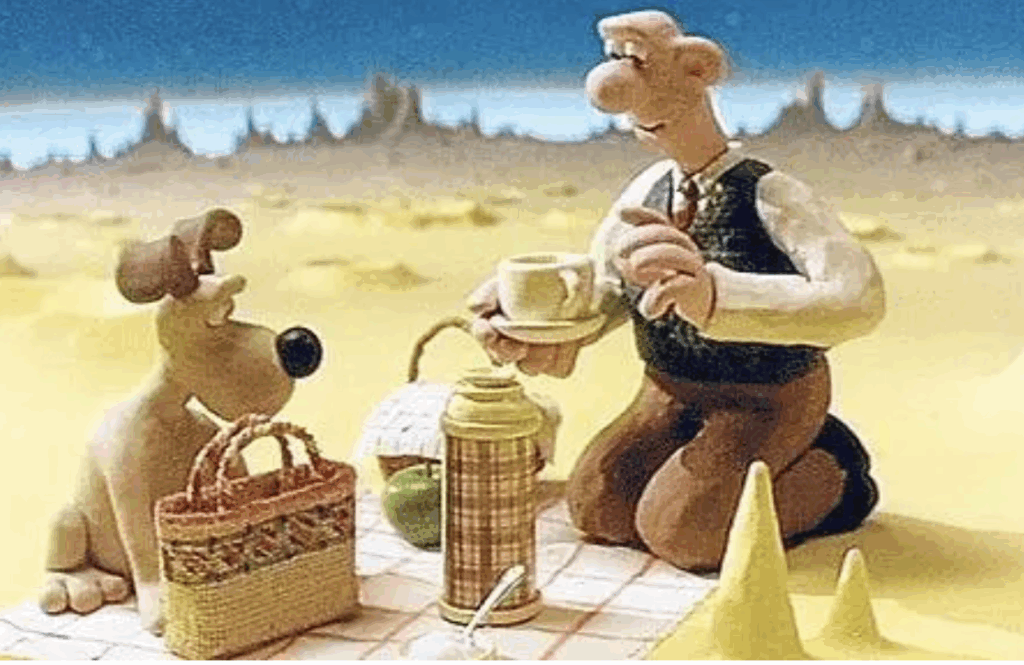
Wallace and Gromit on The Moon
Cheese, Gromit!
By the late 20th century, traditional farmhouse Wensleydale nearly disappeared. We talked about the effects of Industrialization in our post on Kirkham’s Lancashire. Production had long moved into factories, and the old ways of making it on small farms were gone. The last creamery in Hawes was even set to close in the 1990s. What saved it, oddly enough, was Wallace and Gromit! Their love of Wensleydale in the films sent demand soaring, giving Wensleydale Creamery a lifeline and sparking interest in real Yorkshire cheese again. That surge of interest set the stage for Sam and Ben Spence at Curlew Dairy to help bring real farmhouse Wensleydale back to life.
Making Yoredale Wensleydale
Eglantine: I grew up in Yorkshire, so I’ll tell you straight, Wensleydale belongs to this place. For centuries in the Dales, farmers’ wives made Wensleydale, using up the surplus milk when the cows were flush in summer. The cheese is best young and fresh, often eaten with bread and ale at the table, or taken down to the markets. It was never meant to be fancy. It was everyday cheese, proper food for working people, and part of the rhythm of the farm.
That is what Curlew Dairy brought back with Yoredale. They use milk from Holstein and Ayrshire cows, well suited to cheesemaking and to the rough ground of the Dales. The herd grazes on high pastures for much of the year, feeding on grass and wildflowers that give the milk its clean, lactic character. In winter, they eat gorgeous haylage grown on the farm, giving the milk an even sweeter taste. They use the milk the same day, raw and full of its natural flora, to make Yoredale in their dairy in North Yorkshire.
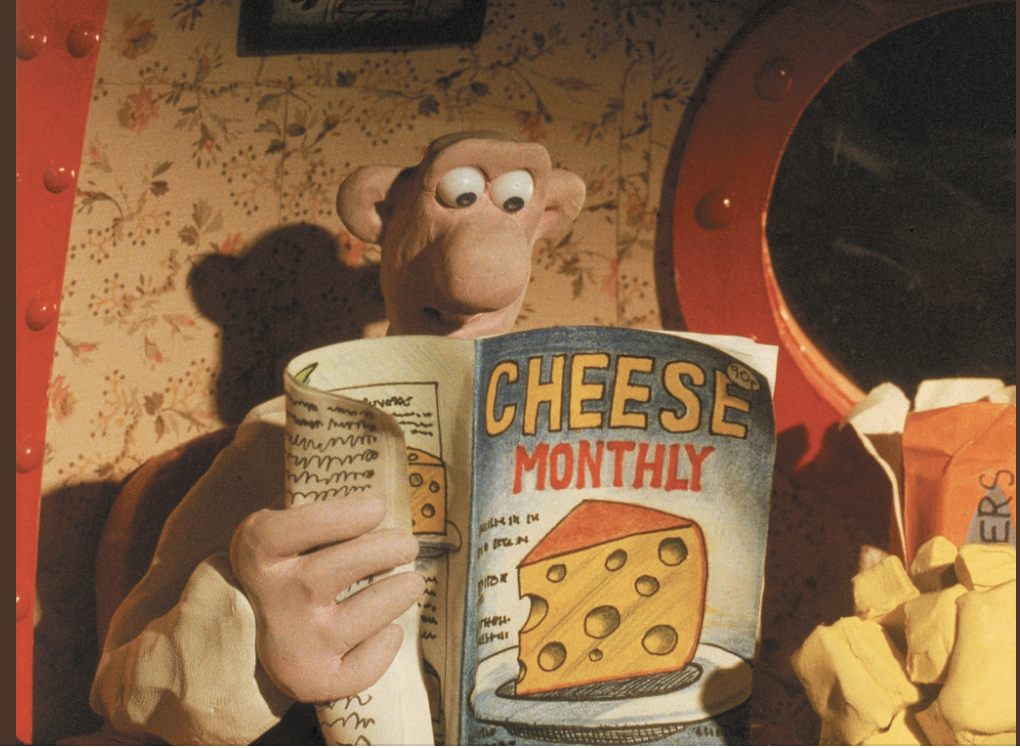
Wallace Reading Cheese Monthly
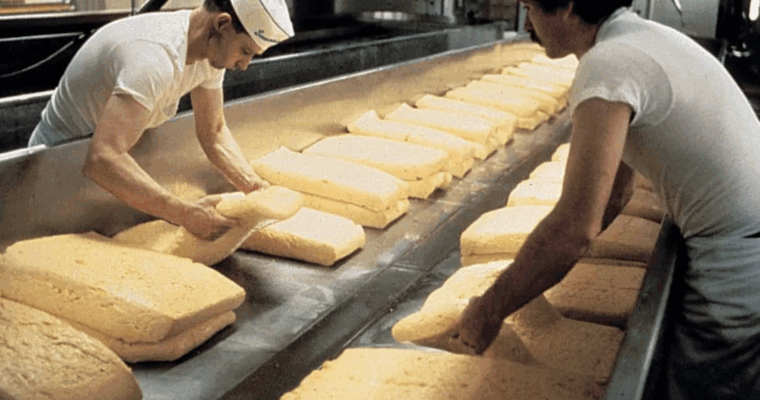
Curd Size
Eglantine: The trick with Wensleydale is in the curd. We cut it bigger and stir it less, so it keeps hold of more whey, and we press it only lightly. That is what makes the cheese moist and crumbly instead of hard and dry. If you press it too much or cut the curd too fine, you end up with something closer to Cheddar. Done right, Wensleydale stays fresh, clean, and lactic with that touch of honey sweetness. It is honest cheese, proper to the Dales.
Aritz: Yoredale Wensleydale ages three to four months. Because the curds are large and hold more whey, the cheese cannot be kept for long aging like Cheddar or Comté. I have nothing more to add, Eglantine has done a beautiful job explaining this cheese.
This is a good moment to notice how curd size affects a cheese. Large curds hold more whey, so the cheese stays juicier and fresher, with a crumbly but moist bite. Small curds, cut fine and stirred longer, drain more thoroughly and set the stage for firm, long-aged cheeses like Cheddar, Parmigiano Reggiano, or Gouda. The make begins with the curd, and the curd decides much of the cheese. If you’re not sure what curd is, stay tuned for an explanation!
Flavor and Pairing
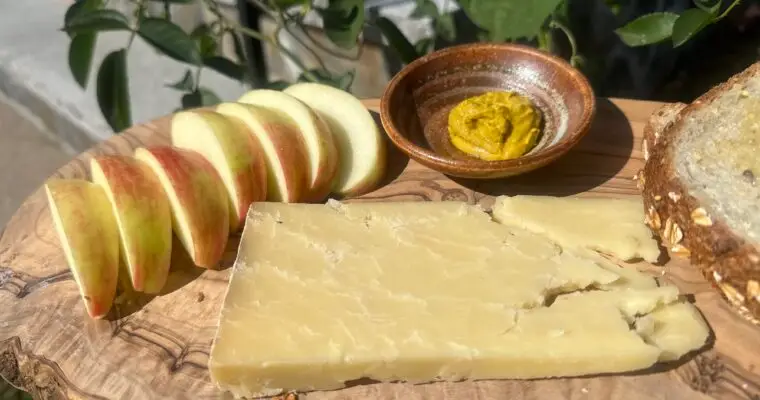
The flavor of Yoredale is a lovely balance of freshness and depth. It has a clean lactic tang, hints of grass and herbs, and a gentle sweetness. It pairs beautifully with crisp apples, ripe pears, and fresh figs. A glass of cider or a light ale will echo its bright acidity, while a floral white wine will bring out its delicate sweetness.
There are two other farmhouse Wensleydales you can find at Neal’s Yard Dairy, but Yoredale is the only one they bring over to the United States. Please comment if you’ve tried the others!
Often I hear, “Oh, I just like boring cheese like cheddar” or if I suggest a cheddar to try, they look disappointed. But it’s a fantastic cheese! Cheddar is the cheese most of us know by name, but very few of us truly know. When …
Do not be afraid! When I’m on the cheese counter at Formaggio Kitchen, helping a customer put together a board, I always ask if there are any cheeses to avoid. The second most common answer is “Blue cheese!” (The most common is “Nope!”). I understand …
It is time to more fully introduce our founders, Eglantine Crumb and Artiz Rind. As I mentioned in a previous post, there’s a bit of hesitation here. I’ve got two reasons. One is respect for their privacy. Two is that I’m not sure people will understand….
Eglantine Crumb
Eglantine is a cheesemaker, cook, and baker with a keen interest in foraging and brewing. She rather fancies herself a bit of a witch. She always says, “Food’s magic!” and believes in the healing power of a warm meal made with love. Born and raised in Yorkshire, England, she will always have a soft spot for Wensleydale. Though her roots are rural, she has traveled widely and draws from many cuisines in her kitchen. Every so often, she shares stories from those adventures. While she is proud of her resilience and ingenuity in finding her way home, she’s still a little embarrassed about how she ended up trapped in a shipping container in the first place.
She is our window into the animal and plant worlds that shape cheesemaking and food. For example, she brings a special understanding of how feed influences milk, how different breeds of cow lend their character to cheese, and she cares deeply about the welfare of the animals themselves. She’ll also share her pairing suggestions and recipes!
She and Aritz founded Crumb & Rind to spread the word about the wonderful world of artisanal cheese. It was her idea to bring me into the fold to hopefully find a greater audience, and I am grateful for her taking a chance on me. I promise to listen and share what I learn.
Aritz Rind
Aritz Rind is a little harder to explain (pssst, he’s a cheese mite.) He is a Basque (we think) anarchist (we know), and an affineur. (An affineur is someone who tends to cheese as it ages. More on that soon.) His favorite cheese is Ossau-Iraty, washed down with an unfiltered sagardo. He lives in an aging cave, though none of us is quite sure where. He insists he has traveled widely, and scoffs at our knowing smiles when we remind him he hasn’t gone all that far.
Through the mycelium network, he can reach almost anywhere on earth, so he picks up all sorts of odd bits of knowledge. Since his diet is mostly fungus, he can be a little out there sometimes. He’s also deeply political, never missing the chance to remind us: “Every bite is a choice, and every choice is a vote.” He can be intense, but he doesn’t take himself too seriously.
Aritz is our guide to the invisible world, where fungi and bacteria shape so much of what we eat and drink. He reveals how cheesemaking depends on things we cannot see. And he often slides into my lane to have something to say about economics, politics, and humanity along the way.
He and Eglantine first met on her travels, and she credits him with helping her get home safely. He has never mentioned it, but it’s clear he’s fond of her. As for me, he wasn’t so sure about my joining Crumb & Rind. He thinks people are too quick to fear what they don’t understand, and too eager to place themselves at the center of the universe. When I joined, I promised him I’d keep a humble, open mind.
Where I Began This post about Boxcarr Handmade Cheese and their Rocket’s Robiola will be a bit longer and sentimental compared to our other posts. I wrote this post without help from Eglantine or Aritz, since it is where my cheese journey truly began. I …