Washed Rind Cheese
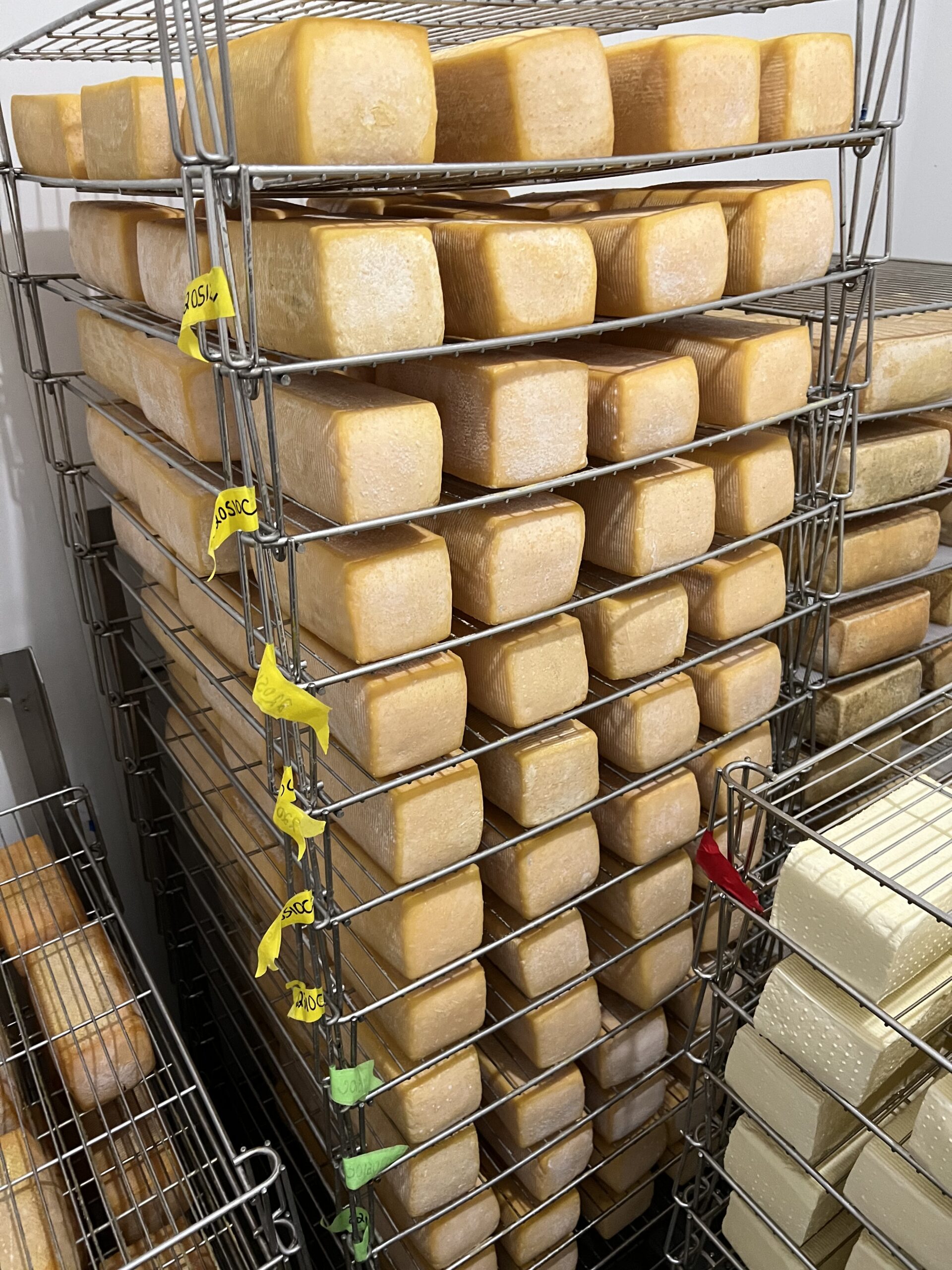
Believe it or not, I’m calling this a seasonal post! A lot of our winter cheeses have washed rinds. Vacherin Mont d’Or, Epoisses, even Gruyère and Comté. Many of the cheeses we melt in the colder months, like Raclette, are on the stronger, funkier side, and they have washed rinds. These cheeses pair well with celebratory Champagne, off–dry wines like Riesling, or a sweet Sauterne. All of these feel right during the holidays and colder weather.
Washing the rind doesn’t just change the look of the cheese. It changes the flavor in a big way. The microbes on the rind start breaking down the cheese from the outside first, which releases all those savory, meaty aromas washed rinds are known for. The paste inside often stays sweet and milky, but the rind adds salt, funk, and a bit of earth. Eating both together gives you that classic washed rind balance of custardy interior and punchier rind.
Funky Washed Rinds
While there are a few ways cheese can develop strong flavors, washing the rind is THE path to funkiness. And that funkiness comes from microbes! When we say a cheese is “washed,” we mean someone literally washes the outside with brine. Sometimes beer, wine, or liqueur is added to the salty water. Some affineurs add microbial cultures to the brine to help things along. Others rely on microbes already in the milk, or those endemic to the aging cave. Washing is cold, labor intensive work. It also requires someone who understands how to care for the cheese at each stage of its life. I got a taste of this skill when I worked at Boxcarr.
Affinage at Boxcarr
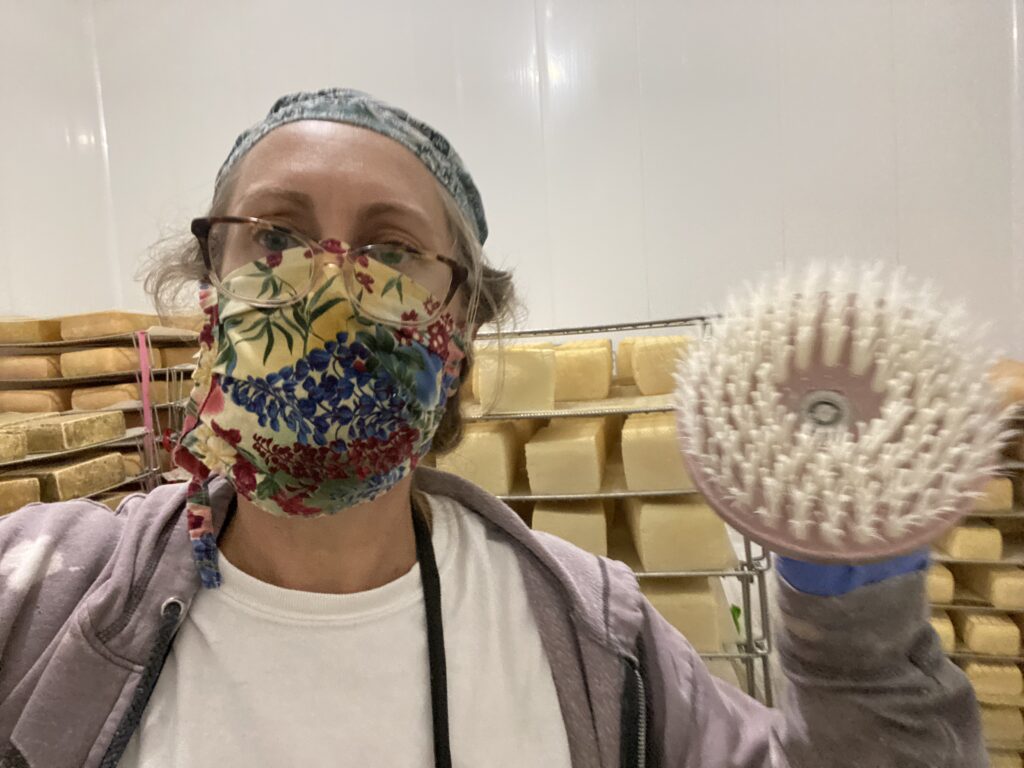
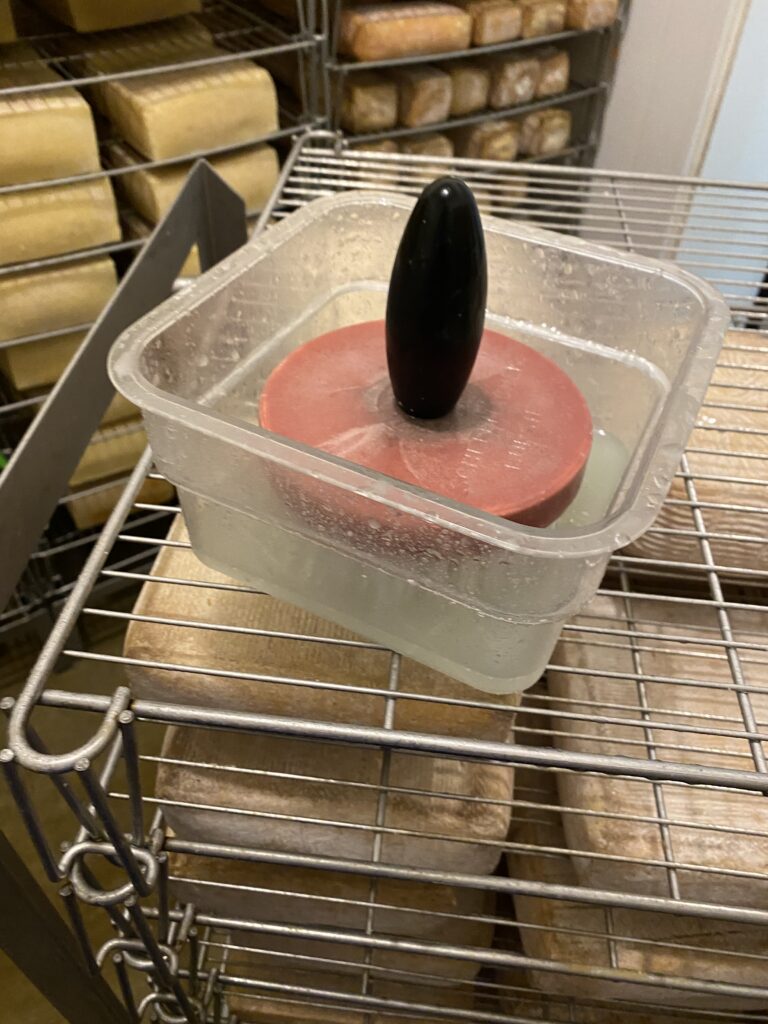
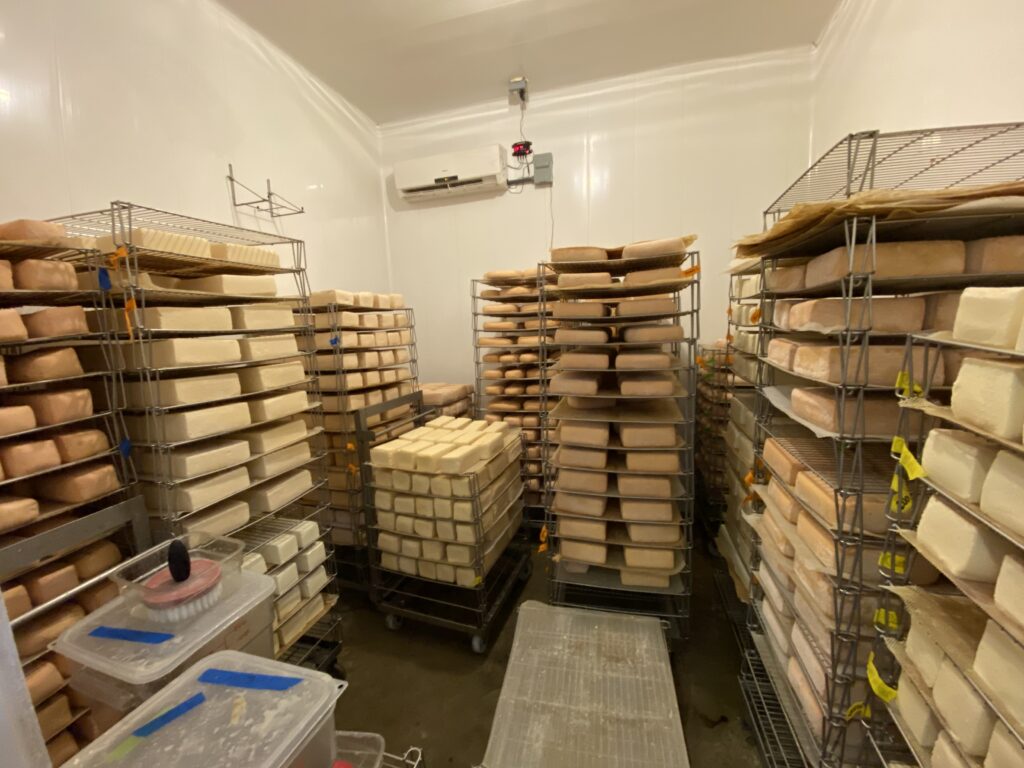
At Boxcarr, cheese brush in hand, I washed Lissome, Nimble, and Campo. Early on, I kept the cheese very wet so the desired microbes could take hold before anything else moved in. Once pale blocks of cheese start turning a bit orange, I could ease up on the aggressive, wet brushing. I wanted the cheese to stay a bit sticky but not too sticky, the difference being something I had to learn by feel. If any unwanted mold started growing, I had to brush more attentively. After a few weeks, once the rind was established, I was able to merely dip my glove in the brine, and lightly smooth over the rind.
An Affineur’s Perspective
Aritz: Brevibacterium linens get a lot of attention for washed rinds, but there are other microbes that create the orange, funky rind people love. Fusarium domesticum, Rhodosporidium, Staphylococcus xylosus, bacteria and yeasts that also make the rind orange and funky. They break down the proteins and fats .
We’ll profile some washed rind cheese, but for now, we hope this was a helpful introduction to what they are!