Gorwydd Caerphilly
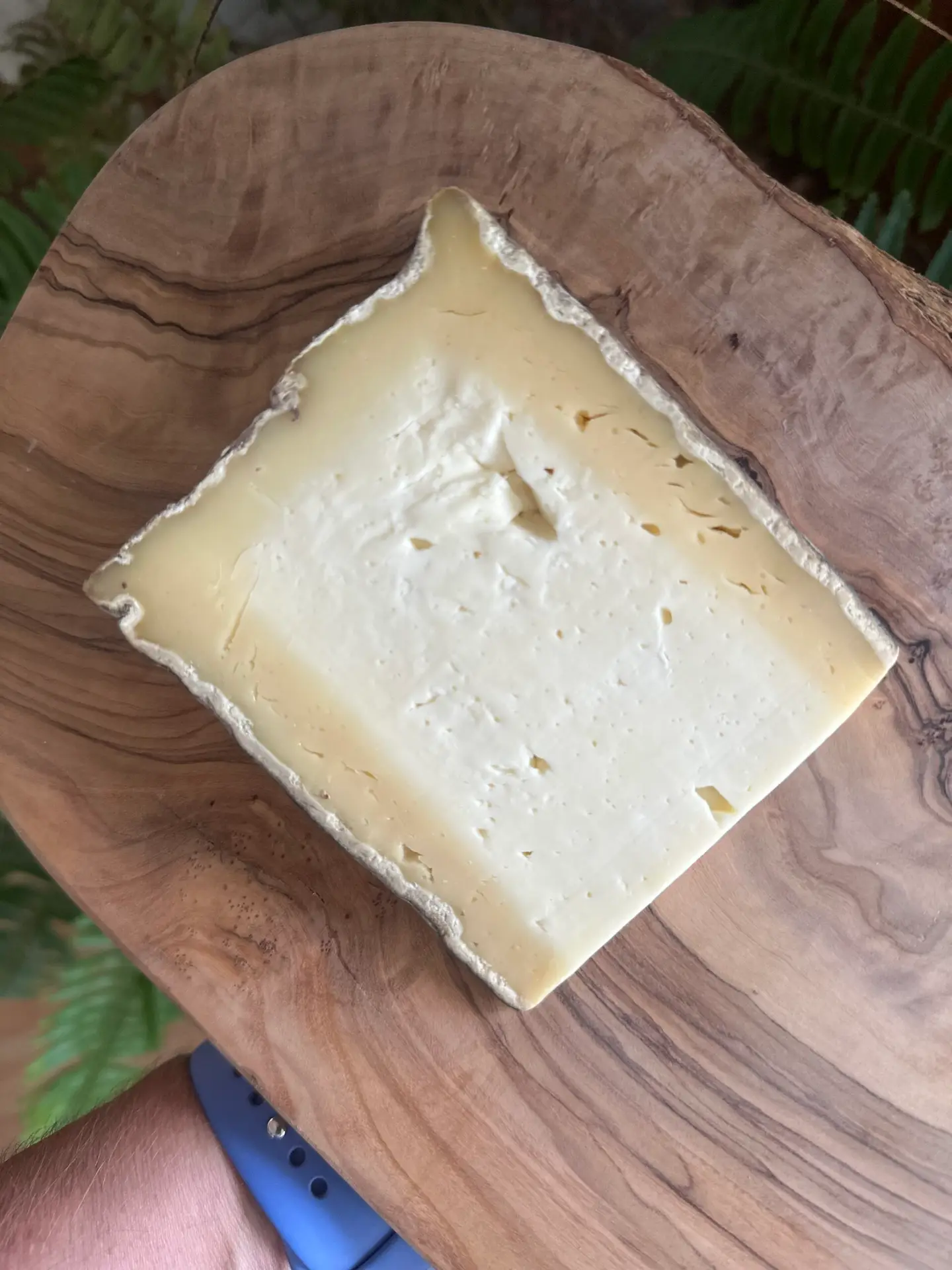
I’ve always been drawn to Caerphilly. It’s a Southern Welsh cheese, and family lore says my great-grandparents on my mother’s side were Welsh coal miners before they emigrated to Pennsylvania. Beyond that though, I think Gorwydd Caerphilly maybe the prettiest cheese I’ve ever seen.
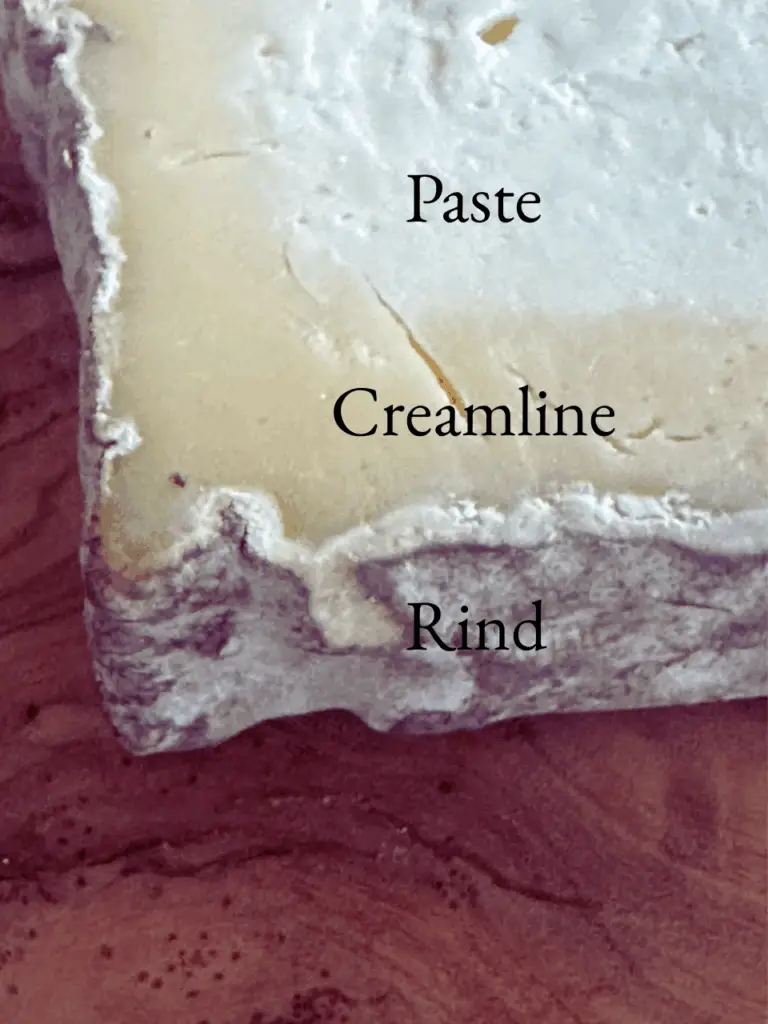
What makes Gorwydd Caerphilly so distinctive though is how easily you can see it ripen in layers. The rind develops a coat of natural molds that smell of wet stone and earth. Just beneath the rind is the creamline, where the process called proteolysis loosens proteins and fats, making it smooth and silky. It gives buttery, vegetal, and mushroomy notes.
At the center, the paste stays bright, crumbly, and clean, with high calcium lending it a chalky texture and lemony snap. Each part tastes different because microbes and enzymes work their way inward. The outside transforms and the middle stays fresh. Tasting Gorwydd Caerphilly is like eating three cheeses in one: mineral, mushroom, and milk all in balance. Here’s your cheese lesson for the day, that you can apply to any cheese. Rind, Creamline, and Paste, all on display.
Cheese of Miners
Caerphilly was first made on farms and sold in local markets, often to miners who needed something sustaining and salty to take underground. Young wheels were wrapped in cabbage leaves to keep the rinds from drying and cracking, a practical solution that left the cheese faintly vegetal. As we discussed with Wensleydale, the curd retains moisture, so has a quicker aging process than what you’d find with a cheddar. The cheese arrived at market a lot sooner, which was later appealing to industrial cheesemakers.
Aritz: A wedge of Caerphilly and bread could be eaten one-handed in the dark of the pit, and its salt helped replace what they lost in sweat. This was food for survival, not luxury.
Eglantine: Oh, Aritz, you say that about every cheese! I’m never sure whether you’re trying to guilt us out of the pleasure of the cheese.
I wonder sometimes if my great-grandparents ate Caerphilly.
Modern History of Caerphilly
By the late 20th century, farmhouse Caerphilly had nearly vanished. Sound familiar? Bland factory blocks replaced gorgeous farmstead cheese, over and over again. Todd Trethowan discovered this loss first-hand while working part-time at Neal’s Yard Dairy in London. Todd later apprenticed under Chris Duckett, who at the time was the last farmhouse Caerphilly maker in Britain. Determined to keep the tradition alive, Todd began making Gorwydd Caerphilly in 1996 on his family’s farm in Ceredigion, West Wales. His brother Maugan soon joined him, and together they built the Trethowan Brothers.
Gorwydd Caerphilly Today
As demand grew, the family farm could no longer keep up. In 2014 the brothers relocated production to Puxton Court Farm in Somerset, just five miles from Cheddar. There they built a dairy and secured milk from a single, well-managed herd. The move gave them consistency, more space, and the chance to control every step of production and maturation. They also rescued a heritage starter culture that had nearly disappeared, ensuring Gorwydd retained a distinct microbial identity. Under this new roof, they continued Gorwydd Caerphilly and launched a second raw-milk cheese, Pitchfork Cheddar, my favorite Somerset Cheddar and subject of a future post!
Eglantine: Do not forget the cows, please. The Trethowans chose Somerset because they could draw from a single herd, cows grazing deep grass and clover. Close your eyes and try to taste the clover. You can taste it in the brightness of the curd and the gentle sweetness behind the lemon snap. Healthy pastures, healthy milk, delicious cheese.
Pairings
Gorwydd Caerphilly shines with cider, the classic Welsh and English companion. If you’d read any of our other posts, you know we’re big fans of dry cider. For this cheese in particular, the lively acidity and gentle tannin cut the richness and echo the apple-sharp notes in the core. Bitter ales also bring out its earthy side. On the table, pair it with pickles, mustard, or a hunk of dark bread. For a more delicate match, fresh green apples or pears highlight its clean minerality.