Pitchfork Cheddar
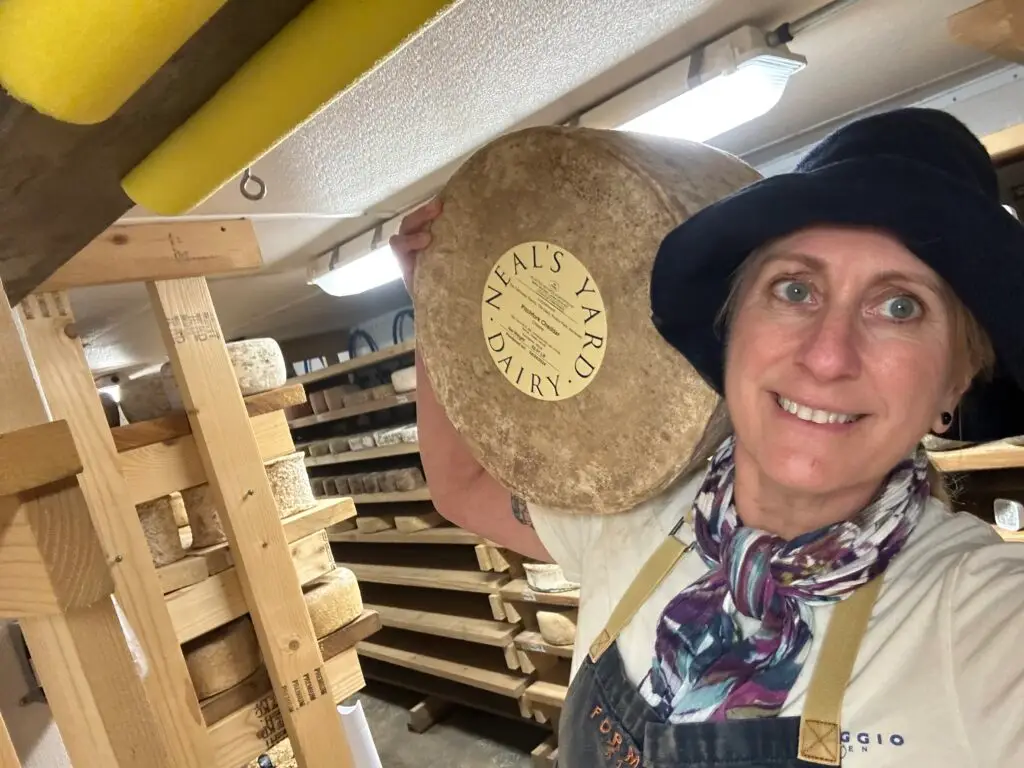
Our previous post was about the Trethowan Brother’s Gorwydd Caerphilly, so we decided it made sense for our next post to be about Pitchfork Cheddar, a West Country Farmhouse PDO Cheddar, also made by the Trethowans! When the brothers left Wales, where they had already been making Gorwydd Caerphilly, they crossed into Somerset and began to make cheddar in 2017 just a few miles from Cheddar Gorge itself. Somerset is the birthplace of farmhouse cheddar, and joining that community meant stepping into centuries of cheddarcraft.
They had their work cut out for them, but they won Best of British at the World Cheese Awards, and the Gold awards at the International Cheese Awards. They gained Artisan Somerset Presidia status from the Slow Food Foundation, one of only three cheddar makers given that honor. It’s also my favorite!
How Pitchfork Cheddar is Made
Eglantine: The Trethowans make Pitchfork with raw milk from their own herd. They begin with with natural starter cultures, the kind that change a little each day. The brothers tend them as a baker tends a leaven, feeding a community of microbes they know by its behavior more than its name. Some of these keep working long after the curd is pressed, moving quietly through the cheese as it ages. They’re what give it depth, the slow work of life continuing under cloth.
Eglantine: After the curd is cut and drained, it’s cheddared (you can read more about that in a previous post). Later, the wheels are wrapped in cloth and rubbed with lard. I rather like that part. It feels like dressing the cheese in a woolen jumper before sending it off to rest in the cellar!
Aritz: And in the cellar, microbes and time do their work. Pitchfork ages 12-14 months. The rind grows dusty and natural, the paste becomes dense and friable, and the flavor deepens. Microbes break down proteins into amino acids such as methionine and cysteine, which can release volatile sulfur compounds. It’s the same chemical family that gives mustard and horseradish their bite. There’s a mustard note that rises near the rind. It comes from the sulfur compounds in the milk as they break down over time. The natural cultures get to work on them slowly, releasing that faint heat you feel at the back of the throat.
PDO AOP DOP!
Today, Pitchfork has a West Country Farmhouse Cheddar PDO, which protects cheeses made by hand, on the farm, from local milk, using traditional methods. PDO stands for Protected Designation of Origin — in French you’ll see AOP (Appellation d’Origine Protégée), in Italy DOP (Denominazione d’Origine Protetta). Whatever the language, the idea is the same: the product can only be made in a specific place, in a specific way. Champagne is the classic French example, and Colombian Coffee has the same status.
These protections anchor food to its landscape and to its history, safeguarding traditions that might otherwise be lost. The West Country Farmhouse Cheddar PDO began in 1994, after decades when farmhouse cheddar nearly vanished into industrial blocks. The Trethowans’ Pitchfork is the most recent addition, proof that tradition is not frozen in time.
Cheese is Culture
In cheesemaking, culture means microbes, but cheese has always been about human culture too. The Trethowans didn’t invent cheddar. They were mentored by James Montgomery and Tom Calver at Westcombe. They benefited from the wisdom of Randolph Hodgson and the team at Neal’s Yard Dairy who championed farmhouse cheese. And now they pass it on, training younger cheesemakers in turn. Knowledge is shared, skills are handed down, and the chain continues.
Community is powerful. Montgomery’s, Westcombe, Keen’s, Quicke’s, Pitchfork, all West Country Farmhouse Cheddars that could see each other as competitors instead act like colleagues. They compare notes, trade ideas, and celebrate each other’s successes. That openness kept clothbound cheddar alive, even after decades of decline. In the twentieth century, farmhouse cheddar nearly disappeared into factories and plastic. But through mentorship and cooperation, it survived.
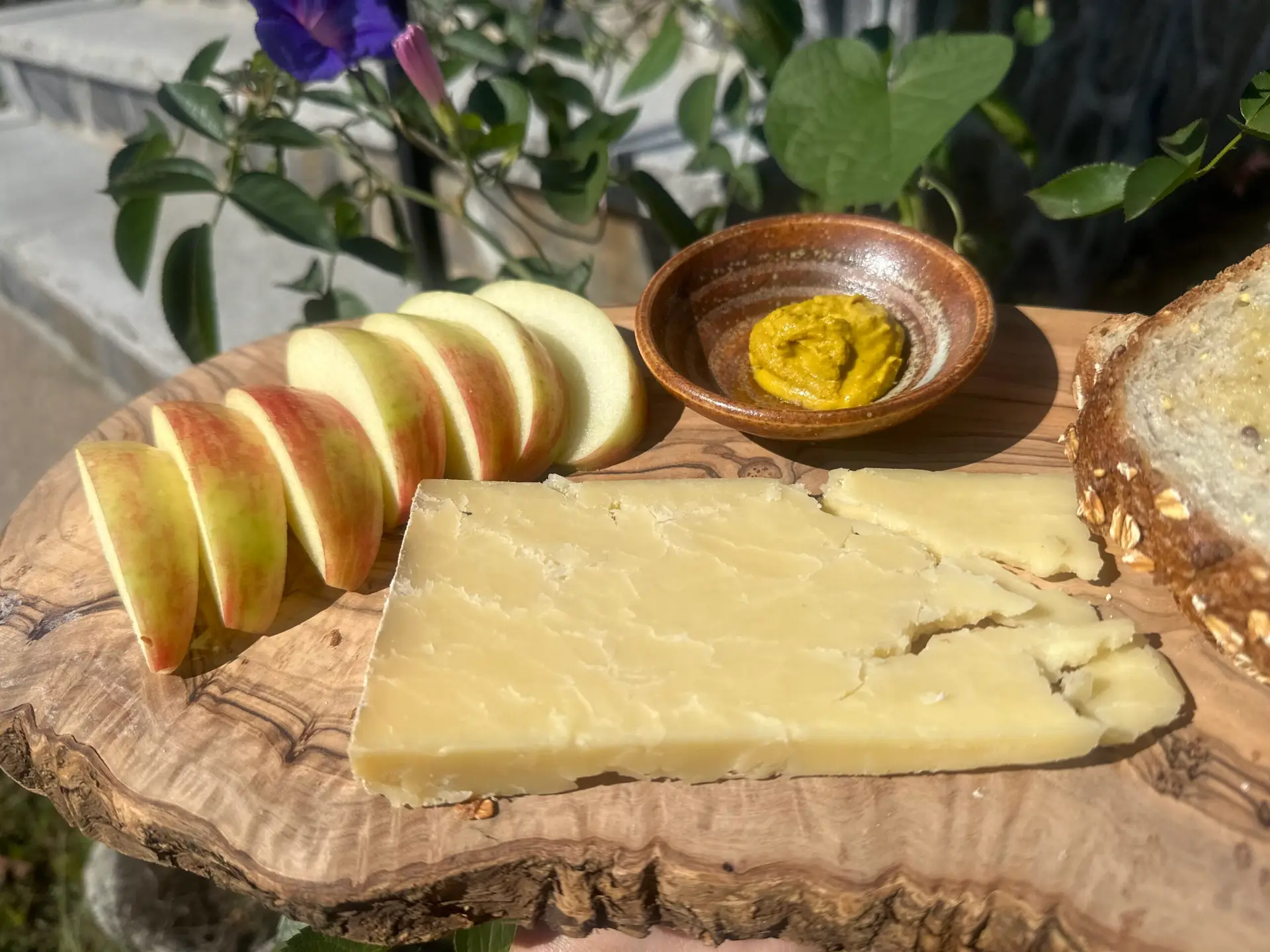
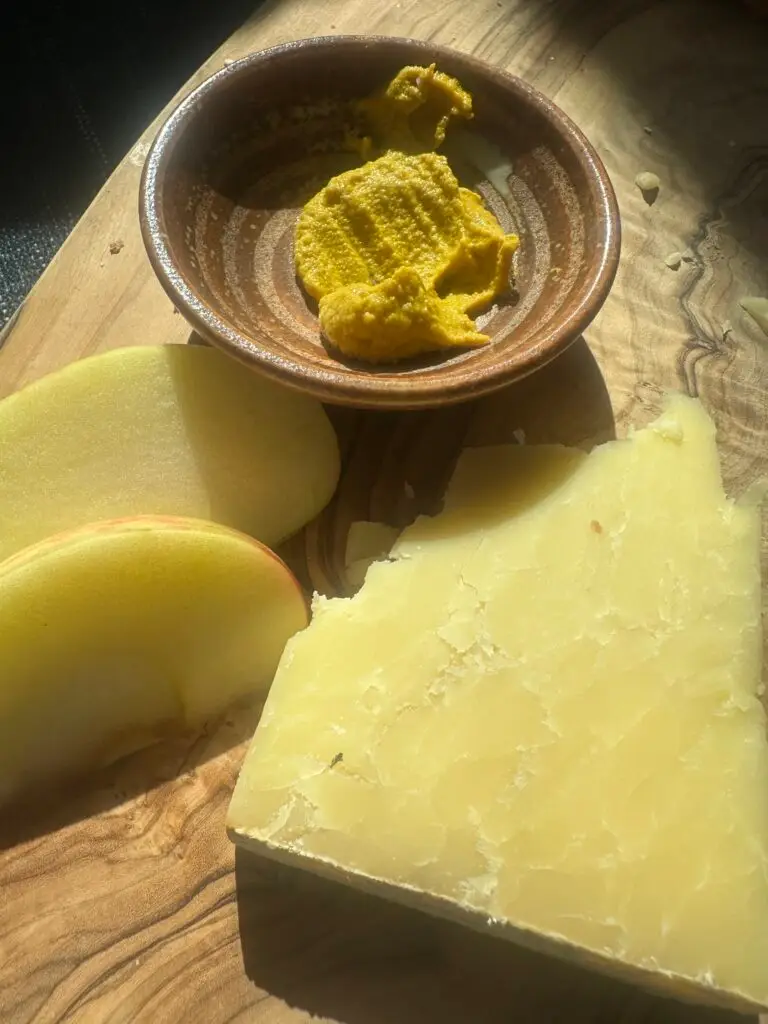
Pitchfork has a mustardy spice that pricks the tongue and lingers, grounded by a golden sweetness like dried hay. If Gorwydd Caerphilly is bright and lemony, Pitchfork is its autumn counterpart. It’s rich, warm, and full of depth. I love eating it with a strong English mustard and, you guessed it, apples! Let me know if you need help finding it!