Appleby’s Cheshire
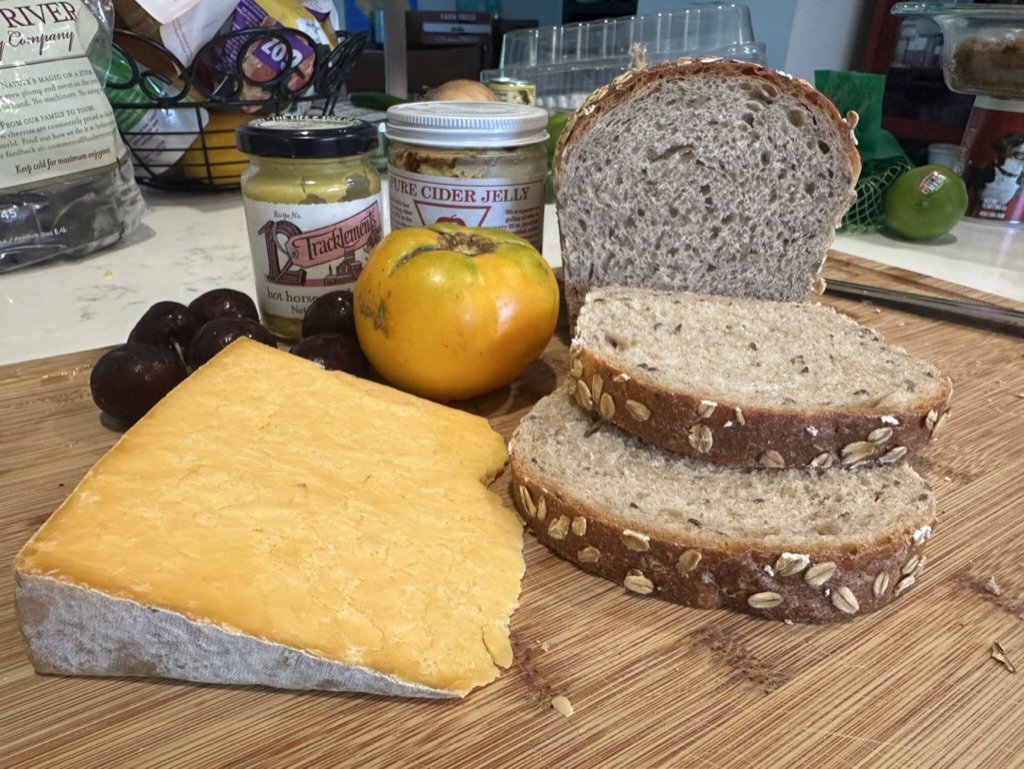
It’s our first cheese post! Here we go! Appleby’s Cheshire comes from Hawkstone Abbey Farm in Shropshire, England. The Appleby family founded the farm in 1952, and now Paul Appleby and his wife Sarah carry on the work, with help from their five children. They craft their farmstead cheese from raw milk, traditional cultures and rennet, and salt from the Cheshire Plains, and aged about 3 months. It’s grassy, complex, and subtle, perfectly paired with a good cider or fresh fruit.
Eglantine Crumb: Farmstead means the cheesemakers use milk from animals living right there on the farm. That ensures freshness, and that the cheesemakers know exactly what’s happening with the pastures and the cows. The Appleby family’s herd is mostly Friesian-cross, and they’ve been working with them to improve soil health, which benefits us all. Aritz and I will have more to say soon about how animals and microbes can help undo the harm caused by industrial farming.
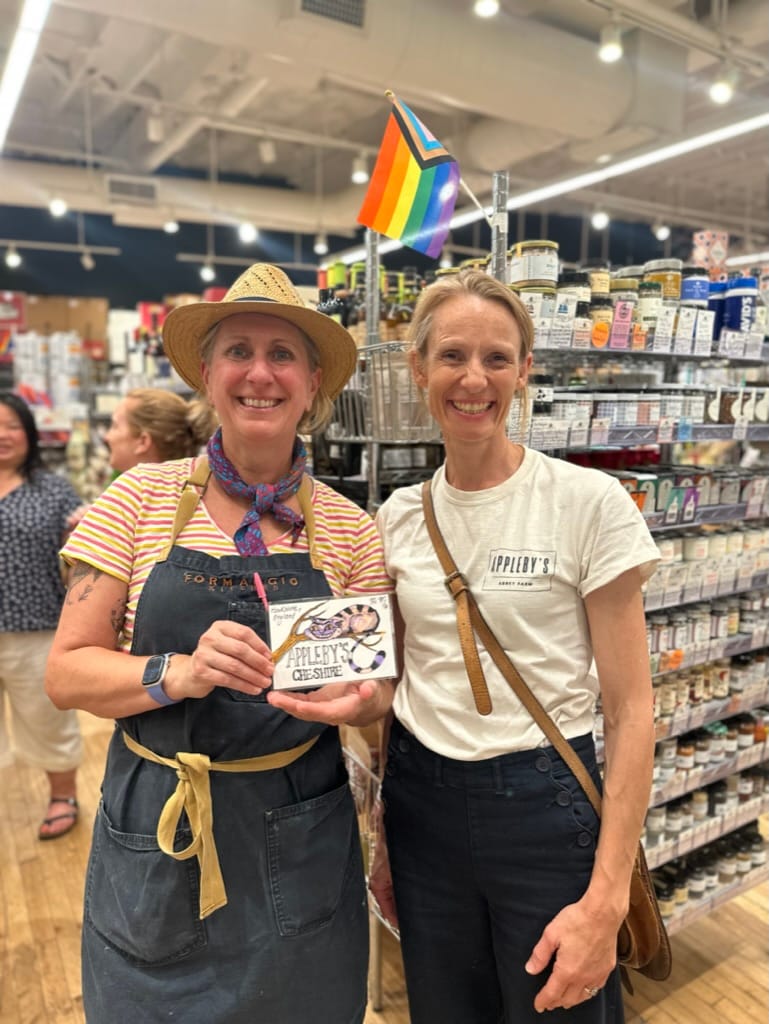
Sarah Appleby and Jennifer Tolliver at Formaggio Kitchen
What is Cheshire
Cheshire is a hard cow’s milk cheese made not only in Cheshire itself, but also in Shropshire, Staffordshire, Warwickshire, and northeastern Wales. It may be the oldest of the British Territorials. You can find cheese from Cheshire mentioned in the Domesday Book of 1086, when villagers paid rent in wheels of it. We can’t be sure it was the same style we know today, but it’s delightful to imagine.
“British Territorials” refers to regional cheeses officially described in the late nineteenth and early twentieth centuries. Cheeses in Britain (and much of Europe) have place names. The Cheshire Plain is known for its lush pasture, as well as its salt and sandstone that give Cheshire its distinctive minerality.
By the 17th and 18th centuries, Cheshire was the most popular cheese in Britain. The Royal Navy purchased only Cheshire to feed their crew for many decades, and Cheshire was the first cheese shipped to London markets on a large scale. Unlike cheesemakers who skimmed cream for butter, Cheshire required whole milk, and the full cream made it tastier. No wonder everyone loves Cheshire!
Aritz Rind: Don’t blame the cheese for empire building! It didn’t ask to be dragged around the world in the service of conquest!
Cheshire Milk & Culture
Cheshire makers traditionally use a mix of morning and evening milk. Morning milk is lower in fat, evening milk higher, so the balance is perfect for cheese. (I’m already looking forward to our post about milking times!) To the warmed milk, Appleby’s adds a traditional starter from Barbers, who have made Cheddar since 1833.
Aritz Rind: Appleby’s does indeed use Barber’s culture, but they push the microbes harder, encouraging a faster acidification than cheddar requires. The rapid pH drop means the milk loses calcium, leaving a weaker curd and more crumbliness.
There were marketing reasons to add color (see our earlier post.) Southern English markets preferred their Cheshire dyed with annatto, while Northerners like it plain. Appleby’s makes both, but Neal’s Yard Dairy exports the orange version to the U.S.
Eglantine Crumb: Southerners and their fussing! Forever wanting their Cheshire red and tidy, as though a dash of dye makes a difference. We Northerners know better. We care about flavor, not frippery.
Aritz Rind: On that point, Eglantine, we agree.
I think the orange looks striking on a cheese board.
Cutting the Curd
Eglantine Crumb: Once the curd sets, it’s cut into smaller pieces than cheddar’s. Like many British cheeses, Cheshire is crumbly, which requires expelling plenty of whey. But unlike cheddar, the curds are handled gently.
Aritz Rind: Cheshire retains moisture, which allows it to ripen more quickly. Microbes thrive in moisture, so the extra water lets them get to work faster.
Eglantine Crumb: The cheesemakers salt the curd before hooping (moulding.) In cloth-lined moulds, they press the curds in vintage presses, beautiful old things, that squeeze out the last bit of whey.
The cheesemakers turn out the wheels and age them for about 3 months. At Appleby’s, they mature in barns with timbers dating back to the Napoleonic era, which lend their own flora to the cheese. (It’s also pretty freaking cool.)
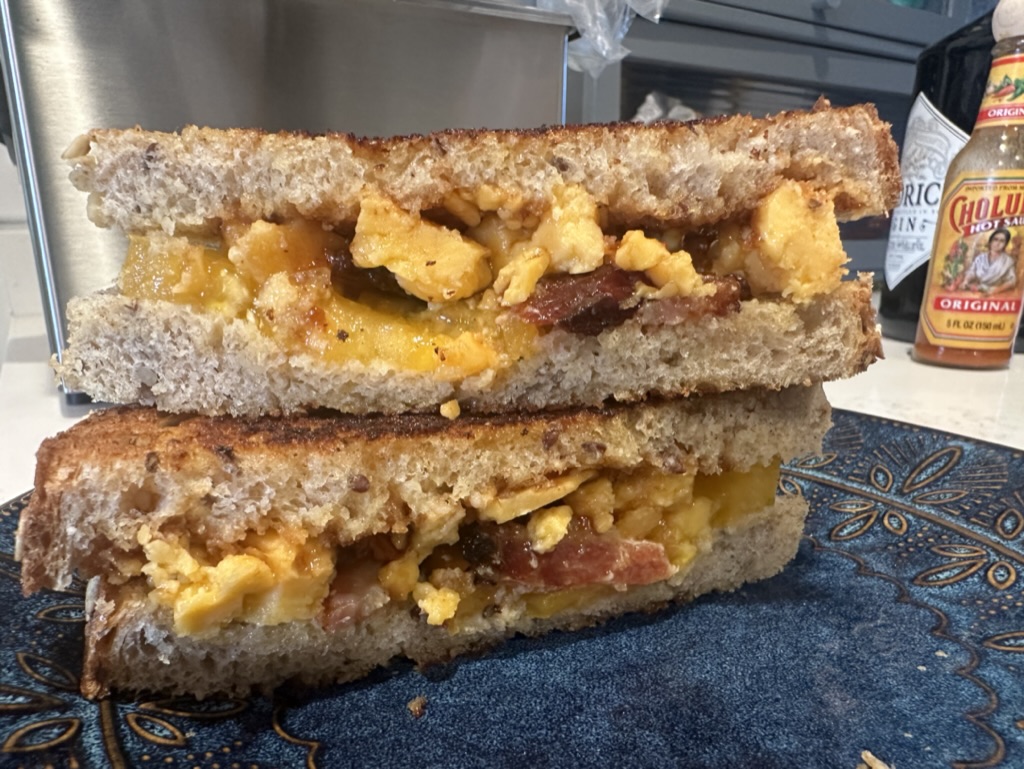
Go Eat It!
A wheel of Cheshire reflects many influences: the pasture, the milk, the culture, and even the timbers above its head. Appleby’s is a gorgeous, artisanal cheese, and the last-standing, traditional farmstead Cheshire. It is well worth the effort to seek it out. If you need help finding it, please contact us!
We’ll shortly be posting a simple recipe from Jen and Eglantine! Stay tuned!
A Cheesemonger’s History of the British Isles by Ned Palmer
https://www.applebysdairy.com/
Oxford Companion to Cheese
https://www.nealsyarddairy.co.uk
The Great British Cheese Book by Patrick Rance